

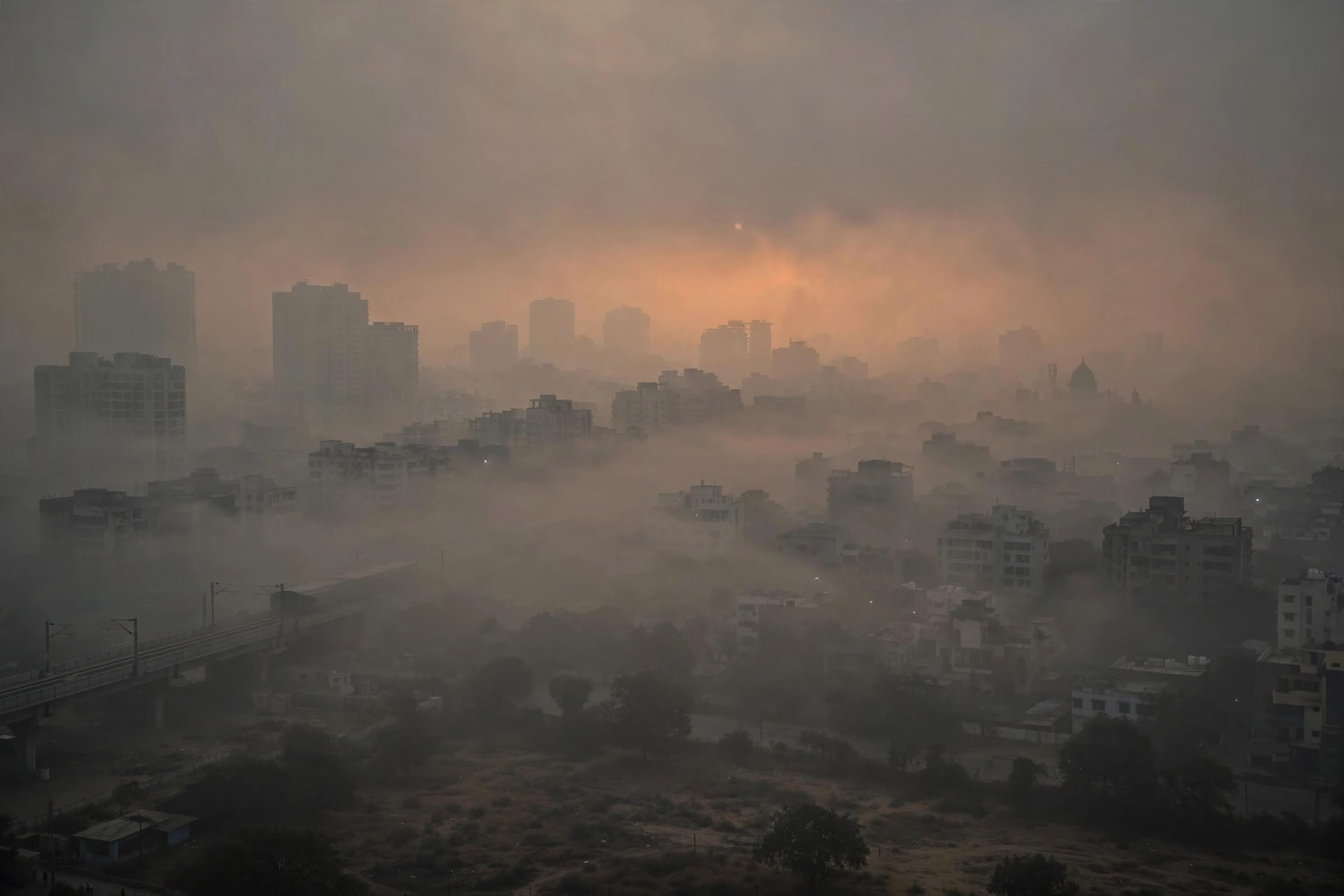
The morning after Diwali, India dominated a global ranking no country wants to lead. As many as 47 of the world’s 50 most polluted cities were in India, according to real-time rankings by air quality monitoring platform AQI.in, with Hisar in Haryana topping the list at a hazardous AQI of 518.
The figures capture a regional crisis, not a single city’s problem. On the morning of November 9, Delhi’s air quality index touched 663, a 69 per cent rise over the post-Diwali reading recorded last year. In the global ranking, Delhi stood ninth with an AQI of 355 in the afternoon snapshot, while a later reading placed it 24th at 393 — the numbers shifting through the day as smoke from firecrackers mixed with stubble burning across Punjab and Haryana.
The worst readings came from smaller cities that rarely make national headlines. Sri Ganganagar in Rajasthan recorded an AQI of 821 in one snapshot, Bathinda in Punjab hit 816, Faridkot 804, and Sirsa 544. On November 9, India accounted for 99 of the world’s 100 most polluted cities, a measure of how completely the post-Diwali haze had settled over the north.
The official data told the same story in quieter tones. The Central Pollution Control Board’s list for Tuesday put Panchgaon at the top with an AQI of 380, followed by Anpara at 341 and Ballabgarh at 340, with Gurugram, Sirsa, Hisar, Kurukshetra, Ludhiana and Noida all in the very poor range. Only a handful of cities — Shillong at 39, Srinagar at 40 — recorded good air.
The causes are familiar and compounding. Firecrackers burst through the Diwali night despite restrictions, stubble fires continued across the northern plains, and calm winter air trapped the pollutants close to the ground. Delhi-NCR remains under Stage III restrictions of the Graded Response Action Plan, with construction curbs and other emergency measures in force.
Health experts warn that the numbers are not abstractions. At AQI levels above 400, the air is hazardous for everyone, not only for children, the elderly and people with respiratory conditions. Hospitals in the capital typically report a surge in breathing complaints in the days after Diwali, and this year’s readings suggest that pattern will repeat.
The rankings will change as the wind picks up and the smoke disperses. But the underlying pattern — a festival, a harvest, and a season of still air combining into a public health emergency — returns every year, and the list of the world’s most polluted cities keeps reading like a map of north India.
