

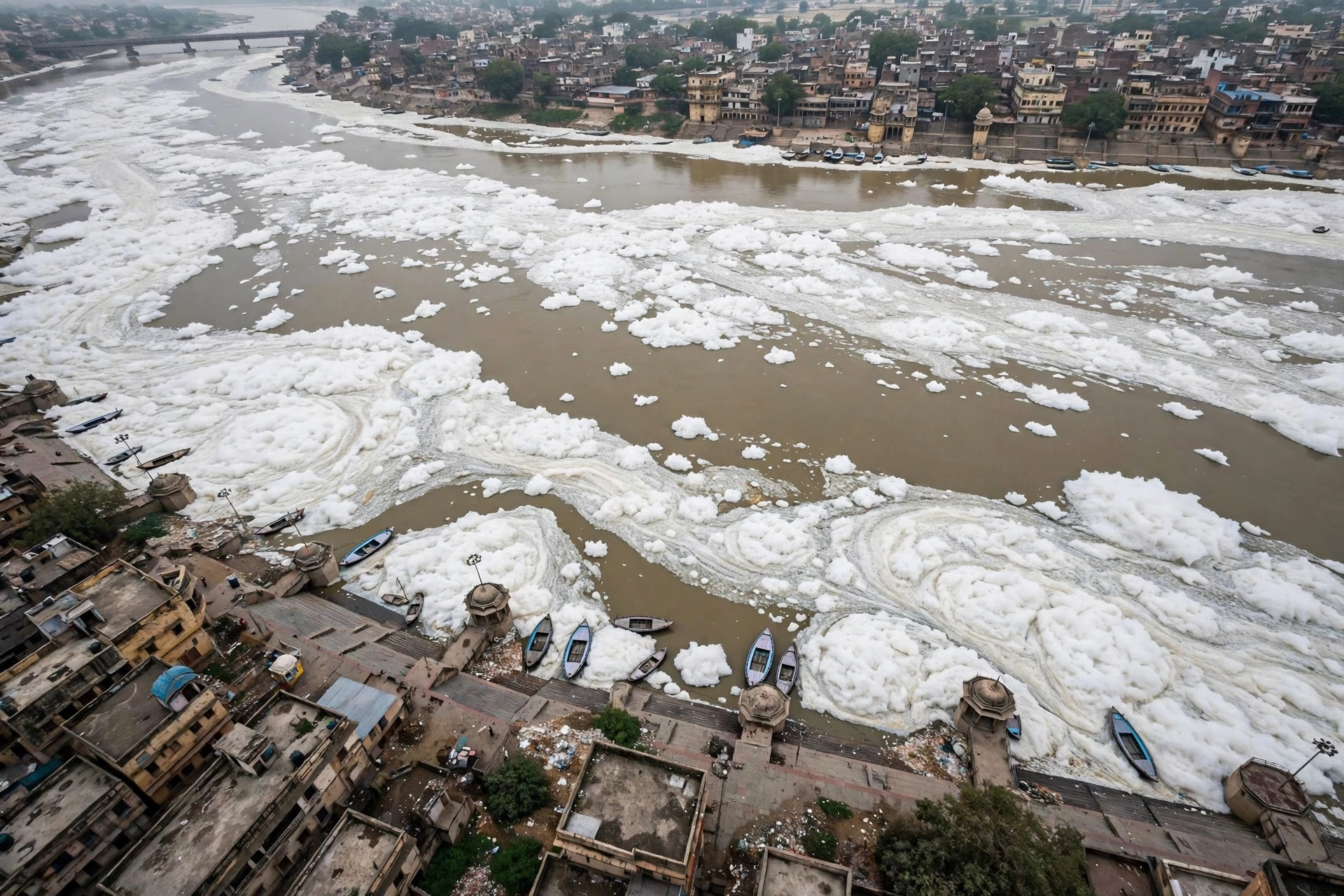
New Delhi: Days after the Centre unveiled a Rs 8,941-crore package to clean the Yamuna, a thick layer of toxic foam was seen floating on the river at Kalindi Kunj in Delhi on Saturday morning, October 24, renewing questions about the pace and effectiveness of the cleanup drive.
The foam was also visible at the same spot on Friday, October 23, suggesting the problem is not a one-day occurrence but a continuing discharge that the existing measures have failed to check. The recurrence over consecutive days points to a persistent pollution source upstream rather than an isolated event.
The visuals have landed at an awkward moment for both the Centre and the Delhi government. Just two days earlier, on October 22, Union Home Minister Amit Shah had inaugurated and laid foundation stones for 43 Delhi Jal Board projects worth Rs 8,941 crore in Dwarka, aimed at cleaning the Yamuna and improving drinking water infrastructure. Shah had claimed that over 40 per cent of the journey towards a clean river had already been covered.
On Thursday, Delhi Chief Minister Rekha Gupta called the project inauguration a “joyful day”, saying her government had made steady progress in the last one-and-a-half years and that the river should be clean and flowing uninterrupted within a few years. Her government has said the Rs 9,000-crore projects follow Rs 9,000-10,000 crore worth of work started last year.
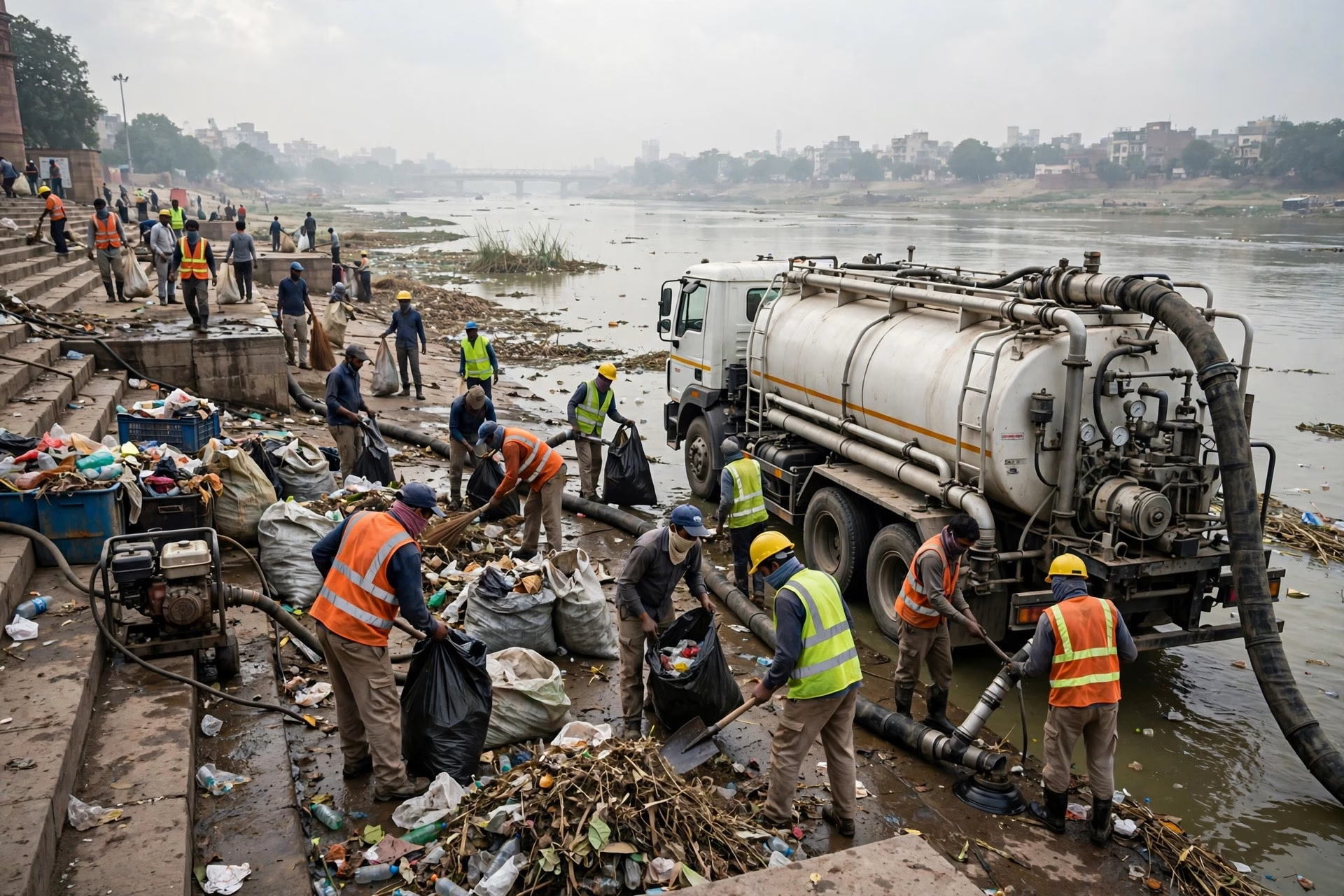
But the ground reality at Kalindi Kunj tells a different story. Separately, questions have been raised about the defoaming contract at the site: while the equipment is present at Kalindi Kunj, the required chemicals had not arrived. DJB assistant chemist Sandeep Verma defended the department, saying annual defoaming campaigns have been run since 2022.
The admission that the chemicals needed for the defoaming exercise had not reached the site raises uncomfortable questions about the preparedness of the very measures designed to handle exactly this kind of episode. The equipment without chemicals renders the intervention ineffective at the moment it is needed most.
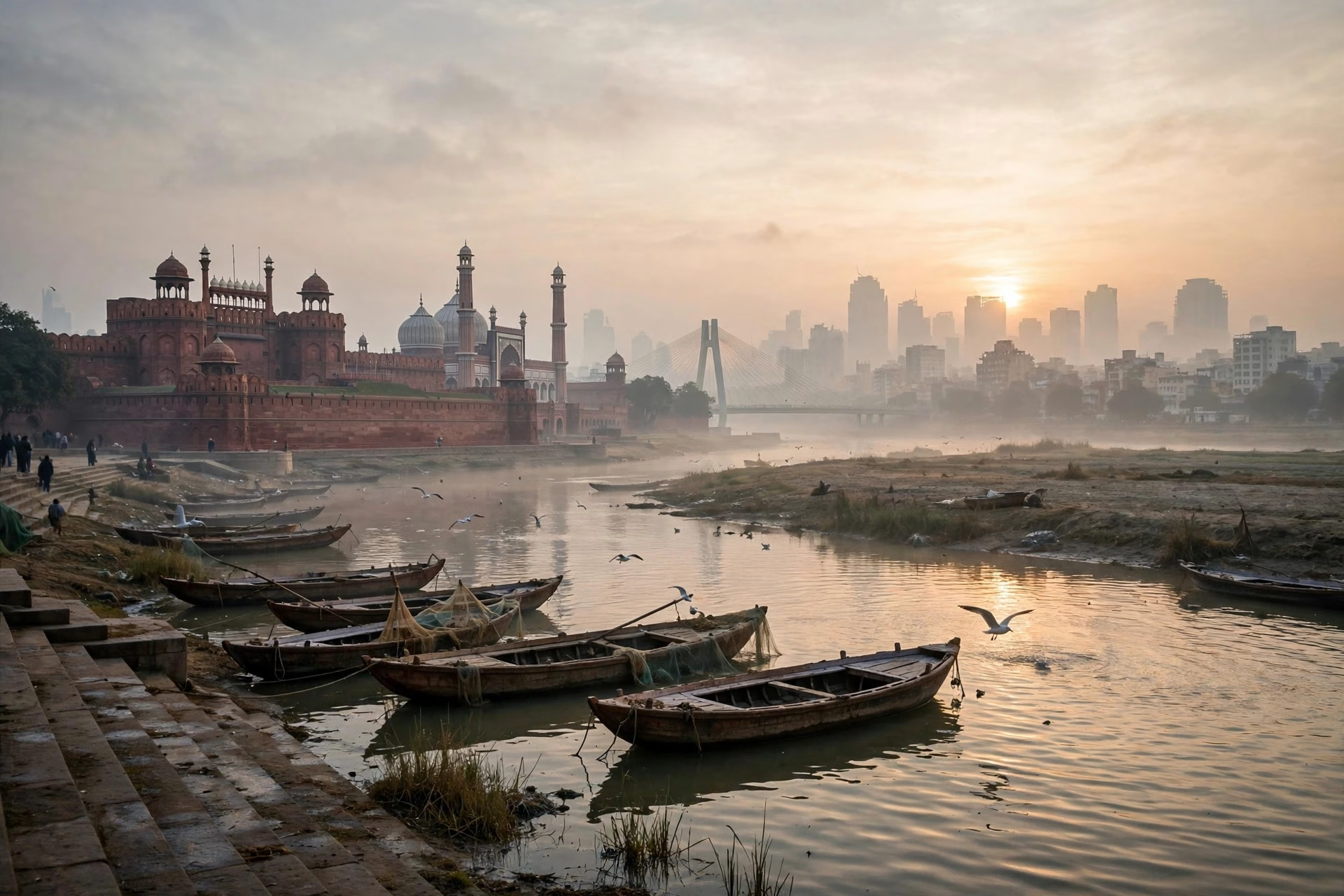
The riverbank itself added to the grim picture, with discarded puja materials, religious idols, clothing and plastic waste found strewn along the stretch, underlining how multiple pollution streams converge at this point of the river.
The foam at Kalindi Kunj has become an annual embarrassment for successive governments, typically surfacing around the festival season when untreated sewage and industrial effluents combine with river flows altered by upstream barrages.
For now, the government will hope the newly announced projects translate into visible change on the ground. Until then, the foam floating at Kalindi Kunj remains the image that defines the state of the Yamuna — and the scale of the challenge ahead for the Rs 8,941-crore push.
