

The Union Cabinet on Tuesday approved a Rs 62,370-crore fertiliser subsidy package for the Rabi 2026-27 season, a sharp 64 per cent increase over last year, in a move aimed at keeping farm inputs affordable for crores of farmers during the winter sowing season.
The approval covers nutrient-based subsidy (NBS) rates for phosphatic and potassic (P&K) fertilisers, which are among the most widely used farm inputs after urea. The subsidy ensures that farmers continue to get these fertilisers at stable, affordable prices even as global prices of raw materials and finished fertilisers fluctuate.
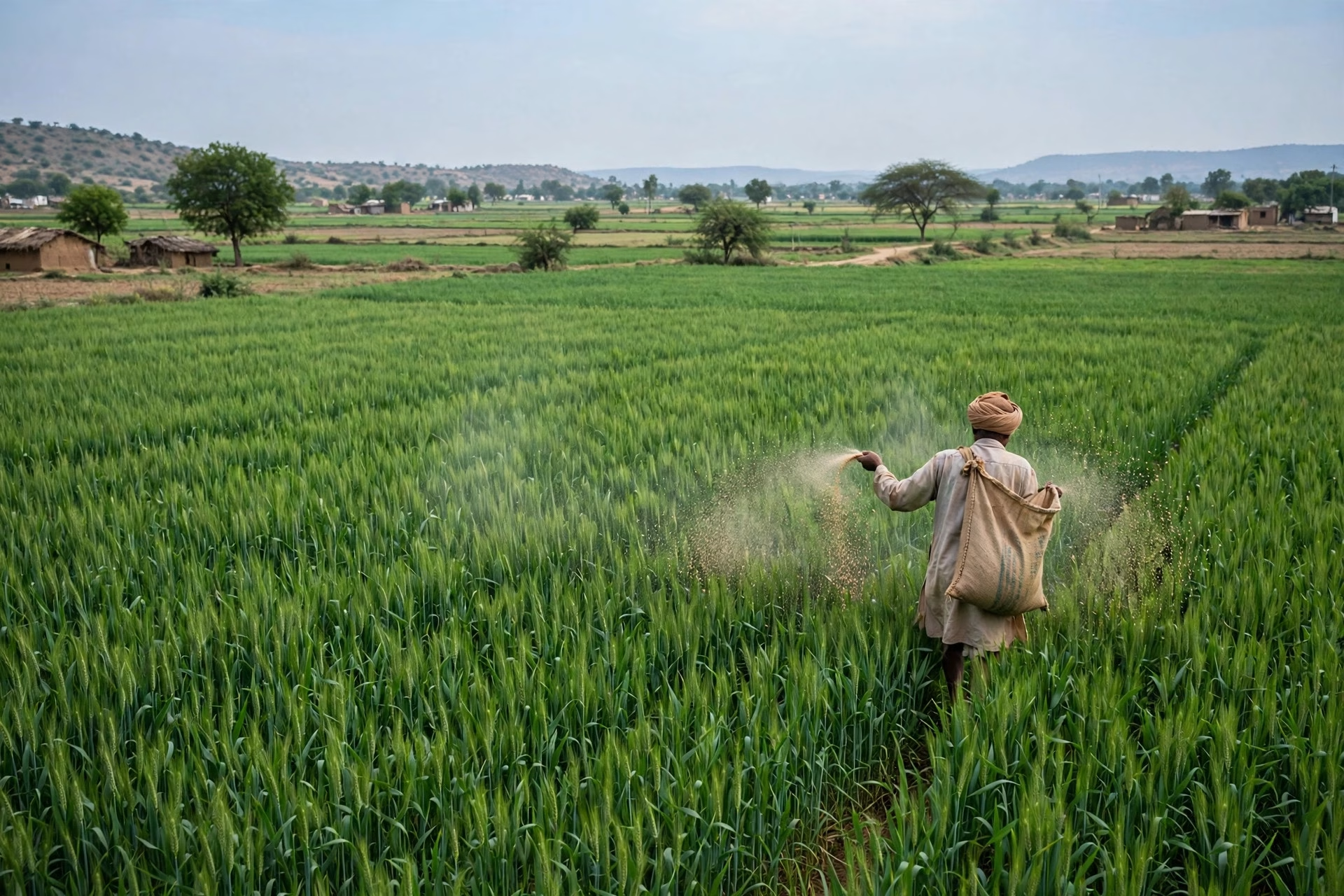
The Rabi season, which runs from October to March, is the backbone of India’s foodgrain production. Wheat, mustard, gram and barley are the main crops sown in this season, and timely availability of fertilisers at the right price is critical to yields. The sowing of wheat, the flagship Rabi crop, is currently under way across the northern plains.
Under the NBS scheme, the government fixes a per-kilogram subsidy for nutrients such as nitrogen, phosphorus, potash and sulphur, and fertiliser companies sell their products at subsidised rates. The difference between the cost of production or import and the retail price is borne by the exchequer.
The increase in the subsidy bill reflects both higher global prices of phosphatic and potassic fertilisers and the government’s decision to shield farmers from passing those costs through. India imports a large share of its P&K fertiliser requirement, making domestic prices sensitive to international markets and currency movements.
Farm organisations have generally welcomed the announcement, saying affordable fertilisers are essential at a time when input costs for diesel, seeds and labour have also been rising. The subsidy, they say, will help farmers apply the recommended doses rather than cut back, which directly affects productivity.
The Cabinet’s decision comes alongside a series of other farm-related announcements, including the extension of the Stand-Up India scheme and the approval of the nutrient-based subsidy framework for the season. Together, they signal the government’s intent to keep farm economics at the centre of its rural agenda ahead of the winter session of Parliament.
Officials said the fertiliser ministry will monitor availability closely through the season, with state governments asked to ensure that supplies reach the mandis and cooperative societies on time. Farmers have been advised to buy only from authorised dealers and to report any overcharging or shortage to the district administration.
The subsidy decision is expected to benefit farmers across the country, with the largest shares going to the major wheat and mustard growing states of Uttar Pradesh, Madhya Pradesh, Punjab, Haryana, Rajasthan and Bihar, where Rabi sowing is at its peak.
