

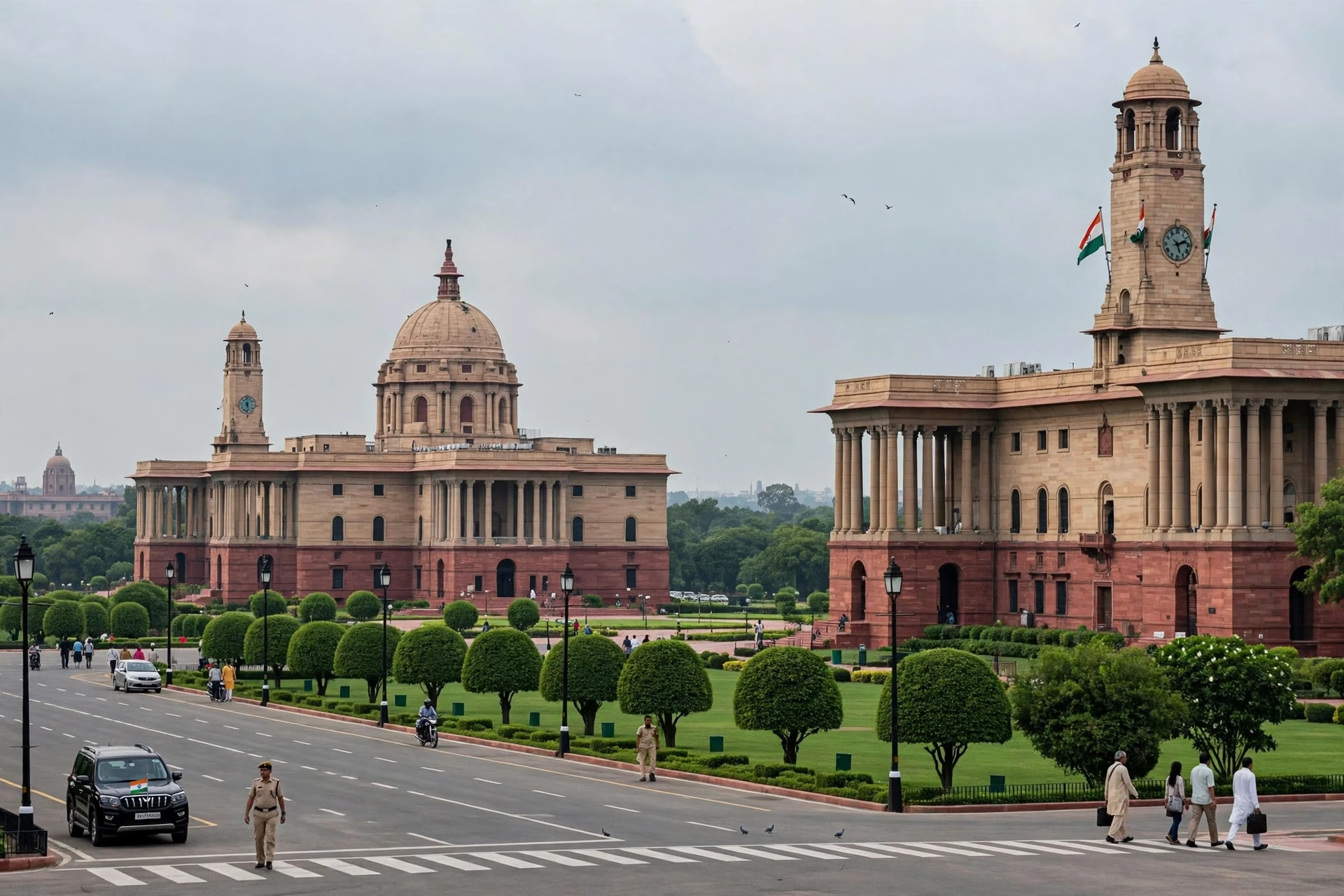
The Union Cabinet has approved a Rs 3,230-crore project to convert Delhi’s historic North and South Block buildings into the Yuge Yugeen Bharat National Museum, billed as the world’s largest museum when complete.
The two sandstone secretariat buildings on Raisina Hill, designed by Sir Edwin Lutyens and Sir Herbert Baker and completed in the 1920s and 1930s, have housed the Prime Minister’s Office and key ministries for nearly a century. They will now be transformed into a national museum telling the story of India from ancient times to the present day.
The project is part of the government’s Central Vista redevelopment, under which ministries are being shifted to new office buildings, freeing the historic secretariat blocks for cultural use. The museum will be spread across the two buildings and is expected to showcase India’s civilisational journey through artefacts, galleries and immersive displays.
Officials say the Yuge Yugeen Bharat National Museum will be among the largest museums in the world in terms of built-up area, surpassing well-known institutions in Europe and the Americas. The name, drawn from Sanskrit, evokes the idea of a timeless, age-spanning India.
The conversion of the two blocks is a complex heritage exercise. The buildings are protected landmarks, and the redevelopment will have to preserve their facades, courtyards and ceremonial spaces while creating modern museum infrastructure inside, including climate-controlled galleries, visitor facilities and conservation laboratories.
The museum is expected to house collections currently spread across institutions such as the National Museum, along with new acquisitions and loans. The galleries are planned around themes covering ancient India, the medieval period, the freedom struggle and modern India, with a strong emphasis on art, science, philosophy and everyday life.
The project also carries a political and cultural message. The government has presented the museum as a reclaiming of India’s civilisational narrative, with the seat of colonial-era administration being turned into a showcase of Indian heritage. Critics of the Central Vista project have questioned the cost and the pace of change, but the government has maintained that the redevelopment is necessary and long overdue.
A timeline for the completion of the museum has not yet been formally announced, and the work is expected to proceed in phases. Once open, the museum is expected to become a major attraction for domestic and international visitors to the capital, anchoring a cultural circuit that includes the new Parliament House, Kartavya Path and the National War Memorial.
