

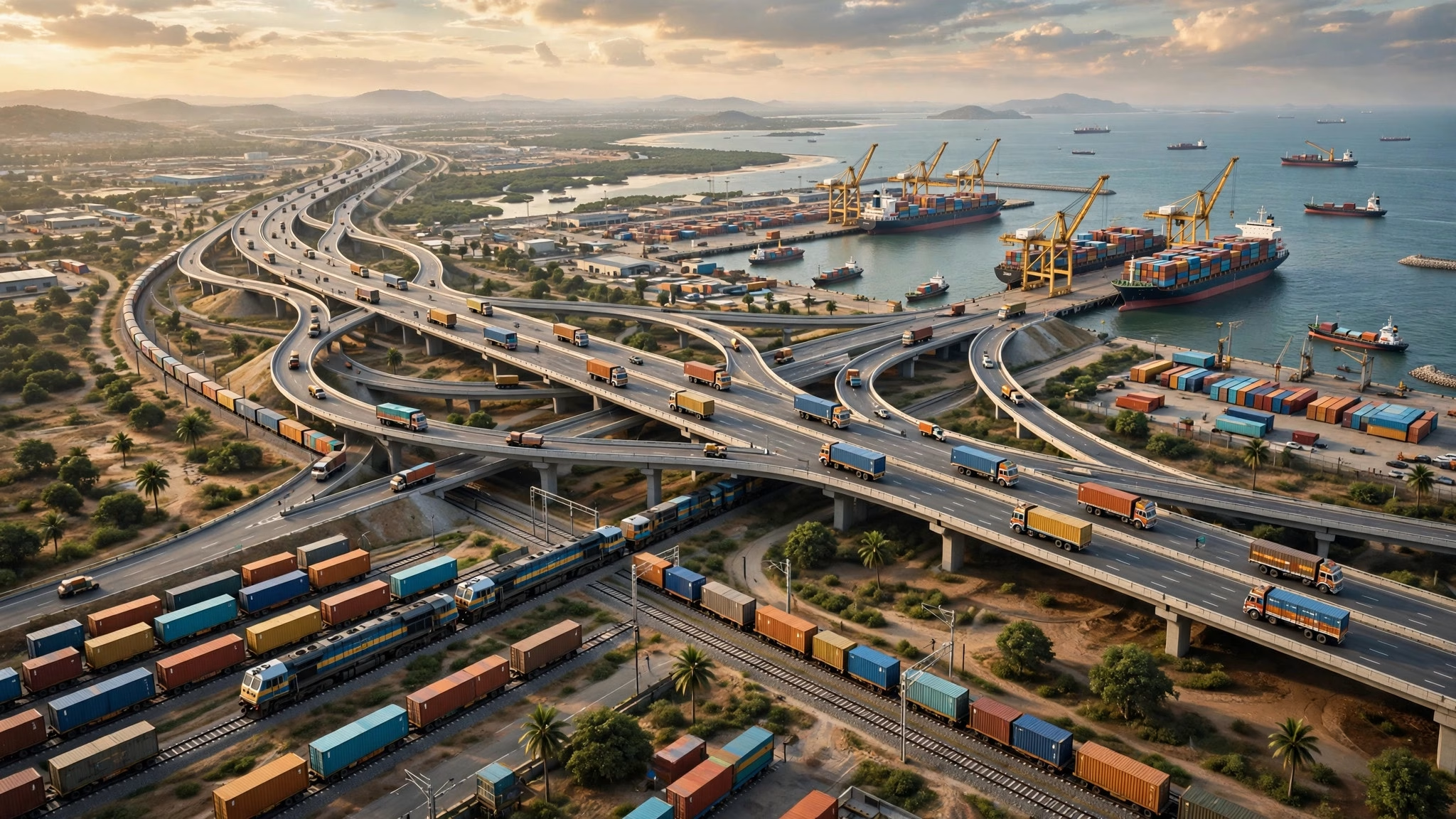
The Union Cabinet on Tuesday approved the creation of the Integrated Transport & Logistics Authority (ITLA), a new national apex body designed to plan, appraise and monitor the country’s transport and logistics infrastructure as one integrated system. The decision, taken at a meeting chaired by Prime Minister Narendra Modi, was announced by Information and Broadcasting Minister Ashwini Vaishnaw at a media briefing.
ITLA will be set up as a special purpose vehicle to strengthen research, planning, project appraisal, monitoring and impact assessment across the transportation and logistics domain, the government said. Mr Vaishnaw described it as “the apex institution for integrated transport and logistics planning, research, project appraisal, monitoring, policy support and data analytics,” one that would bring the Centre and the states together under a single planning framework.
The approval, according to an official statement, “seeks to address the long-standing challenges arising from fragmented planning and implementation across multiple transport-related Ministries and agencies.” The new body will complement the PM GatiShakti National Master Plan and the National Logistics Policy of 2022 — which it will advise on and help review and update — by institutionalising the coordination that GatiShakti began mapping.
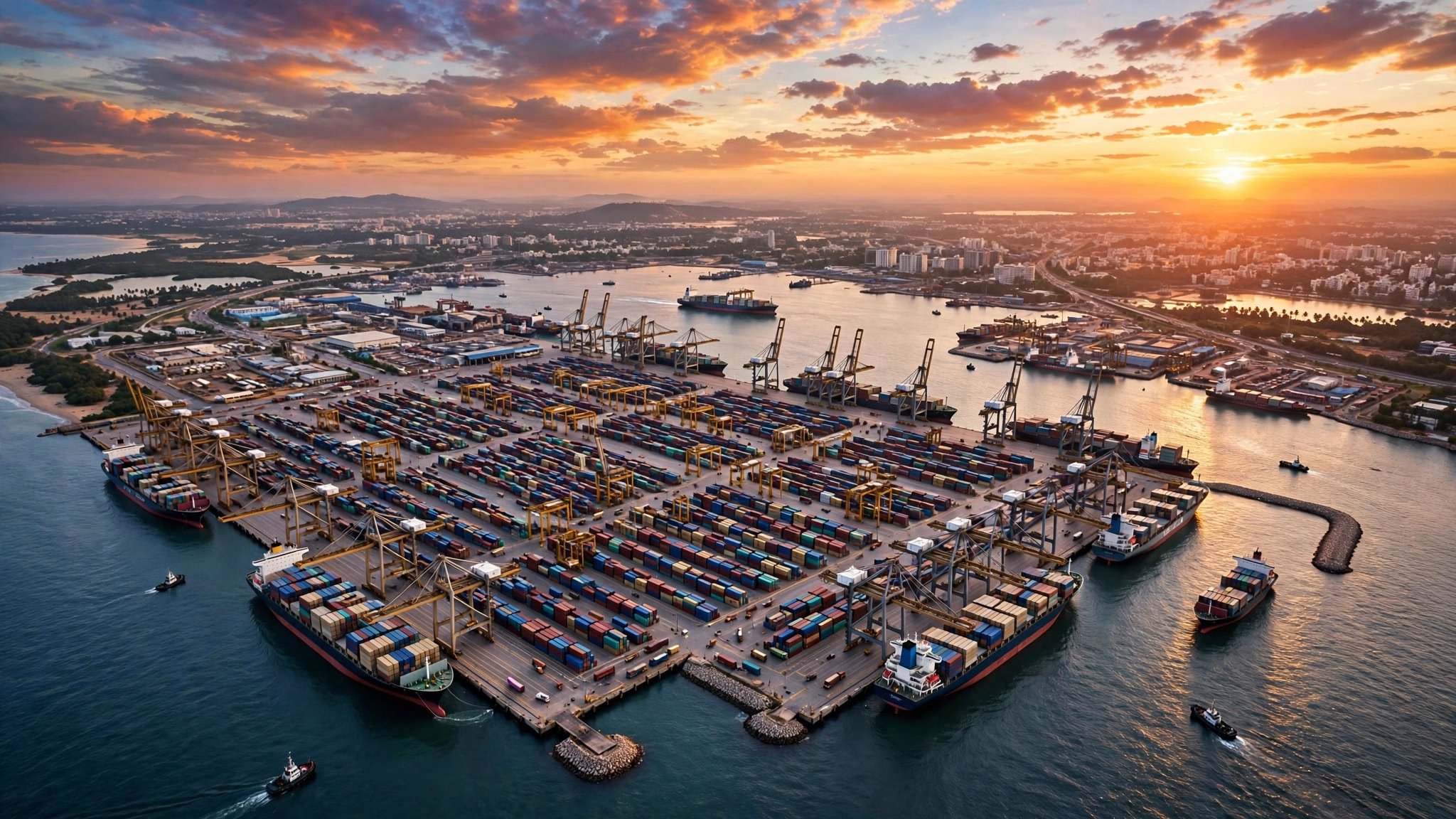
ITLA’s central task will be preparing a comprehensive National Transport Master Plan with a planning horizon of ten years or more, spanning roads, railways, ports and shipping, civil aviation, inland waterways, coastal shipping, urban mobility and logistics. Mr Vaishnaw said the authority would be responsible for formulating such long-term master plans — spanning 10, 15 or even 30 years — to give the sector a strategic perspective. It will also evaluate five-year sectoral plans and the annual plans of transport ministries to ensure alignment with the master plan, and undertake the technical appraisal of government infrastructure projects costing Rs 500 crore or more — though financial appraisal will continue through existing mechanisms.
The authority will monitor the implementation of projects above the Rs 500-crore threshold, provide a coordinated mechanism for resolving execution bottlenecks, and undertake post-implementation impact assessments to judge the outcomes of major investments, the statement said. As economic activity expands, logistics demand is reportedly growing at around 10 per cent a year against GDP growth of 7–8 per cent — making such coordination increasingly critical.
A major plank of the plan is the creation of a National Transport Data Repository (NTDR) that will integrate datasets from GSTN e-way bills, FASTag, Vahan, GPS-based systems and urban traffic management systems. The data will feed analytics such as freight-flow and origin-destination analysis, making infrastructure planning genuinely data-driven, the statement said. ITLA will also advise on capacity building, training and skilling in the logistics sector, and promote research and innovation. The government did not disclose the authority’s budget, staffing or the timeline for its establishment.
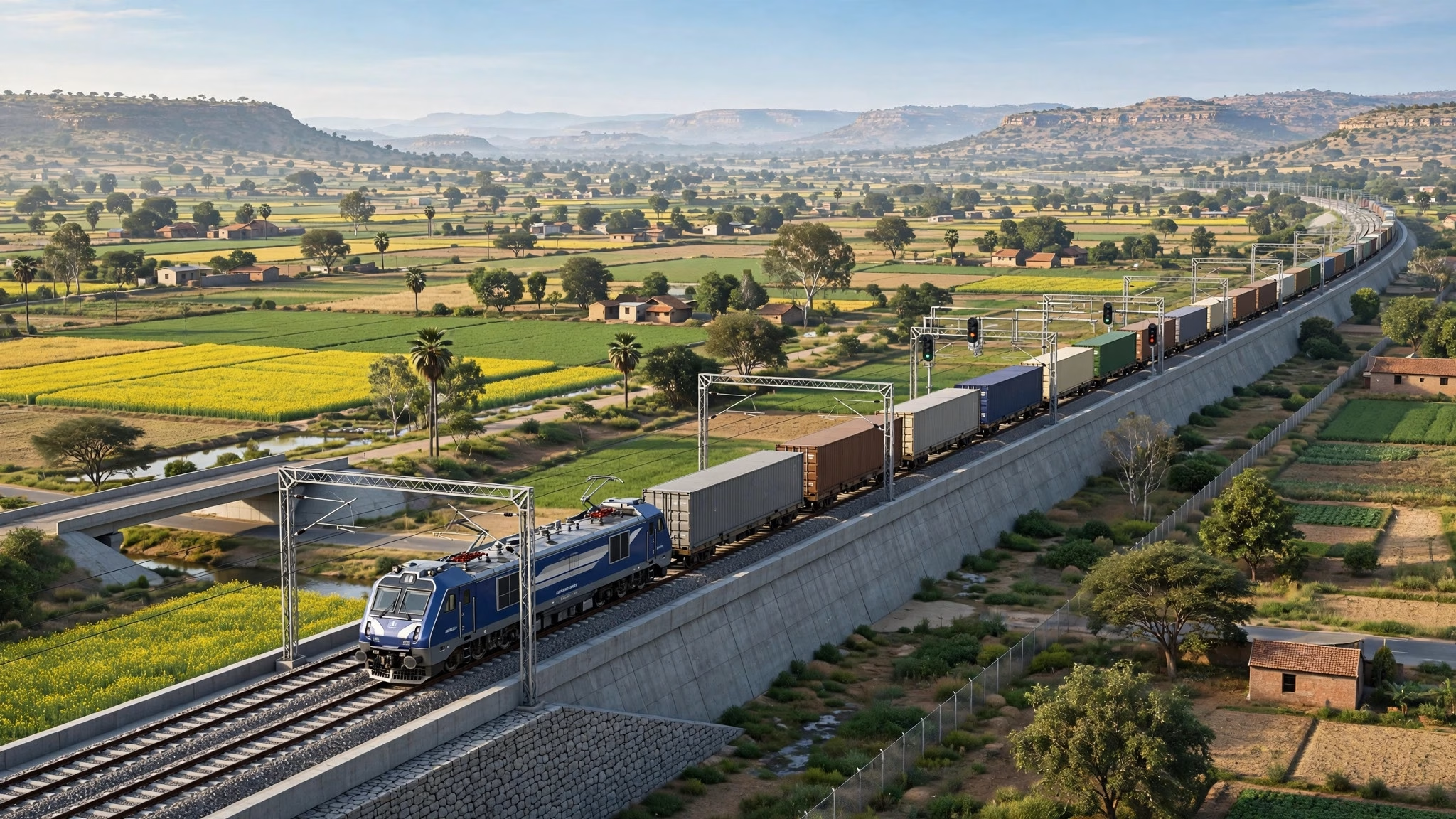
Mr Modi, according to the statement, said the authority would bring greater coordination, data-led planning and multimodal integration, with wide-ranging impact on the country’s growth trajectory. The government expects ITLA to support the Vision 2047 agenda by strengthening multimodal connectivity, reducing logistics costs and improving India’s global logistics competitiveness. For an economy whose freight costs are widely seen as high by global standards, the real test of ITLA will be whether one apex planner can do what decades of siloed ministries could not.
