

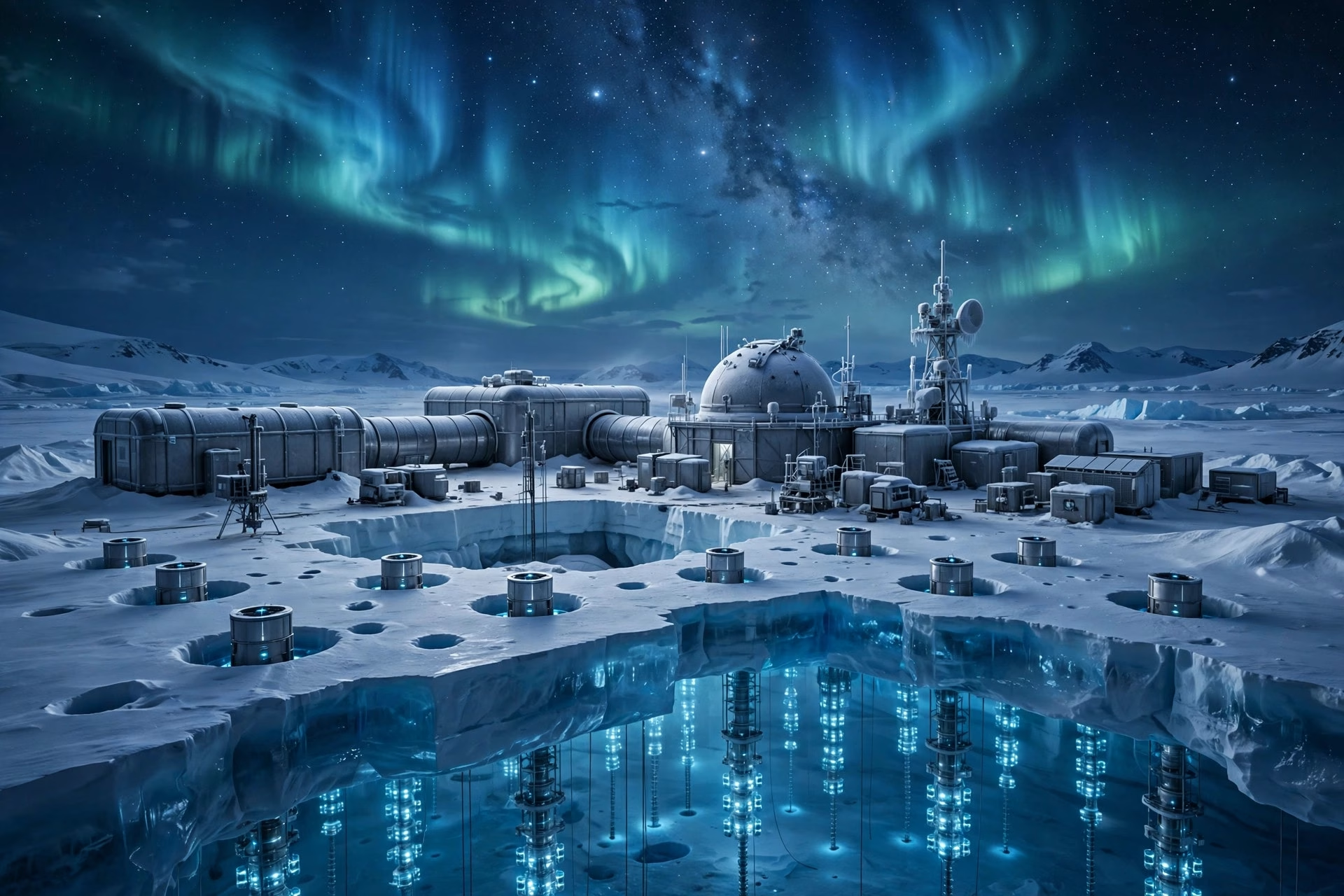
Stockholm, Oct 6 — The 2026 Nobel Prize in Physics has gone to Francis Halzen, the 82-year-old Belgian-born physicist whose stubborn vision turned a cubic kilometre of Antarctic ice into the world’s most unlikely telescope. The Royal Swedish Academy of Sciences honoured him “for decisive contributions to the IceCube Neutrino Observatory and the discovery of high-energy neutrinos of astrophysical origin.”
Halzen, a professor at the University of Wisconsin-Madison, conceived the audacious idea decades ago: bury thousands of light sensors deep in the pristine ice at the South Pole and wait for the faintest flashes of ghost particles streaming in from the far reaches of the universe. That instrument — IceCube — went on to detect the first high-energy neutrinos ever traced to distant galaxies, opening what committee chair Mark Pearce called “a new kind of astronomy.”
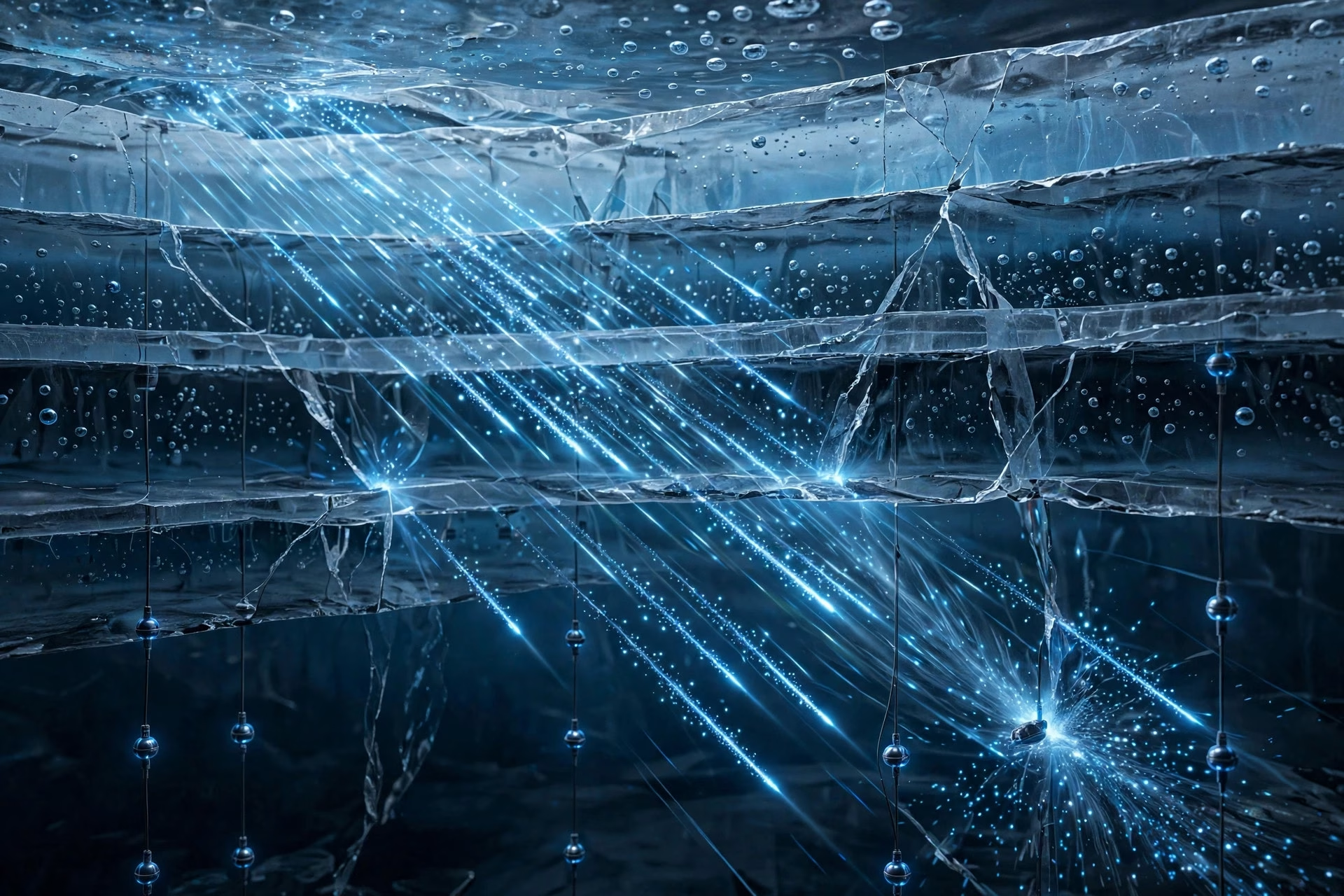
Neutrinos are among the strangest inhabitants of the subatomic world — particles with no electric charge and only a whisper of mass. Trillions of them pass through our bodies every second, streaming out of stars including our own sun, almost never interacting with anything at all. Catching them required exactly the kind of vast, silent detector Halzen imagined: sensors frozen some 2,500 metres beneath the Antarctic surface, watching for the rare blue flash of a neutrino collision.
The announcement, delivered by the Academy’s first woman secretary-general, Ellen Moons, carried a touch of Nobel theatre. Reached by phone from Italy, Halzen drew chuckles when he told the committee, “I hope that this prize will help getting it approved” — referring to a research proposal. The 82-year-old admitted he had been told he was a favourite since 2013: “I had to live long enough.”
The prize carries 12 million Swedish crowns, roughly $1.2 million — money Halzen may now find easier to spend on his next big idea.
Halzen succeeds last year’s laureates, three scientists honoured for quantum tunnelling research that underpins technologies from MRI scanners to mobile phones. His win is the second of Nobel week, after the October 5 Medicine prize to Karl Deisseroth, Peter Hegemann and Georg Nagel for optogenetics, and ahead of the Chemistry prize on October 7 to Henri Kagan and Kenso Soai, the Literature prize on October 8 to Anne Carson, and the Peace and Economics prizes on October 9 and 12.
In an era when astronomy is increasingly done with light, Halzen’s legacy is a reminder that the universe also speaks in particles — and that sometimes the boldest telescope is a kilometre of ice at the bottom of the world.
