

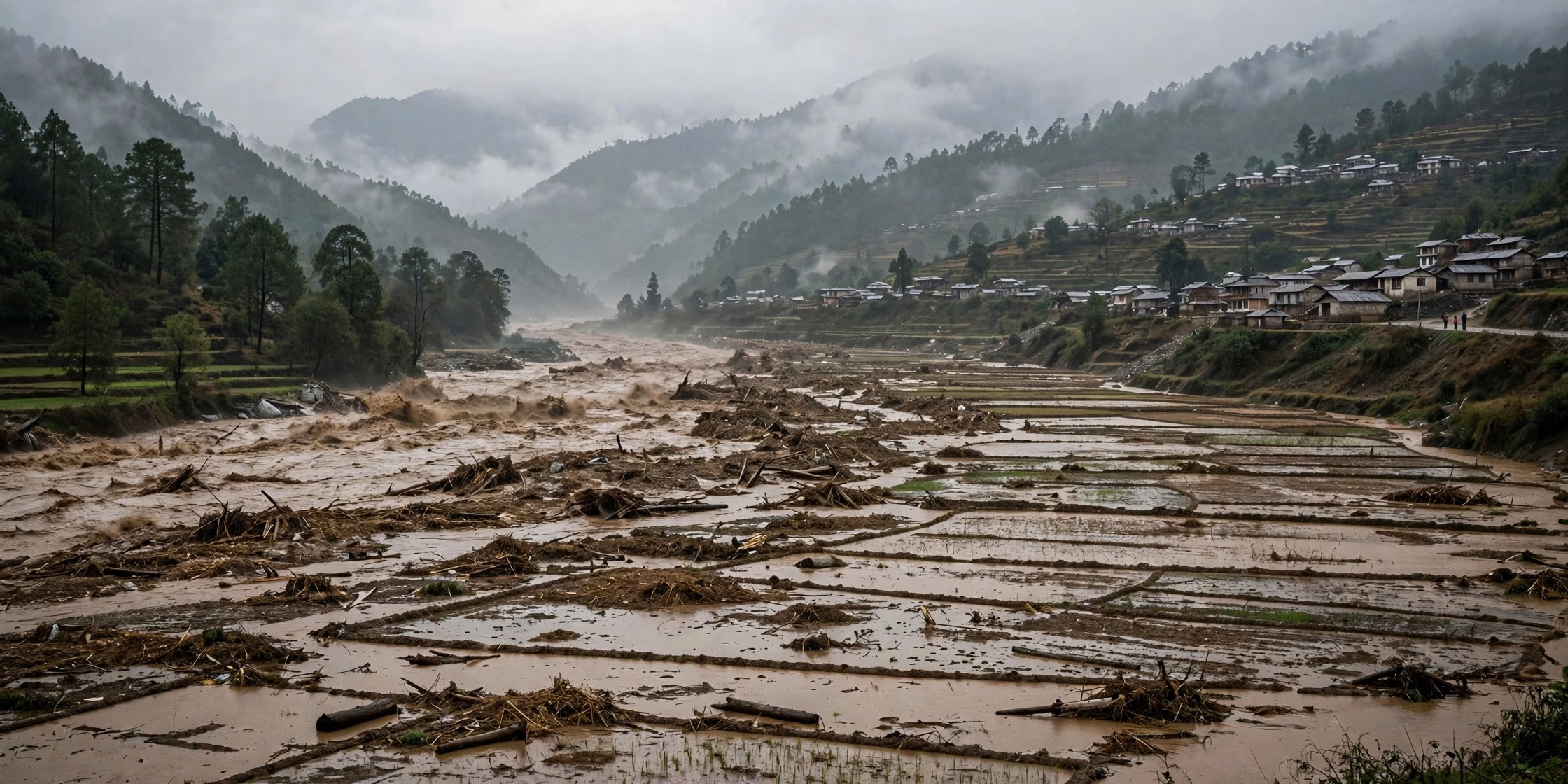
More than 12,000 people have been evacuated in West Bengal after a glacial lake outburst in Bhutan sent floodwaters surging down the Sankosh River towards India, triggering high alerts in northern West Bengal and Assam. The evacuation, one of the largest flood-related operations in the region this year, is a stark reminder of how a disaster in the high Himalayas can become an emergency in the plains within hours.
The outburst occurred at Shintaphu Lake in Bhutan’s Gasa district on 29 October, when the moraine dam holding back the glacial lake gave way. Water rushed downstream into the Sankosh, a river that flows from Bhutan into India, and authorities on both sides of the border moved quickly to warn riverside communities and move people to higher ground.
In West Bengal, district administrations in the northern districts evacuated riverside villages as the river rose, setting up relief shelters and deploying disaster-response teams. The scale of the evacuation reflects the speed with which glacial floodwaters travel: unlike monsoon floods, which build over days, an outburst flood arrives as a sudden surge, leaving little time for a graduated response.
Assam was also placed on alert, with officials monitoring the river’s course and preparing for the water to reach downstream districts. The Sankosh joins the Brahmaputra system, and authorities have been tracking water levels at multiple points to anticipate where the surge might cause damage.
Glacial lake outburst floods, known as GLOFs, have become one of the most closely watched hazards in the Himalayas. As glaciers retreat in a warming climate, meltwater collects in lakes held back by loose walls of rock and ice. When those walls fail — through pressure, an avalanche, or an earthquake — the result is a wall of water, debris and sediment that can devastate everything in its path.
Bhutan, with its steep valleys and numerous glacial lakes, is among the most exposed countries in the region, and India has worked with Thimphu on monitoring and early-warning systems for precisely this kind of event. The speed of the evacuation along the Sankosh suggests those systems functioned: warnings reached downstream communities in time for a large-scale movement of people before the worst of the water arrived.
The human cost of such evacuations is nonetheless severe. Families leave homes, livestock and crops behind, often with only what they can carry, and return to find fields silted, houses damaged and belongings destroyed. Relief operations now face the task of providing food, shelter and medical care while engineers assess embankments, bridges and roads for damage.
The episode also carries a longer-term warning. Scientists have identified hundreds of potentially dangerous glacial lakes across the Himalayas, and the risk is rising as warming accelerates glacier melt. Each event like the Shintaphu outburst strengthens the case for investment in monitoring, early warning and cross-border coordination, since rivers do not stop at national boundaries.
For the evacuated families of northern Bengal, the immediate question is when the river will recede enough for them to return, and what they will find when they do. For policymakers in Delhi, Thimphu and the state capitals, the question is broader: how to live with a hazard that is becoming more frequent, and how to ensure that the next outburst is met with warnings that are earlier, evacuations that are smoother, and losses that are smaller.
