

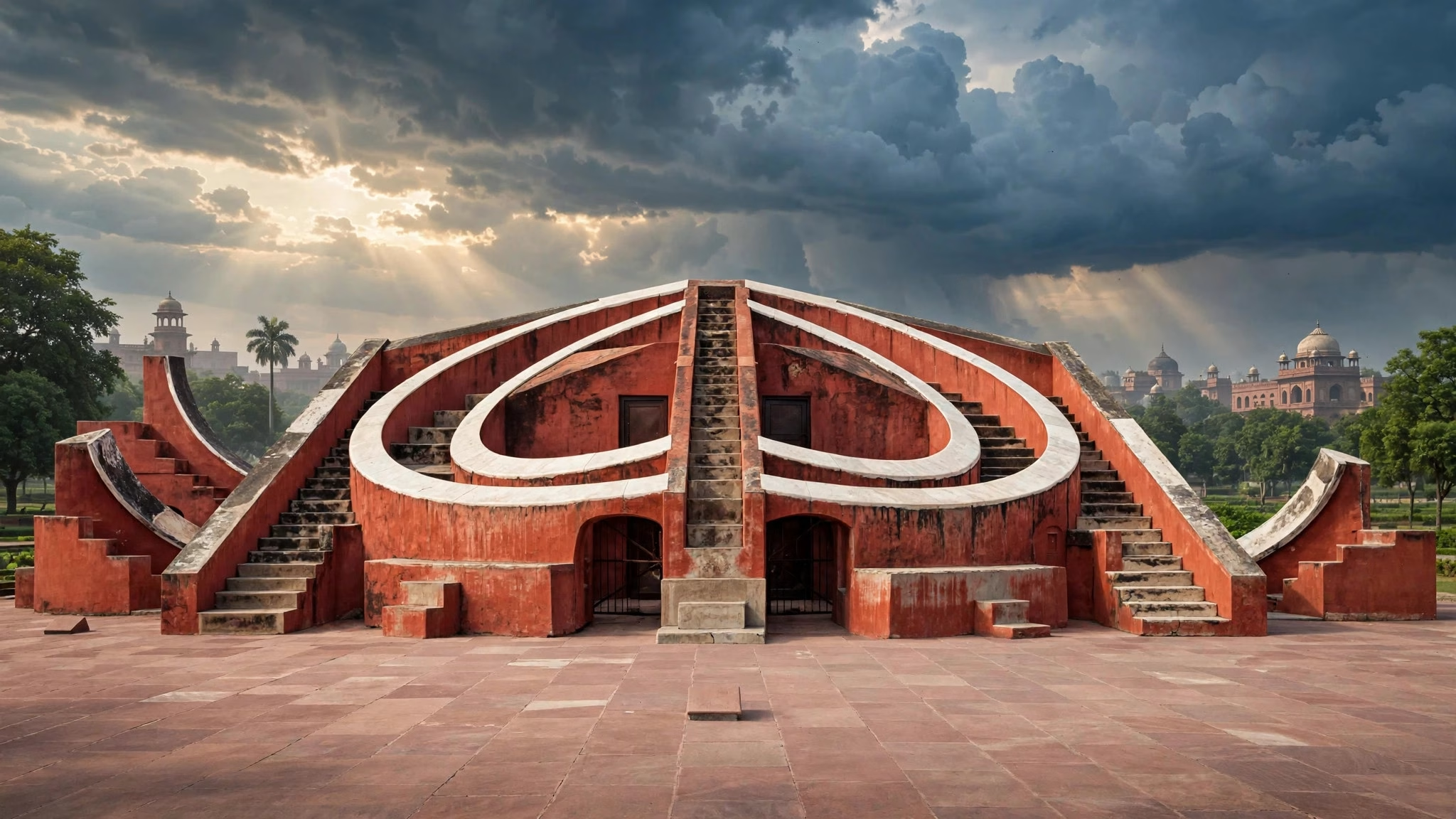
NEW DELHI: The capital’s most famous protest address is about to go quiet. Delhi Police Commissioner Anurag Kumar issued a standing order on October 11 denotifying Jantar Mantar as a designated site for protests and demonstrations, ending the decades-long run of the stretch of road beside the observatory as the country’s default stage for dissent. In its place, three new venues have been designated: Ramlila Maidan, Burari Ground and CBD Ground in East Delhi.
The order states that the Union Ministry of Home Affairs had constituted a committee “to examine alternative proper venues for citizens’ right to organise protest/demonstrations in place of the existing ‘designated site’.” Based on the committee’s recommendations, Jantar Mantar was denotified, the order said, adding that it comes in partial modification of the earlier Standing Order No. L&O/48/22 dated April 28, 2022. A detailed and revised standard operating procedure for organising protests at the three venues will be issued separately.
The timing is hard to miss. The order comes amid heightened security arrangements in the national capital following repeated calls by political parties, youth groups and other organisations to gather at Jantar Mantar. The protest stretch — a section of road connecting Parliament Street and Ashoka Road in the high-security New Delhi district — has hosted landmark agitations over the decades, from anti-corruption movements to student and farmer mobilisations.
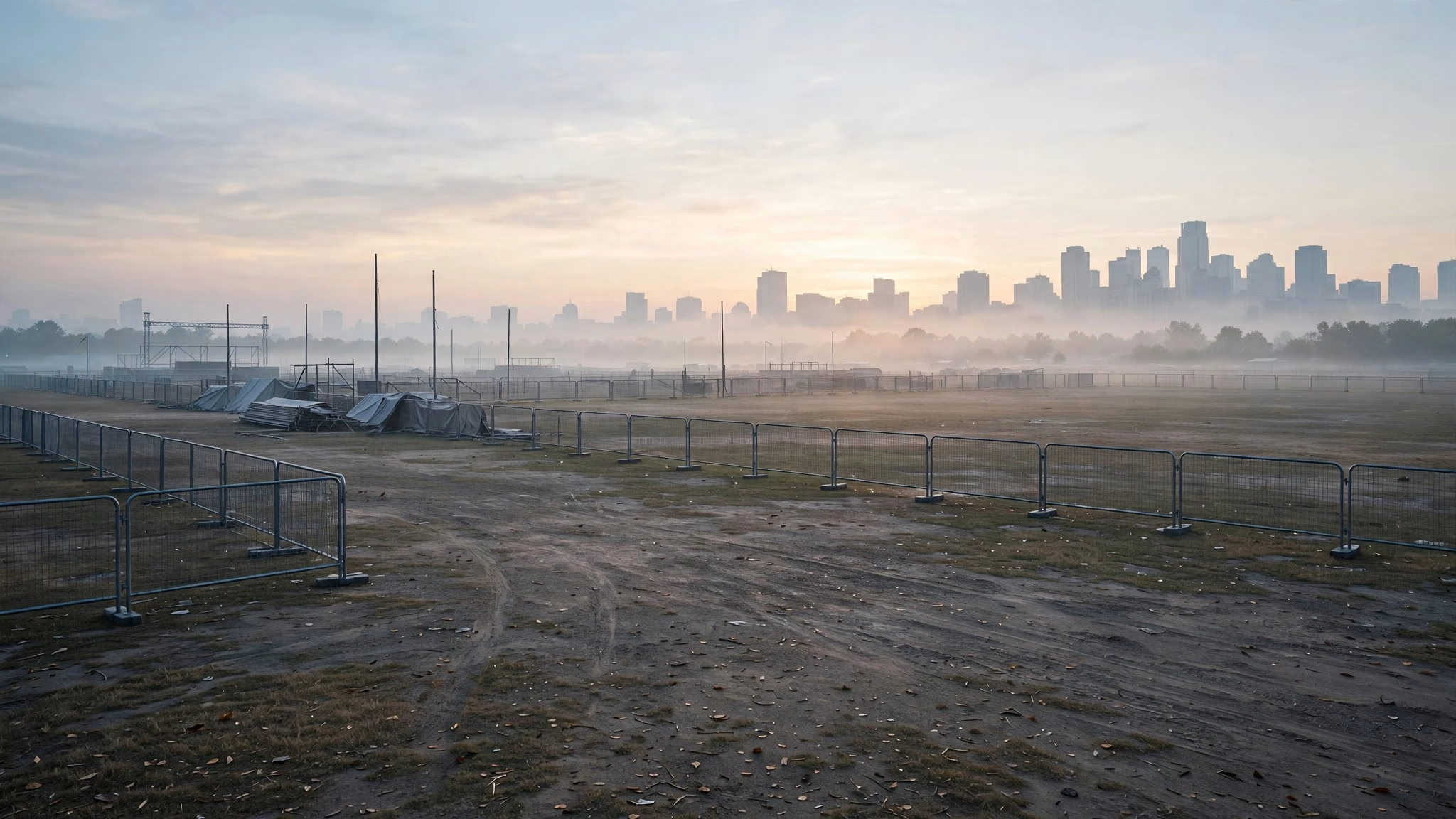
The immediate fallout is practical, and expensive. Ramlila Maidan, the marquee alternative, is booked through the Municipal Corporation of Delhi’s horticulture department, and protesters say a day’s booking runs to roughly Rs 1.21 lakh, alongside a mandatory no-objection certificate from the police. Jantar Mantar required no payment of this kind. Civic officials note that a small portion of the maidan is free for protests and gatherings, but it accommodates barely 150 people — a fraction of most demonstrations. And with Dussehra and Diwali approaching, officials report no dates available until late December, when the festive calendar eases.
The geography of protest is shifting too. Ramlila Maidan sits about four kilometres from Jantar Mantar in the Central District; the CBD Ground in East Delhi is 12 to 13 kilometres away, and Burari Ground in North Delhi is nearly 21 kilometres out. Ramlila Maidan is a busy commercial pocket flanked by hospitals and the municipal corporations’ headquarters, where large gatherings routinely force traffic diversions — a 2014 rally there caused gridlock stretching nearly four kilometres to ITO, officials recalled.

The legal test begins today. The Delhi High Court is set to hear a plea on the denotification on October 13, and rights groups have already framed the move as the monetisation of dissent: a right that once cost nothing now demands a six-figure booking fee, an NOC, and months of waiting. The police, for their part, have leaned on the Home Ministry committee’s recommendations and the security argument — that repeated agitations had left the administrative nerve centre of the capital paralysed.
What happens at the three venues will be shaped by the SOP that Delhi Police has promised but not yet released. Until then, the capital’s protesters face a thinner calendar, a pricier ground, and longer commutes to make their voices heard. Jantar Mantar the road remains; Jantar Mantar the protest site is, for now, history.
