

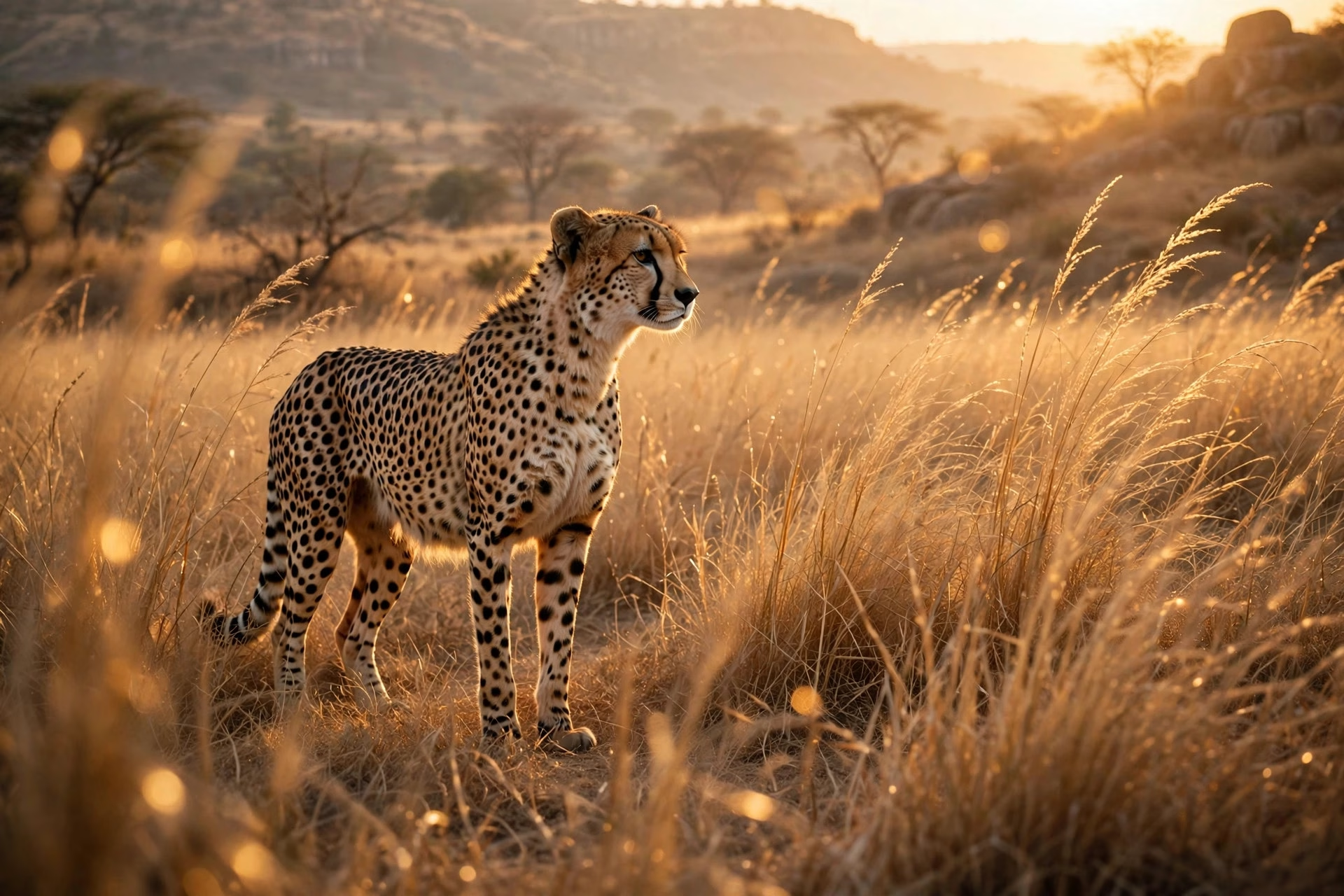
SHEOPUR: An eight-month-old cub of Aasha — the Namibian cheetah that is among the most closely watched mothers at Kuno National Park — was found dead on Monday, officials said, in a fresh blow to India’s ambitious cheetah reintroduction programme. The cub had gone missing during routine morning monitoring, and a search team later recovered its body. The cause of death is not yet known; a post-mortem examination is being carried out.
Aasha, translocated from Namibia in the first wave of the programme, had raised five cubs — a litter widely celebrated as evidence that the big cats were settling into Indian terrain. Forest officials said the remaining four cubs are healthy and continue to be tracked. The cub’s age, eight months, places the loss in a difficult window: old enough to roam with its mother, but still dependent and vulnerable to the many hazards of a large protected landscape.
Project Cheetah has known mortality before, and the programme’s leadership has long maintained that losses in the early years were priced into the design. India’s cheetah population now stands at 59 — 53 at Kuno, including 40 India-born cubs; four at Gandhi Sagar; and two at Veerangana Durgavati. The death trims a population that only recently crossed a symbolic milestone of sustained natural breeding on Indian soil, the very outcome the project was designed to achieve.
Wildlife experts caution against reading any single mortality as a verdict on the programme. Cub mortality in the wild is naturally high — in African populations, a significant share of cubs do not survive their first year, claimed by predators, disease or injury. What matters, biologists say, is whether the surviving population can keep breeding at a pace that outruns losses. On that measure, the 40 India-born cubs at Kuno represent the programme’s strongest argument that the experiment is working.
But the optics remain difficult. Each death at Kuno arrives with scrutiny, and this one — involving a cub of one of the programme’s best-known mothers — will inevitably invite comparisons with earlier cub deaths that once raised questions about veterinary protocols and habitat readiness. Officials have sought to draw a line under those episodes, insisting that monitoring systems, veterinary response and quarantine procedures have been materially strengthened since the programme’s turbulent first year.
The post-mortem findings will be closely watched. Until they are released, speculation serves no one — but forest department sources say the examination will cover disease, injury and any sign of conflict with other predators, including leopards that share parts of the landscape. The results will feed into the regular review process overseen by the steering committee of wildlife experts that advises the programme.
For Madhya Pradesh’s forest administration, the incident is also a communications test. Kuno has become the public face of the reintroduction effort, and every milestone and setback there is amplified far beyond Sheopur district. Officials have promised transparency on the findings, recognising that the programme’s credibility — with Parliament, the courts and the public — rests on candour about what goes wrong, not only on celebrating what goes right.
The coming months will be critical. With 59 cheetahs across three sites, the project is entering a phase where dispersals, territory conflicts and the challenges of second-generation cubs will multiply. Conservationists say the measure of Project Cheetah will not be a mortality-free record — no wild population has one — but whether India builds the scientific and institutional capacity to manage a free-ranging cheetah population for decades. Monday’s loss is a reminder of how unforgiving that task is.
