

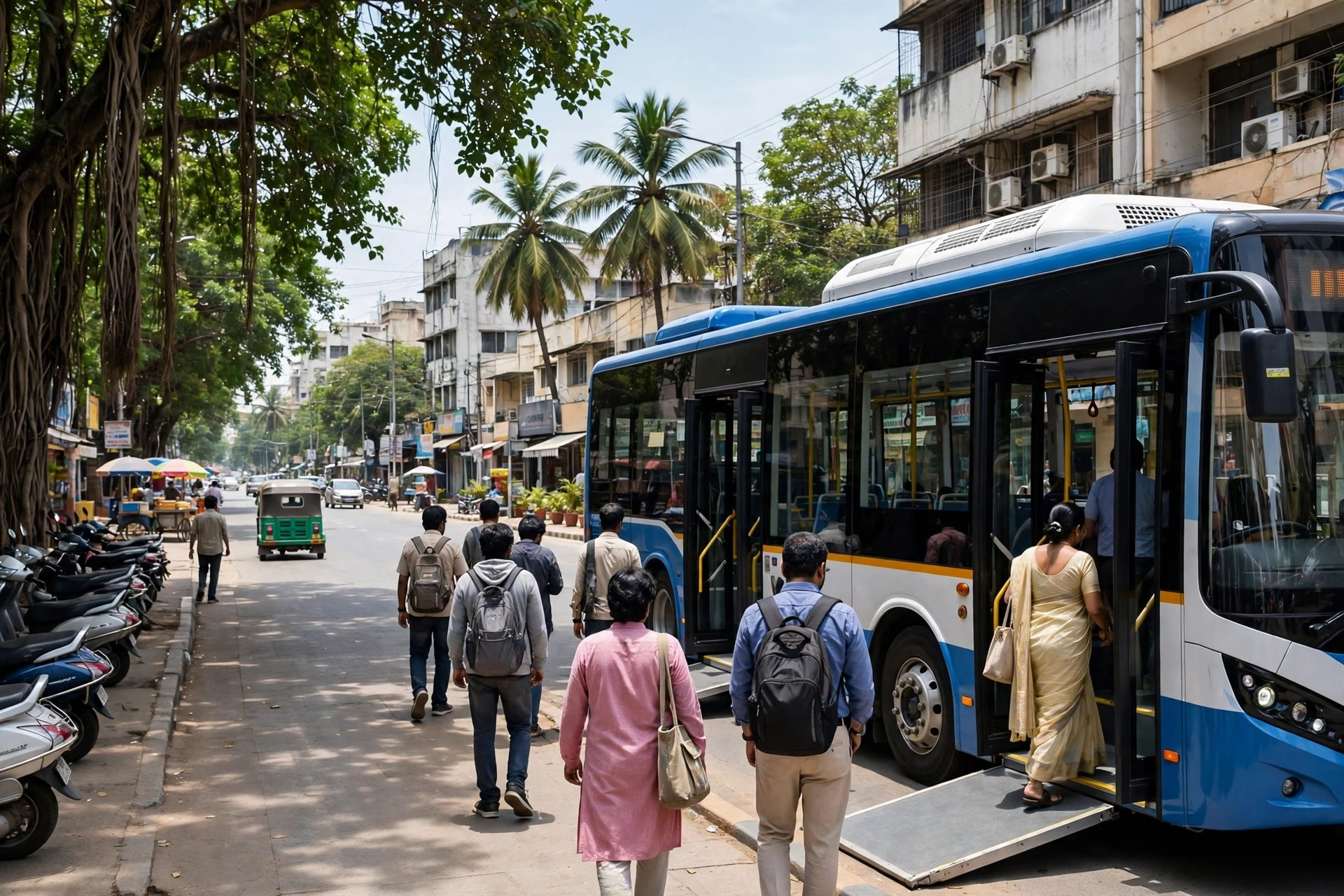
Tamil Nadu Chief Minister C Joseph Vijay on Monday approved the purchase of 1,000 air-conditioned electric buses for the Chennai Metropolitan Transport Corporation, in one of the largest single electric-bus orders by any Indian city transport utility.
The buses will be procured under the Gross Cost Contract model, in which a private operator supplies, maintains and runs the buses and is paid per kilometre, while the transport corporation retains control of routes and fares. The model has become the standard way for Indian cities to electrify their fleets without bearing the full upfront cost of the vehicles and charging infrastructure.
For Chennai, the order is a significant step. The Metropolitan Transport Corporation runs one of the largest bus networks in the country, carrying lakhs of passengers every day across the city and its suburbs. Replacing a thousand diesel buses with air-conditioned electric ones would cut both emissions and the city’s fuel bill, while giving commuters a cooler, quieter ride.
The decision also fits a wider pattern. Indian cities have been moving steadily towards electric public transport, pushed by central government incentives, falling battery costs and the sheer pressure of urban air pollution. Delhi, Mumbai, Bengaluru and Ahmedabad have all placed large electric-bus orders in recent years. Chennai’s 1,000-bus clearance puts it firmly in the same league.
There are practical questions still to be answered — where the buses will be charged, how the depots will be upgraded, and how quickly the first vehicles can hit the road. Electric buses need charging infrastructure that diesel buses do not, and the rollout will have to be phased as depots are readied. The Gross Cost Contract structure helps here, since the operator takes on much of that work.
For the daily commuter, the promise is simpler: air-conditioned buses that do not belch diesel smoke, run more quietly through residential streets, and cost no more to ride than the buses they replace. In a city where the bus is the backbone of public transport for the working majority, that is not a small thing.
The order is also a statement of intent from the Vijay government, which has made clean transport and urban infrastructure a visible part of its agenda. A thousand electric buses is a number that will be hard to miss on Chennai’s roads — and, if the rollout goes to plan, hard to argue with.
The experience of other Indian cities suggests the transition, while not without teething troubles, pays off quickly in lower running costs and cleaner air. As Chennai’s fleet turns electric, commuters, operators and the city’s air will all feel the difference — one quiet, air-conditioned bus at a time.
