

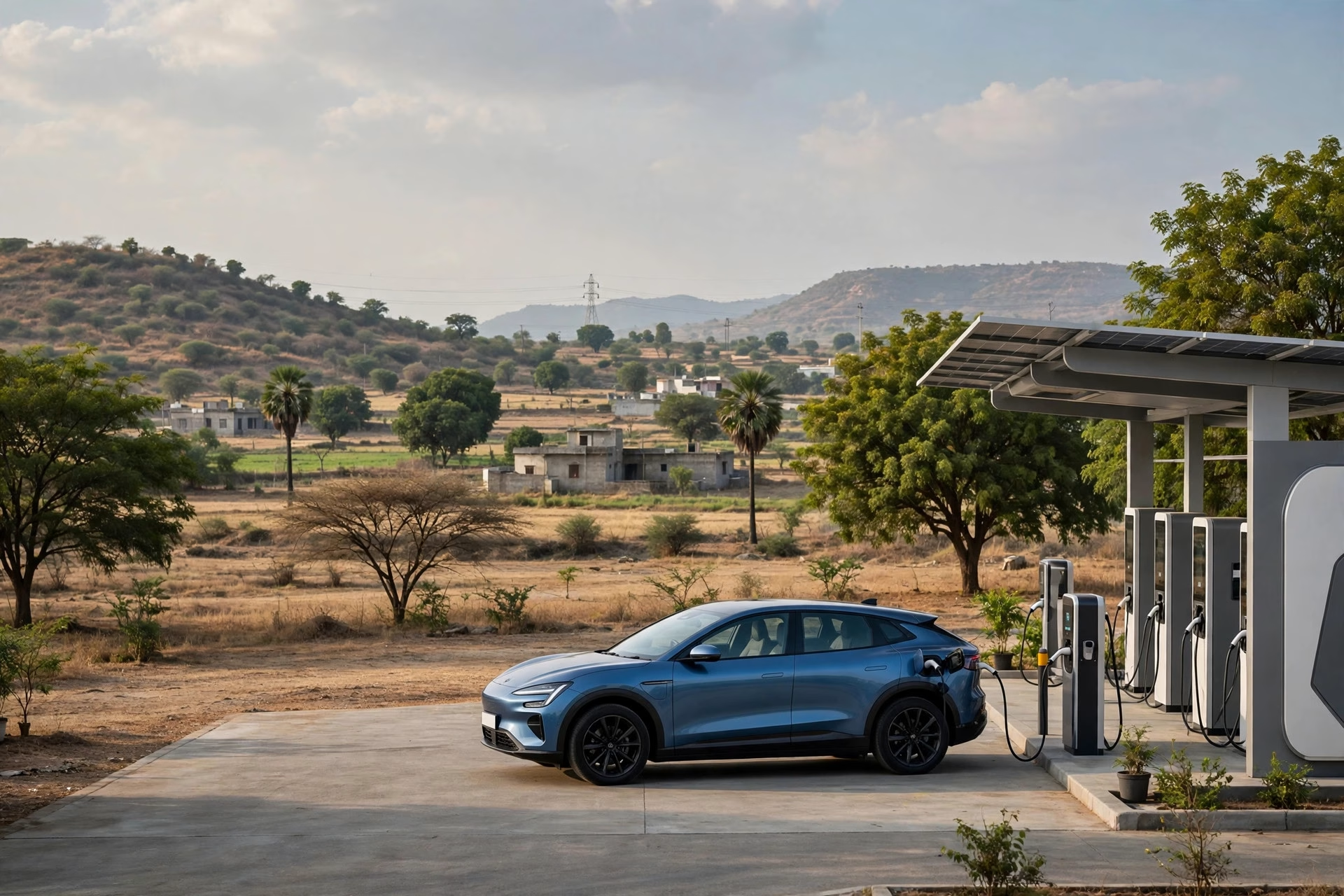
The government is considering a new advanced electrified vehicles category for passenger cars, a move that would widen the country’s green mobility push beyond pure battery electrics to include range-extended electric vehicles and plug-in hybrids. The proposal, reported on Friday, 6 November, would cover cars with batteries of at least 15 kilowatt-hours.
The significance of the 15 kWh threshold is that it separates serious electrified vehicles from mild hybrids that offer only marginal fuel savings. A battery of that size can power a car for a meaningful distance on electricity alone, and the category would bring together pure EVs, range-extended EVs that carry a small petrol engine as a generator, and plug-in hybrids that can be charged from the grid.
For the industry, the move would be a recognition of how the market has actually evolved. Pure electric cars remain a small share of Indian passenger vehicle sales, held back by price, range anxiety and charging infrastructure. Hybrids and range-extended vehicles, which offer most of the benefits of electric driving without the same dependence on charging networks, have grown faster — and manufacturers have been asking for a policy framework that treats them as part of the transition rather than as a footnote to it.
The proposal comes as the government reviews its broader approach to clean mobility. India has set ambitious targets for electric vehicle adoption, and the new category could sit alongside existing incentives, giving manufacturers a clearer path to plan their product lines. It could also help the country build a domestic supply chain for larger batteries, which is the most expensive and most strategically important component of any electric vehicle.
Details are still being worked out, including what benefits — if any — the new category would carry, and how it would interact with existing schemes for electric vehicles. The automobile industry will watch the final contours closely: the difference between a category that carries real incentives and one that is merely a label is the difference between a policy that changes investment decisions and one that does not.
For consumers, the immediate effect would be more choice. A market that today offers a binary between petrol cars and pure electrics would gain a middle path — vehicles that can run on electricity for daily use and on petrol for long journeys, without the premium that pure electrics still command. That middle path may be where India’s electric transition actually happens.
