

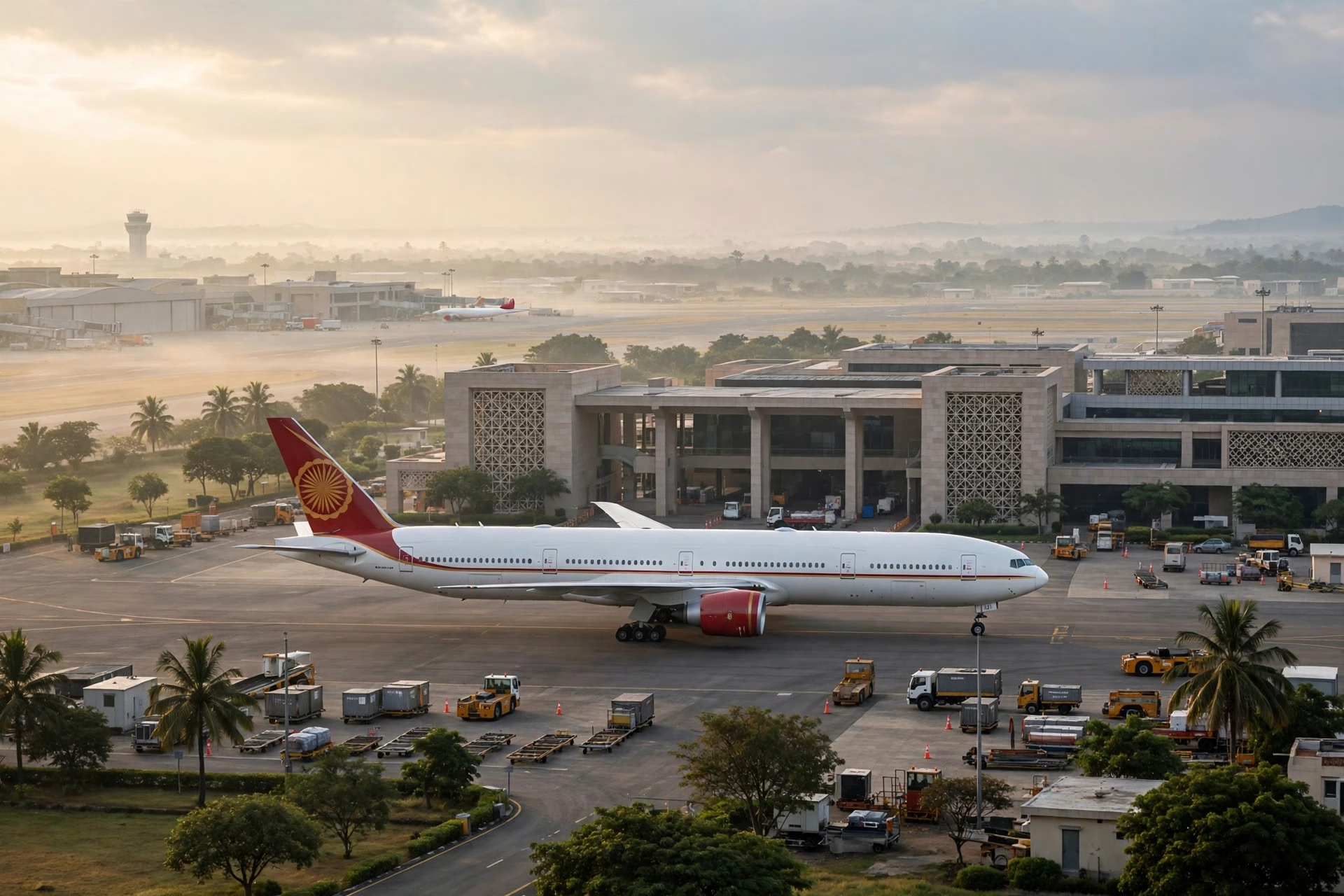
Air India has proposed a levy on aviation fuel purchased in India by domestic and foreign airlines to offset the costs of Pakistan’s airspace closure, which has forced Indian carriers to fly longer routes to Europe, North America and West Asia. The proposal, reported on Friday, 6 November, is the airline’s most direct attempt yet to recover the mounting cost of a disruption that has now lasted for months.
Pakistan closed its airspace to Indian aircraft earlier this year, and the detours have added flying time, fuel burn and crew costs to every long-haul service that would normally cross Pakistani territory. For Air India, which operates the largest long-haul network of any Indian carrier, the bill has been substantial — and it is one the airline has so far absorbed itself.
The proposed levy would apply to aviation turbine fuel bought in India by all airlines, domestic and foreign alike, spreading the cost across the industry rather than leaving it with the carriers most affected. The logic, as the airline sees it, is that the closure is a national problem, not a commercial one, and the remedy should be shared. Whether the government and other airlines accept that logic is another matter.
Foreign carriers, which are not subject to the airspace ban and continue to fly the shorter routes, would be asked to pay for a problem they do not have. Their reaction is likely to be hostile, and the proposal will need government backing to go anywhere. The civil aviation ministry has not yet commented on the idea.
The backdrop is a difficult one for Indian aviation. Fuel is already the single largest cost for airlines, and Indian carriers pay some of the highest aviation fuel prices in the world because of state taxes. Adding a levy on top would raise ticket prices at a time when demand is strong but margins are thin, and it would test the government’s willingness to intervene in an industry it has spent years trying to deregulate.
Air India’s proposal is also a measure of how long the airspace closure has lasted. What began as a crisis measure has become a semi-permanent feature of the operating environment, and the industry is now looking for structural solutions rather than waiting for a political resolution. The levy is one such solution. Whether it is the right one will be debated in the weeks ahead — by the government, by rival airlines, and by the passengers who would ultimately pay for it.
