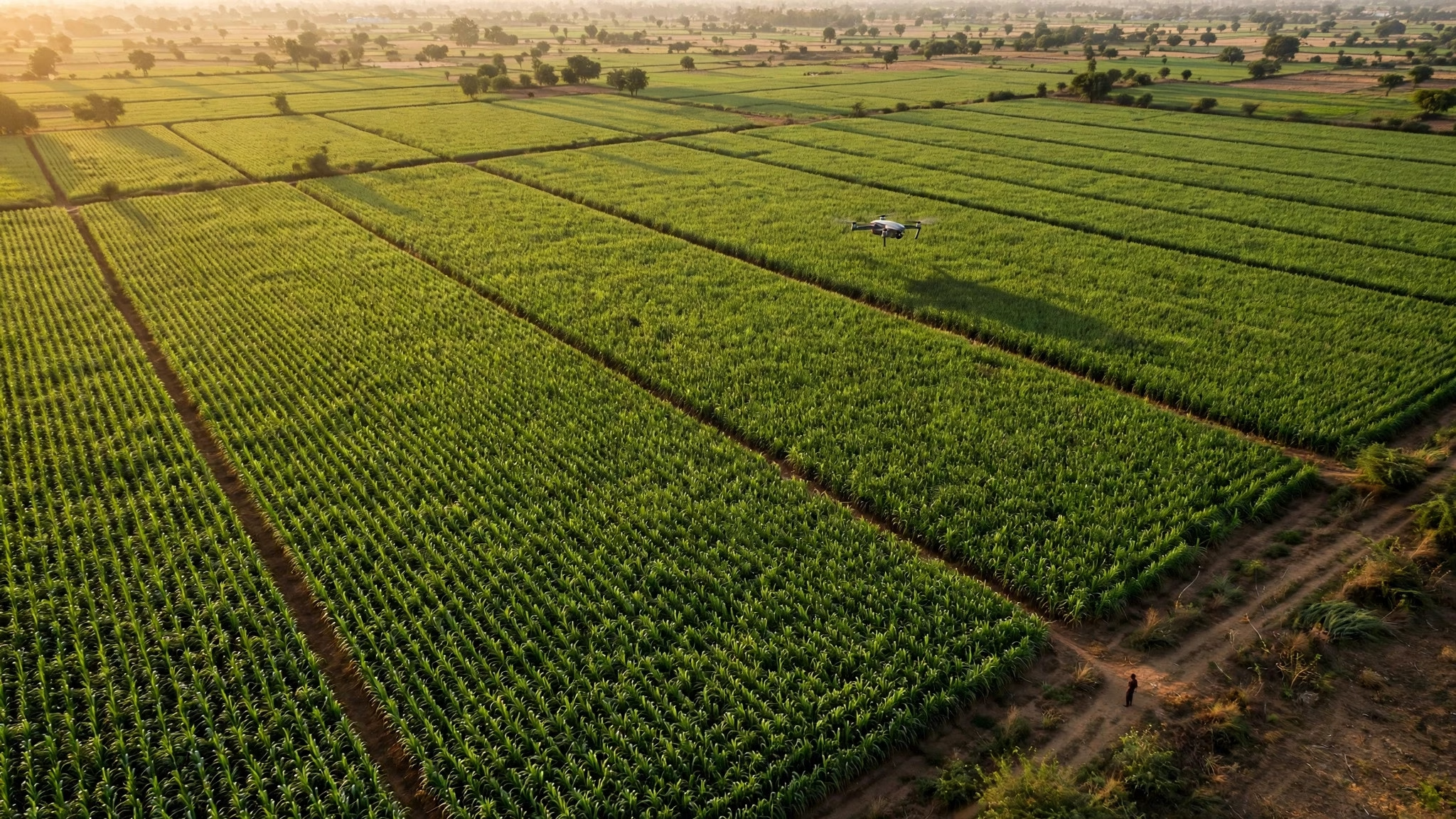
Google has unveiled a sweeping set of artificial-intelligence initiatives aimed at India, covering crop science, classroom education and the country’s vast small-business economy. The announcements, detailed in a Google blog post dated October 15, span open-access agricultural research, a $15-million commitment to micro, small and medium enterprises, and a rapidly expanding programme to train the country’s teachers in AI tools.
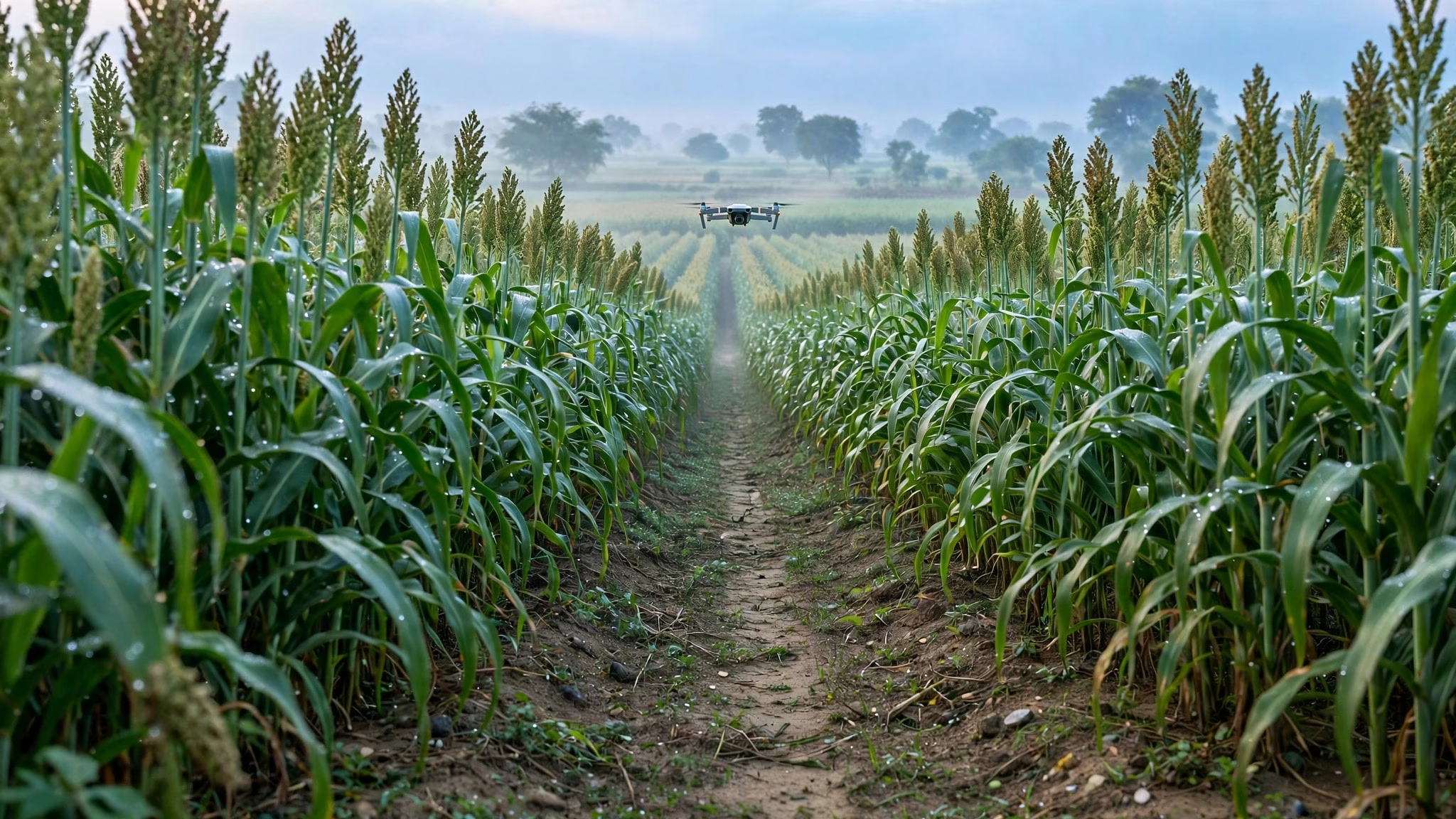
At the heart of the agriculture push is a landmark collaboration on one of India’s hardiest crops. Google DeepMind and Google.org, working through the AI Collaborative for Food Security, have joined hands with the Hyderabad-based International Crops Research Institute for the Semi-Arid Tropics (ICRISAT), the HudsonAlpha Institute for Biotechnology and the University of Washington’s Department of Genome Sciences. Together, they will create the first Global Dryland Sorghum Pangenome — a genetic atlas of jowar drawn from ICRISAT’s genebank of more than 44,000 distinct seed samples gathered from over 90 countries, including India.
The pangenome will pair genetic analysis with machine learning to identify promising plant combinations, and the results will be released as an open-access global public good. Sorghum sustains the nutrition of more than 500 million climate-vulnerable people, according to Google DeepMind’s Abi Ramanan, and the atlas is designed to help breeders develop varieties better suited to hotter, drier growing conditions.
DeepMind is also establishing a three-year postdoctoral fellowship at ICRISAT — its first fellowship in India and its first anywhere outside the United Kingdom — to build genome-characterisation tools for chickpea, groundnut and pigeon pea (arhar/toor dal), staple pulses of the Indian plate.
On the economic-inclusion front, Google.org has committed $15 million to The/Nudge, the Bengaluru-based nonprofit, to build scalable AI tools that give small businesses access to formal credit, market discovery and compliance support. The grant was announced in New Delhi on October 14 and will be disbursed through an open call for proposals. The programme includes a multilingual, voice-led platform to train local talent in Tier 3 and Tier 4 towns. India is home to more than 90 million MSMEs employing over 345 million people, and Google India vice president and country manager Preeti Lobana said the effort is aimed at extending the formal economy’s reach to the smallest enterprises.
Education forms the third pillar of the package. Google’s AI Educator Series has already trained more than 80,000 educators since May, and the programme is now being extended to Bihar, Madhya Pradesh and Sikkim as well as the Ministry of Skill Development. A free, online, self-paced version is available in English, with Hindi, Marathi, Telugu, Assamese, Odia and Punjabi versions set to arrive later this month. In addition, 100 Atal Tinkering Labs will be established through ATL Saathi, a Gemini-powered initiative, and Google has partnered with IIT Bombay and the Office of the Principal Scientific Adviser on further research outreach.