

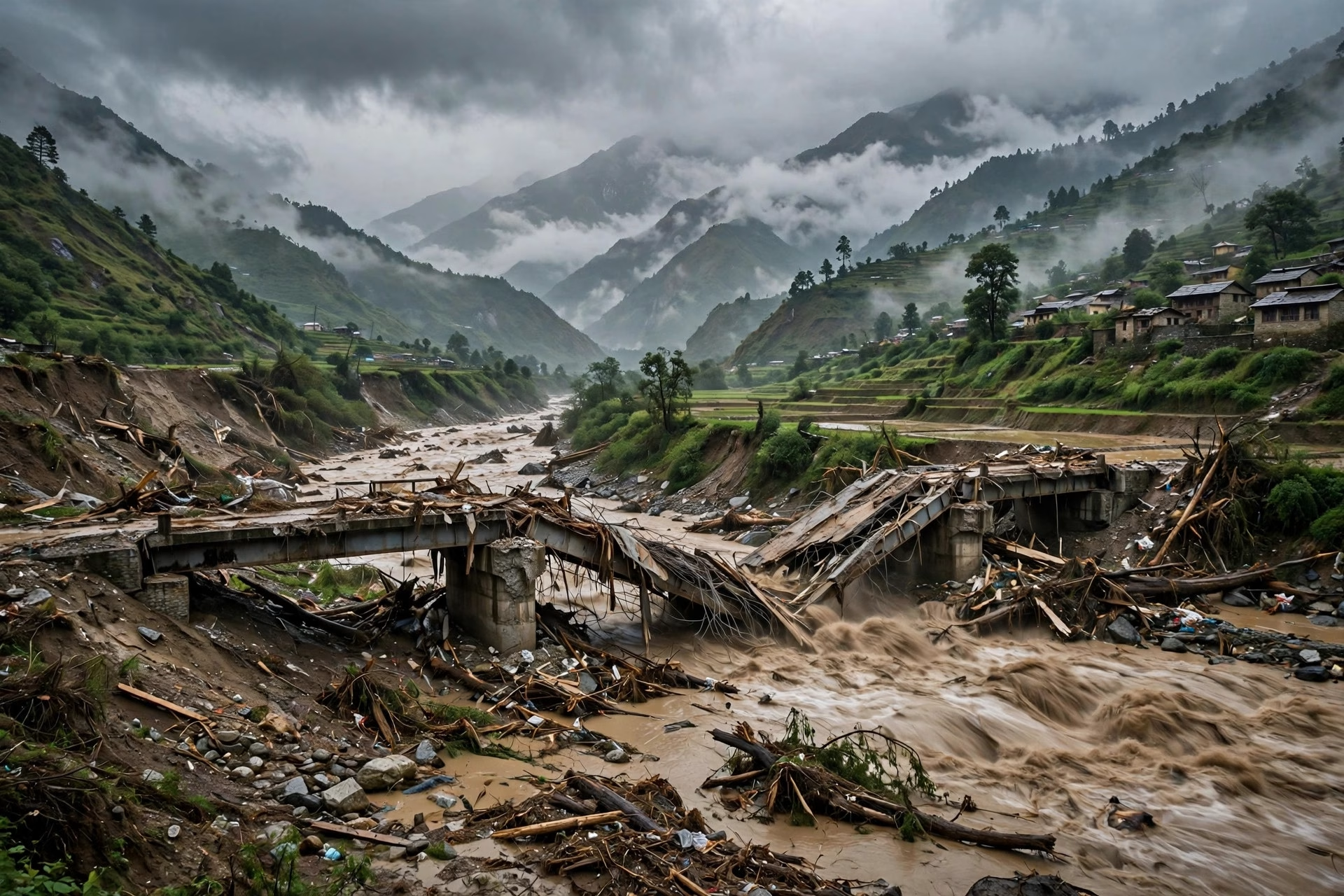
Kathmandu: A debris-laden flash flood in the Budhi Gandaki River swept away more than 35 houses and several bridges in Nepal’s Gorkha district on Sunday, October 11, 2026, in a disaster officials say began with a landslide that temporarily dammed the river high in the mountains.
Preliminary reports point to a landslide above Siuribas — between Lokpa and Chumling in Chumnubri Rural Municipality-6 — that blocked the Budhi Gandaki and formed a temporary lake. When the natural dam breached, the stored water released in a surge that witnesses described as arriving with terrifying speed. The river’s water level reportedly rose from around two metres to roughly 8.5 metres — a fourfold jump that turned a mountain river into a wall of mud, rock and debris.
Five people from Gorkha have been reported missing, officials said, while 49 people were rescued from the flood’s path. The infrastructure damage is severe: two motorable bridges and two suspension bridges were destroyed, cutting off riverside settlements; a hydropower project sustained damage; and — in a cruel detail that speaks to the flood’s ferocity — a hydrological monitoring station meant to warn of such surges was itself swept away by the water.
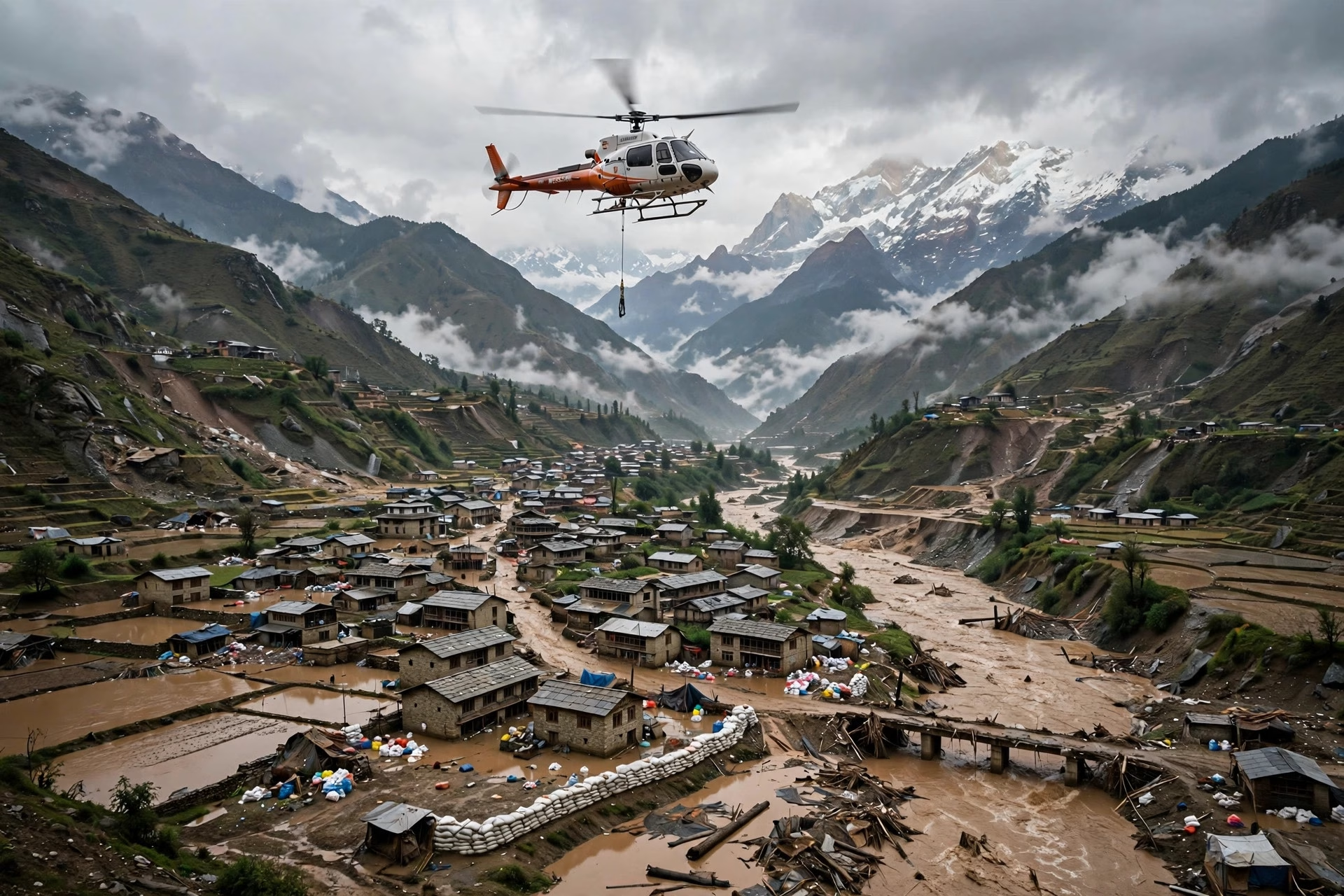
Army Airlift and a Tourist Evacuation
The Nepal Army airlifted 36 people to safety on Sunday, and authorities urged all residents along the Budhi Gandaki to move to higher ground as a precaution against further surges. District officials warned that unstable slopes upstream could trigger secondary damming, and rescue teams continued searching for the missing as night fell.
The disaster has also stranded travellers. Around 211 foreign tourists in the Manaslu Conservation Area — a popular trekking circuit that draws thousands each autumn — were being evacuated as trails and bridges along the route were damaged. The evacuation added an international dimension to a crisis unfolding in one of Nepal’s most remote districts.
The timing has compounded the suffering. The flood struck just as Dashain, Nepal’s biggest festival, had begun — a period when families gather and travel home. And it comes only weeks after catastrophic floods and landslides on August 26 killed more than 1,400 people across Nepal, a toll that had already made 2026 one of the deadliest monsoon seasons in the country’s memory.
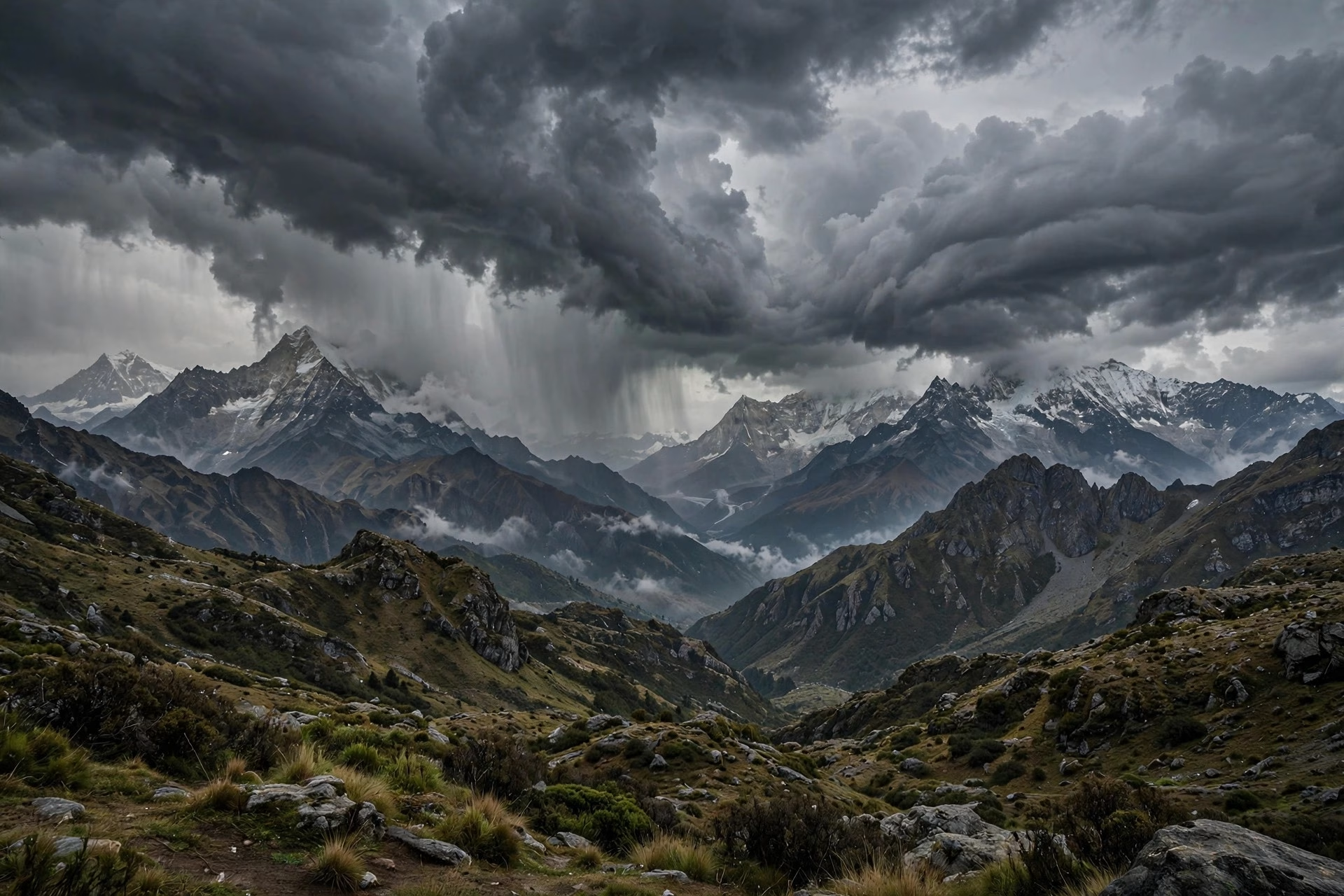
A Pattern That Keeps Repeating
Hydrologists have long warned that glacial valleys like the Budhi Gandaki are uniquely vulnerable to landslide-dammed outburst floods — a risk amplified by unstable post-monsoon slopes and, increasingly, by the climate-driven retreat of Himalayan glaciers. Sunday’s breach, in which a natural dam formed and failed within hours, is a textbook example of the phenomenon.
For Gorkha — the epicentre of the devastating 2015 earthquake and a district still rebuilding a decade on — the flood is another chapter in a long ledger of natural disasters. As rescue operations continue and engineers assess whether bridges and the damaged hydropower plant can be restored before winter, the immediate question is simpler: how many more slopes above the Budhi Gandaki are waiting to slide.
