

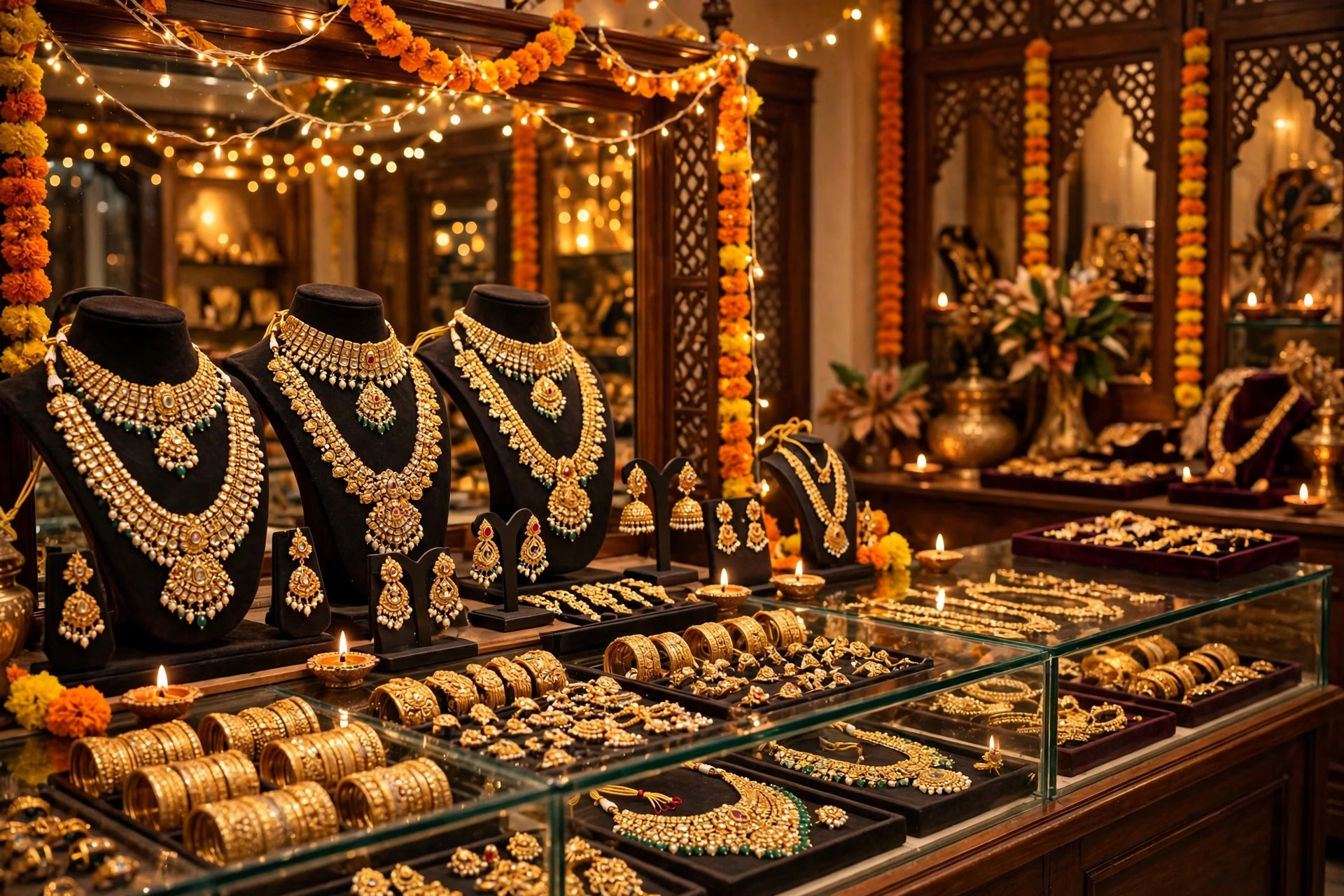
Gold is trading at its highest ever level on a Dhanteras morning, with the benchmark 24-karat rate at Rs 1,46,085 per 10 grams on Friday, 6 November, as millions of households mark the first day of Diwali with the traditional purchase of the yellow metal. The 22-karat rate, the purity most jewellery is made of, stood at Rs 1,33,814 per 10 grams, while silver touched Rs 1,90,941 a kilogram in the Zaveri Bazar reference market in Mumbai.
The rates are wholesale bullion-market reference rates, and the price on a jewellery bill will be higher once GST and making charges are added. Even so, the direction is unmistakable: gold has climbed by nearly Rs 6,000 per 10 grams in just two days in the run-up to the festival, and it is roughly 9 per cent dearer than on Dhanteras last year, when 24-karat gold was about Rs 1,27,320 per 10 grams.
Futures told the same story on Thursday. MCX December gold closed the session around Rs 1,45,146 per 10 grams, up 1.33 per cent, with silver at Rs 1,89,021 a kilogram. Global cues have been supportive: COMEX December gold settled near 4,073 dollars an ounce earlier in the week, helped by a softer dollar and the political uncertainty in the United States after the midterm elections.
For buyers, the auspicious window matters as much as the price. Dhanteras falls on the Trayodashi tithi of Kartik, which begins around 10.30 in the morning on Friday and runs into Saturday morning. The Lakshmi-Kuber puja muhurat in Delhi is roughly 6.02 pm to 7.58 pm, though jewellers across the country report brisk footfall from the morning itself, with many families buying early to beat the evening rush.
Jewellers say the pattern of buying has shifted this year. With prices at record levels, many customers are choosing lighter pieces, coins and bars over heavy sets, and a growing number are splitting purchases between physical gold and digital options such as sovereign gold bonds and gold ETFs. Industry watchers note that gold has returned nearly 8 per cent since last Dhanteras, and some brokerages see it testing Rs 1,55,000 by December, though such forecasts are not guarantees.
The festival arithmetic is worth keeping in mind before paying. A 3 per cent GST applies to the value of gold, and making charges, which vary widely by jeweller and design, are charged on top. Hallmarking, now mandatory for gold jewellery, is the simplest check a buyer can make: the BIS hallmark, the purity mark and the jeweller’s identification mark should all be present on the piece.
Silver, often the second purchase of the day, has had its own spectacular run. At nearly Rs 1.91 lakh a kilogram, it is far above the levels of a year ago, and dealers report strong demand for silver coins, utensils and idols of Lakshmi and Ganesha, which are traditionally bought on Dhanteras for the evening puja.
Diwali itself falls on Sunday, 8 November, which means the buying season has two more days to run. For now, the queues outside jewellery stores tell their own story: even at Rs 1.46 lakh, the festival’s oldest tradition is holding firm.
