

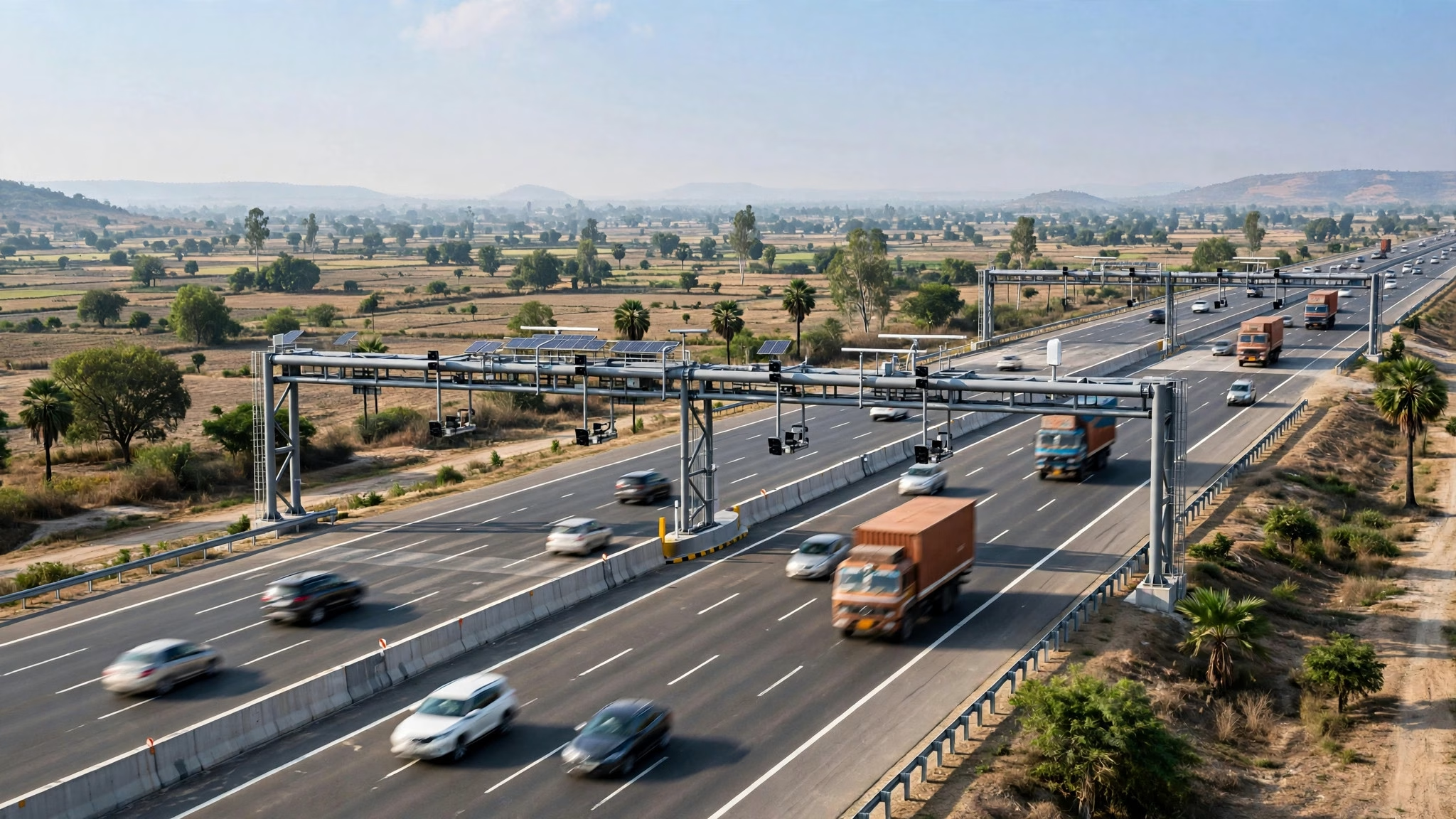
The National Highways Authority of India on Friday released standard design and infrastructure norms for barrier-less multi-lane free flow tolling on national highways of four lanes and more, moving the country a step closer to toll plazas without barriers. The guidelines set out how the new tolling plazas should be designed and built, and are expected to standardise the rollout across the network.
Multi-lane free flow, or MLFF, tolling allows vehicles to pass through toll points at highway speed, without stopping or even slowing down at a barrier. Overhead gantries read FASTags and, where needed, automatic number plate recognition cameras identify vehicles, with tolls deducted electronically. The system is already in use in several countries, and India has been testing it at select plazas.
The new norms matter because toll plazas have long been one of the biggest sources of delay on Indian highways. Even with FASTag, which is now near-universal, vehicles slow down at plazas, and queues form at peak hours. Removing barriers entirely would cut travel time, reduce fuel consumption and lower emissions from idling vehicles, while also cutting the cost of operating plazas.
NHAI’s move follows years of incremental change in tolling. FASTag, introduced nationally in 2021, ended cash collection and dramatically reduced waiting times. MLFF is the next step, and the authority has been working towards it through pilot projects and consultations with technology providers. The standard design guidelines now give highway developers and concessionaires a clear template to follow.
For highway users, the change should be seamless. Vehicles with FASTags will be charged automatically as they pass under gantries, while vehicles without valid tags can be identified by their number plates and charged accordingly, with enforcement through the existing challan system. The guidelines are expected to cover gantry design, camera placement, signage and the back-end systems that reconcile payments.
There are challenges to work through. Number plate recognition must be accurate across the many plate formats in use, and the system must handle vehicles that deliberately evade tolls. NHAI will also need to ensure that the transition does not inconvenience users on stretches where the new system is introduced alongside older plazas.
The release of the norms is part of a wider modernisation of the national highway network, which has expanded rapidly in recent years. As the network grows, the authority is under pressure to make it faster and more efficient, and tolling is one of the most visible parts of the highway experience for ordinary users. If the rollout succeeds, the familiar sight of queues at toll plazas could become a thing of the past.
