

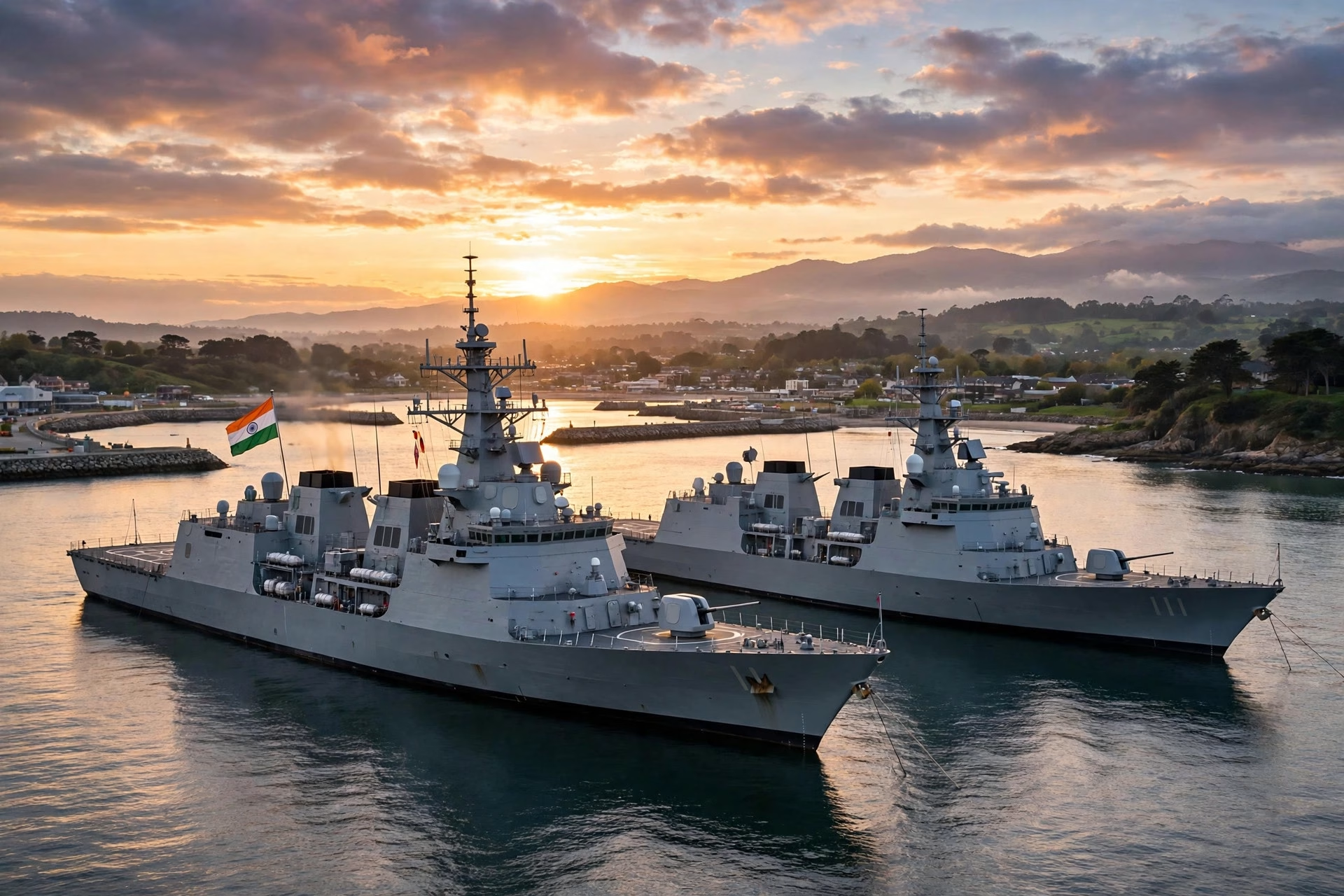
The fifth edition of Tiger Triumph, the tri-service humanitarian assistance and disaster relief exercise between India and the United States, concluded in Visakhapatnam with a closing ceremony on Thursday. Held from October 31 to November 5, the exercise brought together the armies, navies and air forces of both countries for six days of joint training in responding to natural disasters.
The exercise included a Staff Exercise and a Tabletop Exercise, in which officers from both sides planned and rehearsed coordinated responses to large-scale humanitarian crises. This year, the National Disaster Response Force took part for the first time, adding its on-ground rescue expertise to the military planning. The harbour phase in Visakhapatnam saw ships and aircraft from both navies working side by side, while the shore phase tested how quickly relief could be moved from a port to affected communities inland.
Tiger Triumph is the flagship humanitarian exercise between the two countries, and it has grown steadily since its first edition. Its focus is on the unglamorous but vital work of disaster response: moving relief supplies, setting up field hospitals, coordinating rescue teams, and getting aid to people cut off by floods, cyclones or earthquakes.
The choice of Visakhapatnam, headquarters of the Indian Navy’s Eastern Naval Command, reflects the exercise’s maritime dimension. The Bay of Bengal coast is among the most cyclone-prone regions in the world, and the ability of Indian and American forces to work together in the hours after a disaster strikes is a capability both sides value.
For India, the exercise also showcases the growing interoperability between its armed forces and those of the United States, a relationship that has deepened across successive governments. The two countries now hold a range of joint exercises across all three services, but Tiger Triumph is distinct in that its purpose is humanitarian rather than combat-oriented.
The participation of the NDRF is a notable addition. The force is India’s specialist disaster-response agency, and its involvement means the exercise now connects military planning with the civilian rescue machinery that actually reaches affected communities. That link, officers say, is what turns a tabletop plan into a response that saves lives.
As the closing ceremony wound up, both sides described the exercise as a success. In a region where the next cyclone is a matter of when rather than if, the relationships and procedures built over six days in Visakhapatnam may matter far more than any single drill.
