

Air Chief Marshal Ashutosh Dixit took over as the 29th Chief of the Air Staff on Saturday, 1 November, succeeding Air Chief Marshal A P Singh, who retired after 42 years of service in the Indian Air Force. The change of command at the top of the Air Force comes at a time when the service is in the middle of a major modernisation push, with new aircraft inductions, indigenous platforms and air-defence upgrades all competing for priority.
Dixit, a highly decorated fighter pilot, brings decades of operational experience to the post. His career has spanned frontline squadrons, command appointments and senior staff roles, and his elevation follows the established pattern of the senior-most operational commander taking charge of the service. The appointment was announced by the government in advance, ensuring a smooth handover from Singh, whose tenure saw the Air Force navigate a demanding security environment on two fronts.
The outgoing chief, Air Chief Marshal A P Singh, hangs up his uniform after 42 years that took him from a young fighter pilot to the head of the service. His tenure was marked by a focus on operational readiness and the induction of new capabilities, and his farewell was marked by the traditional ceremonies of the service, including a guard of honour and the handing over of the baton of command.
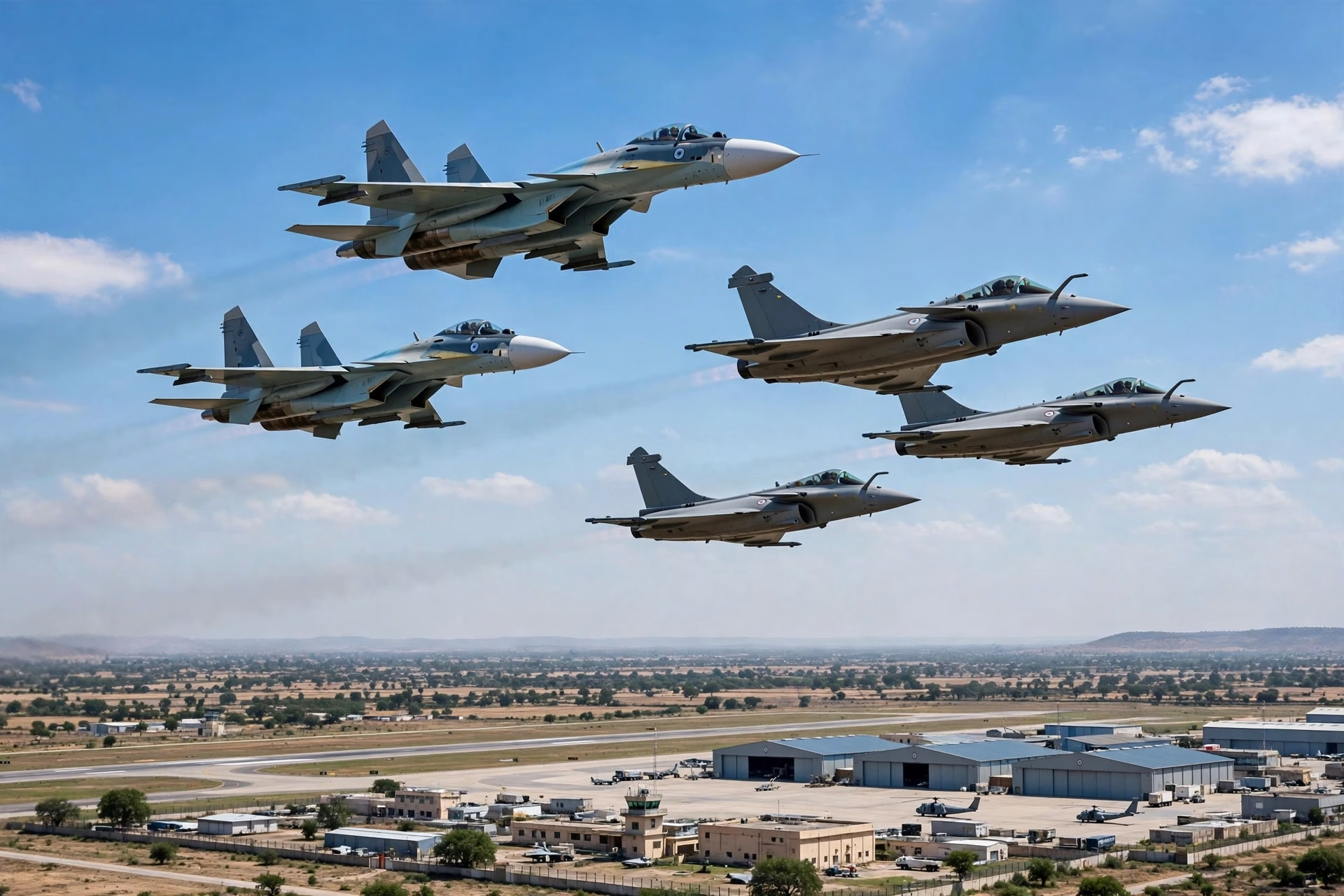
For Dixit, the in-tray is formidable. The Air Force’s squadron strength remains below its sanctioned level, and the timely induction of indigenous platforms such as the Tejas Mk-1A, along with the long-running search for additional multi-role fighters, will dominate his tenure. The service is also deepening its integration with the Army and Navy under the theatre-command reforms, a structural change that will test the leadership of all three services.
Air power has also taken on a sharper edge in India’s strategic thinking in recent years, with air defence, unmanned systems and space-based surveillance gaining weight alongside the traditional fighter fleet. Dixit’s task will be to balance these emerging domains with the bread-and-butter work of keeping squadrons flying, pilots trained and bases ready.
The appointment also underlines the continuity of leadership in the armed forces at a moment of churn in the wider security establishment. A new chief brings his own priorities, but the Air Force’s modernisation roadmap — built over years of planning — is unlikely to change direction overnight. What changes is the pace and emphasis, and that will become clear in Dixit’s first months in office.
As he takes command, Dixit inherits a service that is both proud of its operational record and impatient for new hardware. His tenure will be judged, above all, on whether the gap between the Air Force’s ambitions and its fleet strength begins to close.
