

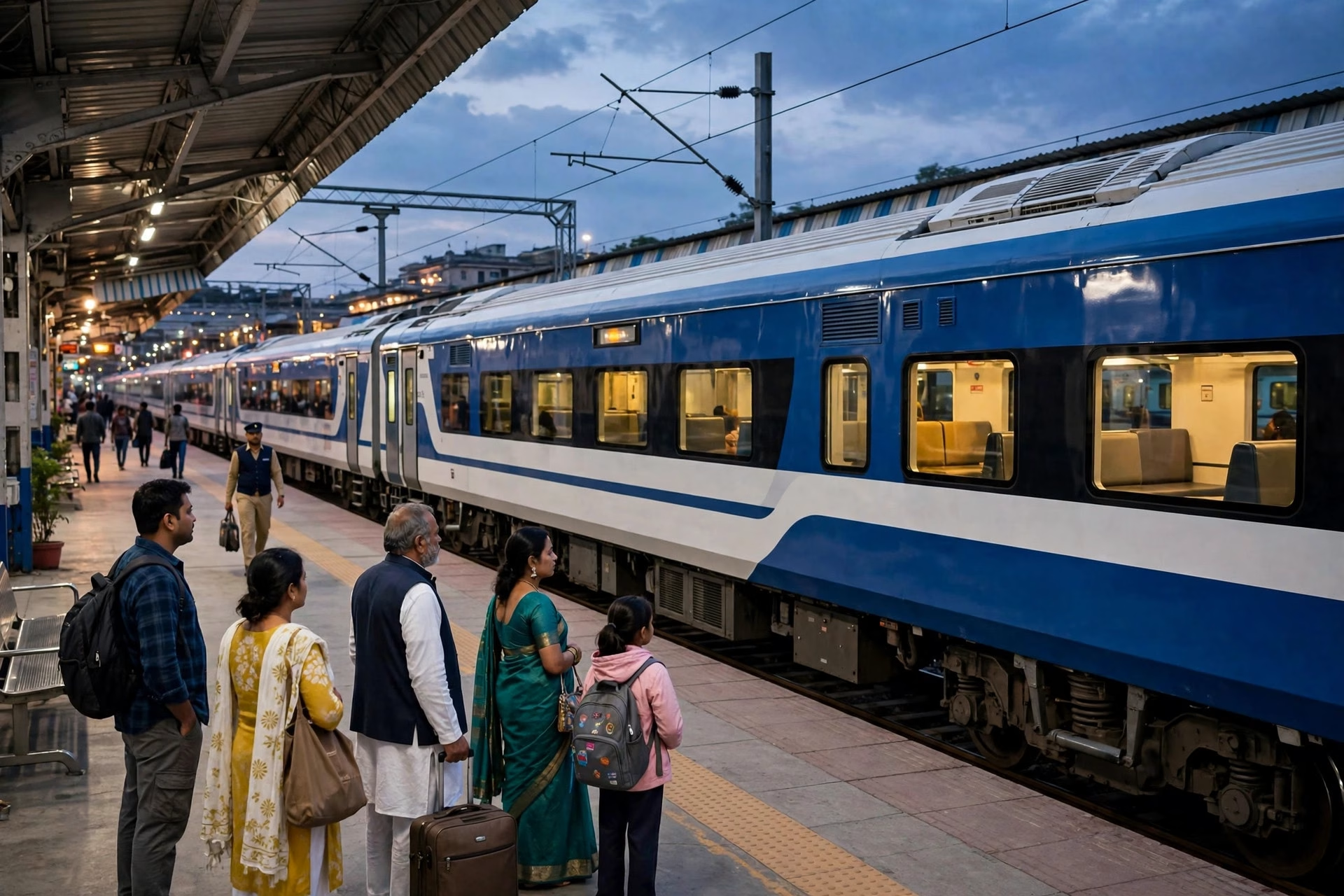
Railway Minister Ashwini Vaishnaw flagged off the inaugural run of the Bengaluru–Mumbai Vande Bharat Sleeper Train from Bengaluru on Saturday, 1 November, adding an overnight option to one of India’s busiest intercity corridors. Regular services begin on 2 November from the Mumbai side and on 3 November from the Bengaluru side, according to South Western Railway.
The service will run between SMVT Bengaluru and Mumbai CSMT, covering the distance overnight — a schedule designed for business travellers, students and families who want to leave one city in the evening and wake up in the other. For a corridor long served by conventional mail and express trains, the Vande Bharat Sleeper promises a faster, quieter and more comfortable journey, with modern berths, improved suspension and the quieter ride that the Vande Bharat platform is known for.
The launch is part of Indian Railways’ wider plan to extend the Vande Bharat brand beyond chair-car day trains into the overnight market, where sleeper demand is enormous. The sleeper variant has been one of the most keenly awaited additions to the fleet, because it targets the segment that fills trains night after night — passengers who need to sleep on the move rather than sit upright for hours.
Officials have pointed to the timetable’s weekly exceptions: the service will not run on Monday from Bengaluru and Tuesday from Mumbai, a pattern passengers will need to factor into their bookings. As with other premium trains, demand in the opening weeks is expected to be strong, particularly in the run-up to Diwali on 8 November, when travel between the two metros peaks.
The Bengaluru–Mumbai corridor is one of the most commercially significant in the country, linking India’s technology capital with its financial capital. Better overnight connectivity matters beyond passenger comfort: it supports business travel, relieves pressure on flights and road traffic, and gives the railways a premium product on a route where passengers have historically been willing to pay for speed and reliability.
The sleeper launch also fits into a broader story of the Vande Bharat programme’s expansion, from a handful of chair-car services to a family of trains covering different journey types. Each new route tests whether the platform can hold up to the demands of overnight running — berth comfort, noise levels, catering and punctuality over a full night’s journey.
For passengers, the real test begins with the first regular services this week. If the Bengaluru–Mumbai sleeper delivers on its promise of a comfortable night’s sleep at a competitive fare, it will quickly become the default choice on the corridor — and a template for overnight Vande Bharat services elsewhere in the country.
