


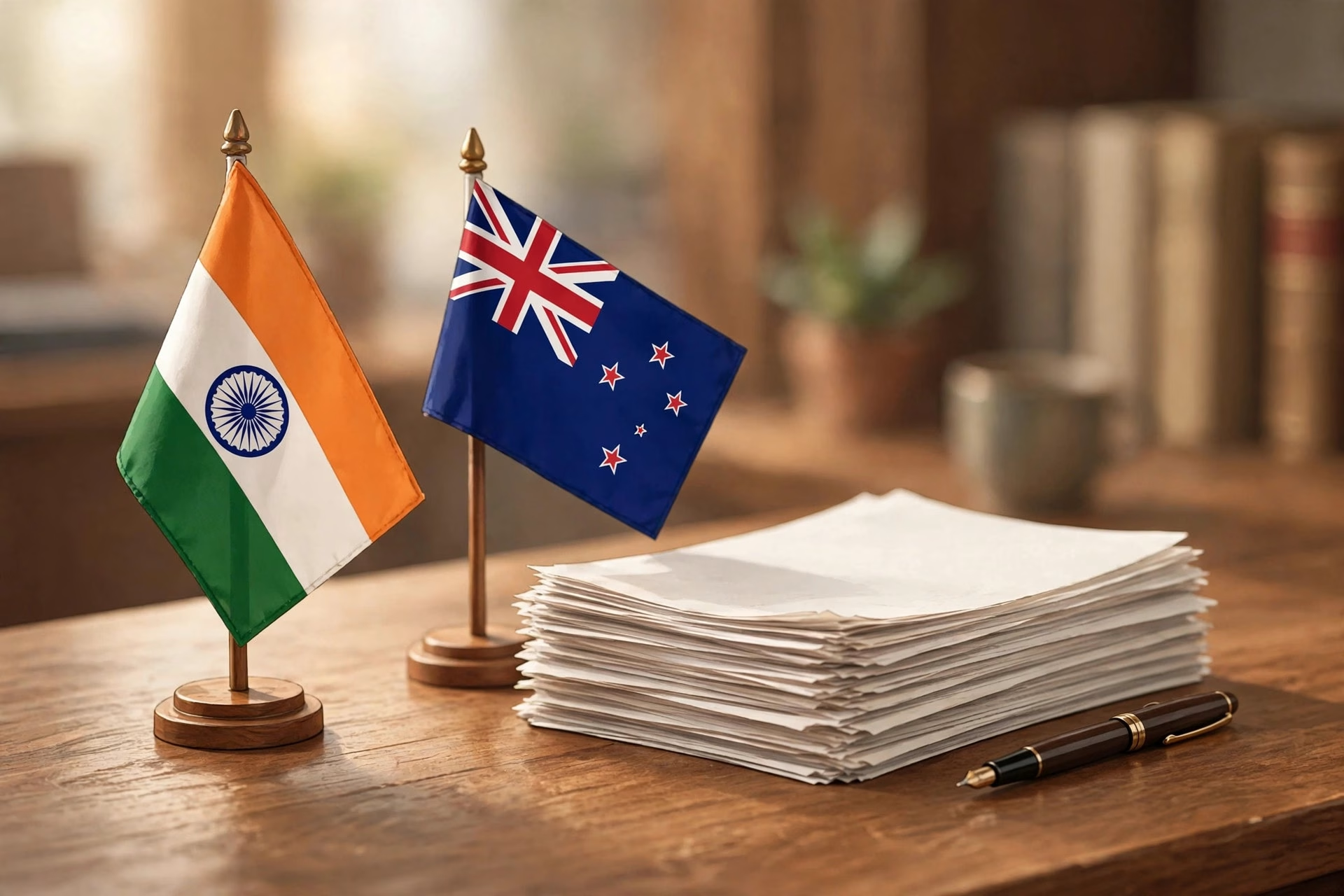
New Delhi: The India-New Zealand Free Trade Agreement comes into force today, October 20, 2026, eliminating tariffs on all of India’s exports to New Zealand from day one. Commerce Secretary Rajesh Agrawal said on Monday that the agreement paves the way for deeper economic engagement, faster regulatory cooperation and increased investment flows between the two countries. “FTAs are about creating deep economic partnership,” Agrawal said.
The announcement carries immediate commercial weight. DGFT Additional Director General Sampath Kumar told ANI in Hyderabad that the agreement “is going to be implemented” from Tuesday, adding: “100% of tariff lines are going to become zero from tomorrow onwards.” For Indian exporters, the deal wipes out import duties of up to 10 per cent on textiles, clothing, leather and footwear, and up to 5 per cent on pharmaceuticals, agricultural and marine products, plastics, chemicals and electrical goods.
The negotiations themselves were strikingly swift. Talks were launched in March 2025 and concluded in barely nine months. The agreement was signed on April 27, 2026, in New Delhi by Commerce and Industry Minister Piyush Goyal and New Zealand’s Trade Minister Todd McClay, and was ratified on September 21, setting up the October 20 implementation date.

New Zealand has positioned the FTA as a breakthrough for its own exporters. McClay said almost 57 per cent of New Zealand’s exports to India would become tariff-free from today, rising to 82 per cent over time. The most striking concession sits with wine: New Zealand wine has faced tariffs of 150 per cent in India, which will now fall to 25–50 per cent over the next ten years — a move industry watchers say could transform India’s premium wine market, currently dominated by domestic labels and high-priced imports.
The economics underpinning the deal are already visible. Bilateral merchandise trade reached USD 1.3 billion in 2024-25, a jump of 49 per cent, with India’s merchandise exports accounting for USD 711 million of that total. Combined goods and services trade stands at USD 2.4 billion, and both sides have set a target of doubling it to NZD 7 billion — roughly Rs 35,000 crore — by 2030. On the investment side, New Zealand is targeting inflows of up to USD 20 billion into India across agriculture, manufacturing, infrastructure and startups.
Crucially, the deal was negotiated with India’s sensitivities in mind. India liberalised around 70 per cent of its tariff lines while protecting dairy and certain agricultural products — a red line that has stalled other Indian trade negotiations. New Zealand, meanwhile, is expected to lean on the pact’s Agriculture Centres of Excellence for apples, kiwifruit and honey, designed to boost productivity and quality in supply chains feeding Indian demand.
For exporters and logistics operators, the pact also promises speed. Customs provisions commit to clearing standard cargo within 48 hours and express and perishable shipments within 24 hours, backed by digital certification. For perishable goods, where a day’s delay can erase margins, that clause may matter as much as the tariff cuts.
Commerce ministry officials see the agreement as part of a broader pattern: India has been pursuing FTAs aggressively, from the United Kingdom deal earlier this year to ongoing talks with the European Union and the United States. The New Zealand agreement’s distinguishing feature is its pace and its balance — New Delhi opened roughly seven-tenths of its market while shielding its farmers, and Wellington got the wine and produce access its exporters have long sought. Whether the 2030 target materialises will depend on how quickly businesses convert paper concessions into purchase orders.
