

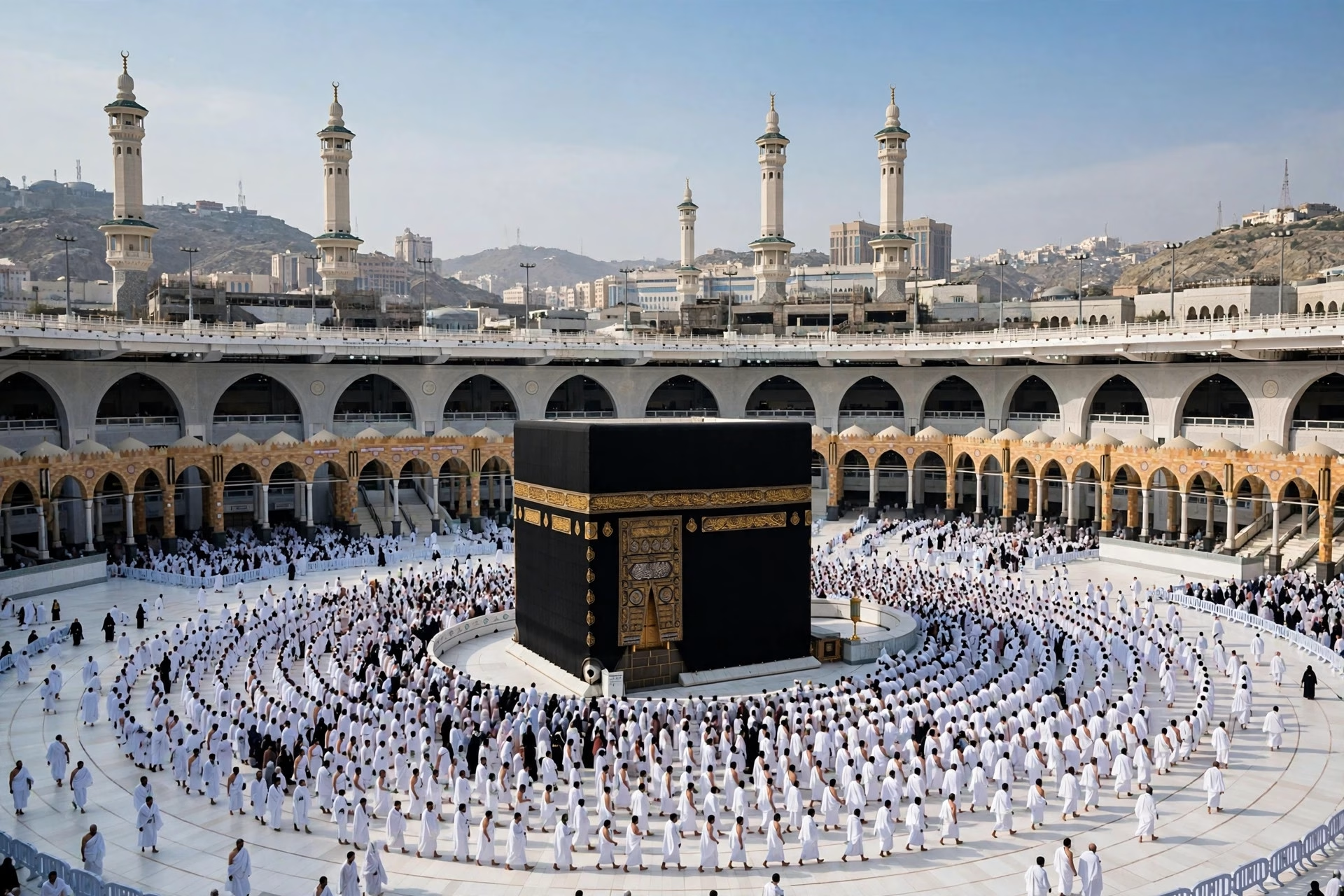
India and Saudi Arabia have signed the bilateral Haj Agreement for 2027, fixing India’s pilgrim quota at 1,75,025, the government has announced. The agreement was concluded during Union Minority Affairs Minister Kiren Rijiju’s official visit to Saudi Arabia from November 6 to 9.
Rijiju held talks with Saudi authorities in Jeddah on preparations for next year’s pilgrimage, covering the arrangements for Indian pilgrims — from accommodation and transport in Mecca and Medina to health services and the logistics of moving more than 1.75 lakh people through the holy sites.
The quota figure is significant. India is among the largest senders of Haj pilgrims in the world, and the annual allocation is the single most important number for the thousands of families who apply each year through the Haj Committee of India and private tour operators. A confirmed quota of 1,75,025 gives applicants and organisers a firm basis to plan around, months before the pilgrimage.
The Haj is one of the largest annual religious gatherings on earth, and its organisation is a formidable logistical exercise. Pilgrims travel in waves, stay in designated accommodation, and move between the holy sites on a tightly managed schedule. The bilateral agreement sets the framework for all of it — the numbers, the responsibilities of each side, and the facilities Indian pilgrims can expect.
For the pilgrims themselves, the signing of the agreement is the starting gun for months of preparation. Applications, medical clearances, vaccinations, travel bookings and the training sessions run by the Haj Committee all follow from the quota being fixed. Many applicants have waited years for their turn, and the announcement will be watched closely by those hoping 2027 is their year.
The agreement also reflects the steady rhythm of India-Saudi cooperation on the pilgrimage. The two countries negotiate the terms annually, and the process has become a well-established part of the bilateral relationship, running alongside the wider energy, trade and strategic ties between New Delhi and Riyadh.
Rijiju’s visit, which wrapped up on Sunday, also gave the two sides a chance to review how this year’s arrangements had worked and what could be improved. Comfort, safety and health are the perennial concerns, particularly for elderly pilgrims, and the Indian side has in recent years pressed for better accommodation and medical support.
With the agreement signed, attention now turns to the Haj Committee’s schedule: the opening of applications, the draw for places, and the long countdown to the pilgrimage itself. For 1,75,025 Indians, the journey to Mecca in 2027 has just become real.
