

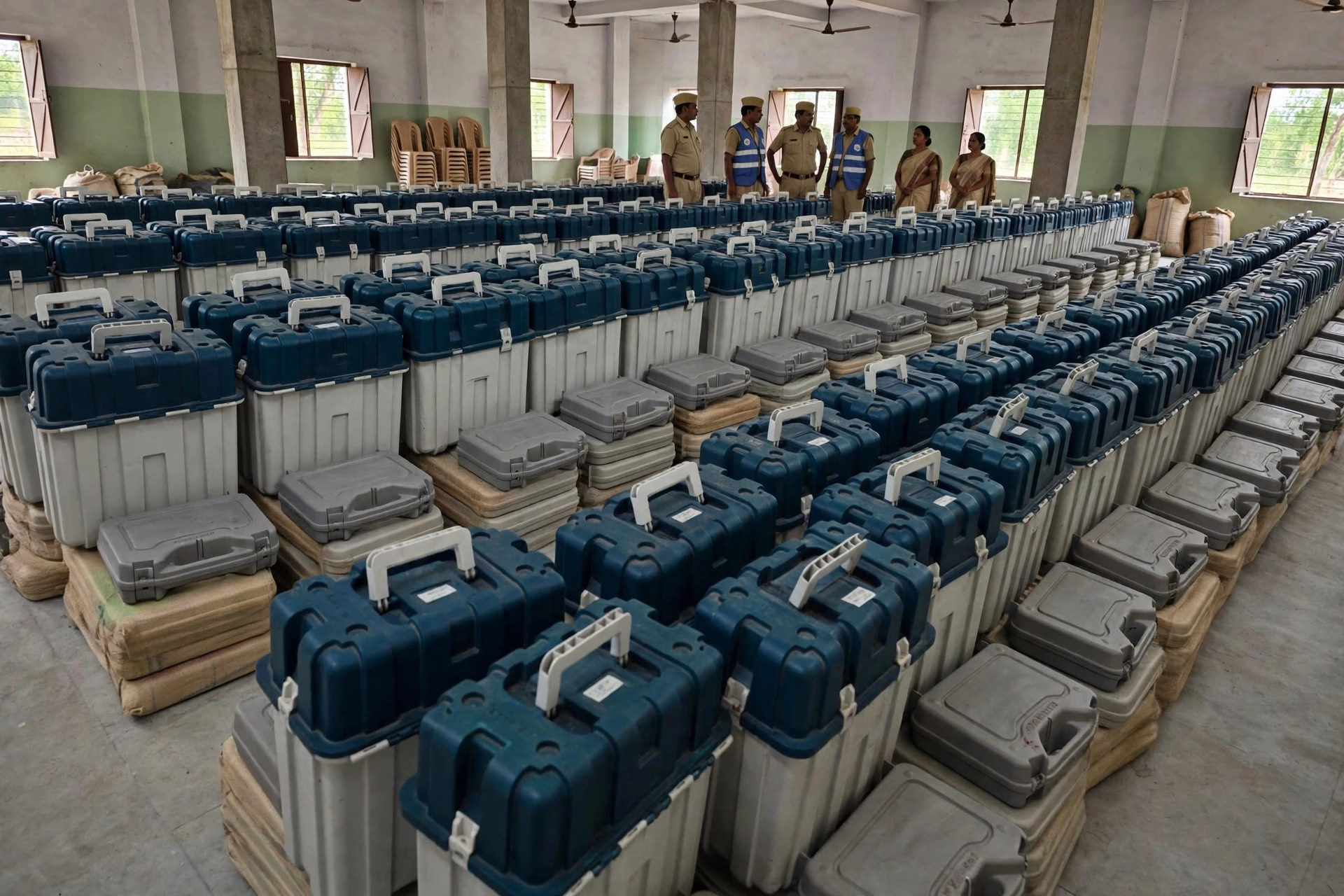
Patna: The high-decibel campaign for eight Bihar Legislative Council seats fell silent at 5 pm on October 21, setting the stage for polling on October 23 in a contest that has become an unlikely prestige battle ahead of the state’s bigger electoral calendar. As many as 150 candidates are in the fray for the eight seats — four Graduate and four Teachers’ constituencies spanning Patna, Darbhanga, Tirhut, Kosi and Saran.
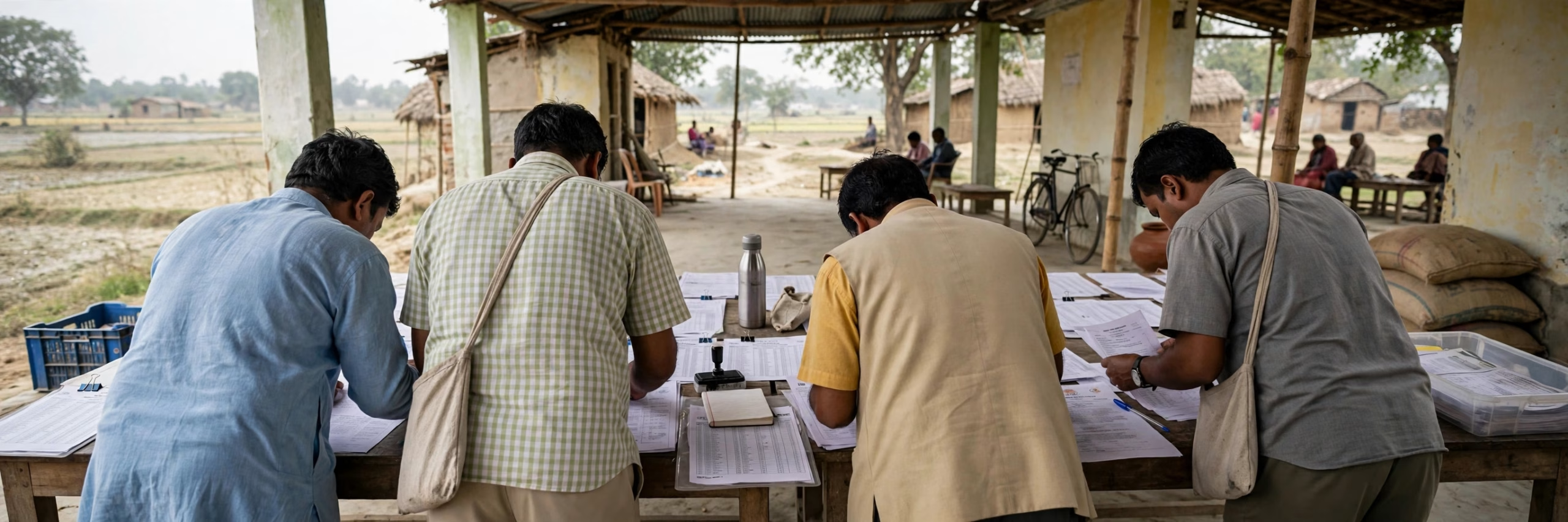
The numbers underline the scale of the exercise. Polling will be held from 8 am to 4 pm on October 23 across 933 polling stations, with 5,32,847 registered voters — graduates and teachers enrolled in the respective constituencies — eligible to cast their ballots. Counting is scheduled for October 27, and the results will be watched far beyond Bihar’s borders.
What has lifted these council polls from procedural routine to political theatre is the three-cornered nature of the fight. The ruling NDA and the opposition Mahagathbandhan are being challenged by Prashant Kishor’s Jan Suraaj, which is treating the contest as its first serious electoral examination in the state. For a party that has promised to upend Bihar’s established political order, even a respectable showing on October 23 would be a morale booster; a win anywhere would be a statement.

The marquee battle is the Patna Graduate constituency, where JD-U’s Neeraj Kumar is seeking a fourth consecutive term. Kumar, who was recently hospitalised, faces Jan Suraaj’s Anuj Singh — a candidate whose campaign has drawn oxygen from the open backing of JD-U rebel Anant Singh, the strongman-turned-MLA whose defiance has embarrassed the ruling camp. With RJD and Congress challengers also in the mix, Patna Graduate has all the ingredients of a thriller.
Kishor himself has been careful to manage expectations. Addressing supporters in Muzaffarpur, he said this election “will not change the government” — but framed it as one where “people can rein in the existing system with their votes.” It was a characteristically clever formulation: lowering the bar for success while casting every Jan Suraaj vote as a verdict on the incumbent order.
For the NDA, the council polls are a test of organisational grip. Graduate and Teachers’ constituencies are decided by a narrow, literate electorate that is harder to sway with the usual campaign machinery — and where anti-incumbency, if it exists, shows up early. A clean sweep would let the ruling alliance claim momentum; any slippage would hand the opposition a talking point it will use relentlessly.
The Mahagathbandhan, meanwhile, needs the October 23 verdict to demonstrate that its coalition arithmetic still converts into votes. Council elections have their own logic, but symbolism matters in Bihar’s unforgiving political marketplace, and a strong opposition performance would embolden its ranks.
Security and administrative arrangements are in place across the five regions, with the Election Commission deploying observers and central forces at sensitive stations. Graduate and Teachers’ polls traditionally see modest turnout, but officials are hoping for healthy participation given the unusually charged atmosphere.
When the counting begins on October 27, Bihar will get its first hard data point on the Jan Suraaj experiment — and an early read on the state’s political temperature. For now, the campaign noise has ended; on October 23, the voters do the talking.
