

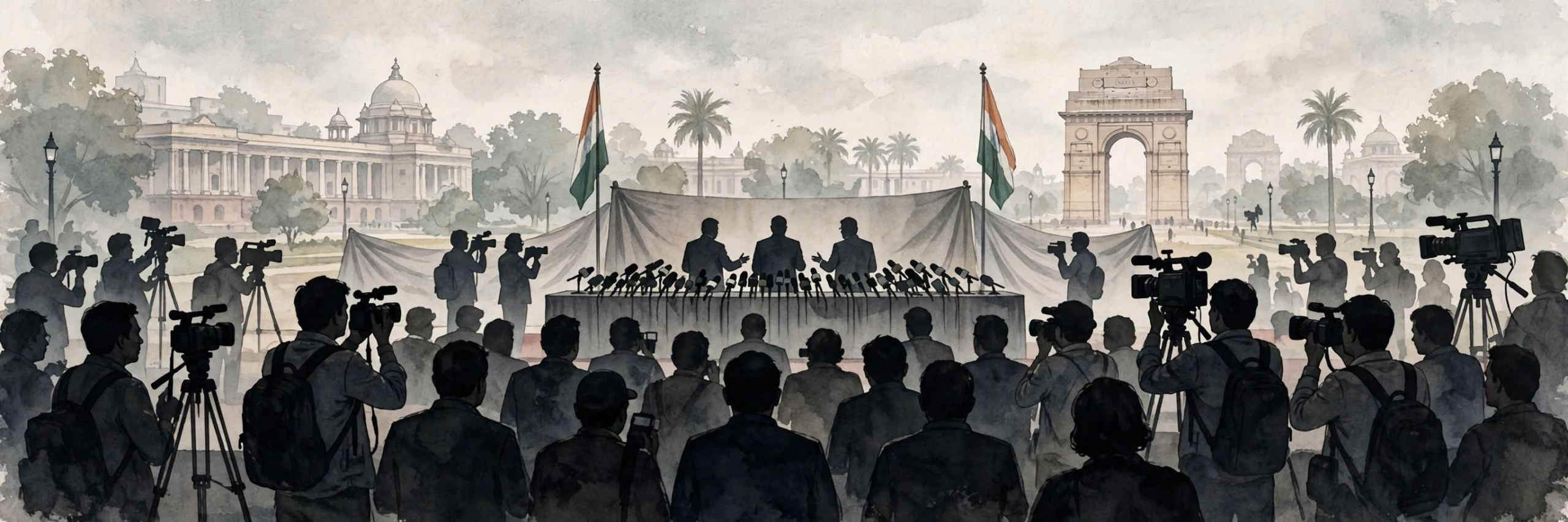
New Delhi: The BJP on October 21 opened a new front in its confrontation with the Opposition, alleging that a “regime change” narrative being amplified by opposition leaders is being orchestrated by “unidentified and suspicious foreign entities” with the aim of inciting violence in the country.
Addressing a press conference in the capital, BJP national spokesperson Sudhanshu Trivedi said the repeated invocation of “regime change” by opposition figures — including Uddhav Thackeray, who has called such a change “inevitable” — was not spontaneous political rhetoric but part of a designed playbook. The objective, Trivedi alleged, was to create conditions for street unrest on the lines seen in other countries, and he urged the public to recognise the pattern.
The charge was sharpened considerably by BJP MP Sambit Patra, who trained his fire directly on Leader of the Opposition Rahul Gandhi. Patra accused Gandhi of “planning regime change” in India and claimed the Congress leader had picked up his tactics from billionaire philanthropist George Soros during a recent four-day private trip to Vietnam. The Soros reference was deliberate — the BJP has long projected the financier as a hostile external actor invested in destabilising the Modi government.
Patra also seized on a social media post by Shiv Sena (UBT) leader Sanjay Raut, who had shared images of Albania’s burning parliament and supreme court buildings on X. The BJP MP described the post as an endorsement of violence against India’s democratic institutions and demanded to know what message the Opposition was sending by circulating such imagery at a moment of charged political rhetoric.
The Opposition’s response was swift and dismissive. Congress leader Shashi Tharoor rejected the regime-change framing outright, declaring that “India is not Bangladesh” — a pointed reference to the popular uprising that toppled the Sheikh Hasina government in Dhaka. “What we are calling for is free and fair elections,” Tharoor said, casting the BJP’s allegations as an attempt to criminalise legitimate democratic dissent.
The exchange marks a significant escalation in the war of narratives dominating Delhi politics. The BJP’s strategy is clear: link the Opposition’s agitation over issues like the Special Intensive Revision of electoral rolls and the “vote chori” allegations to a larger, foreign-orchestrated design, thereby shifting the debate from the substance of the complaints to the motives of the complainants. It is a framing with deep resonance in the party’s support base, where suspicion of external interference runs strong.
The Opposition, for its part, sees the “regime change” charge as a diversion — an effort to paint demands for electoral transparency as sedition. Tharoor’s formulation was designed to draw a bright line: seeking free and fair elections, he argued, is the opposite of seeking regime change by extra-constitutional means.
Whether the rhetoric cools or intensifies may depend on events on the ground. With protests over electoral issues continuing and both sides digging in, October 21’s press conferences suggest the battle lines are hardening. The BJP has put its accusation on record; the Opposition has denied it with contempt. What neither side has done is lower the temperature — and in Delhi’s current climate, that may be the most telling detail of all.
