

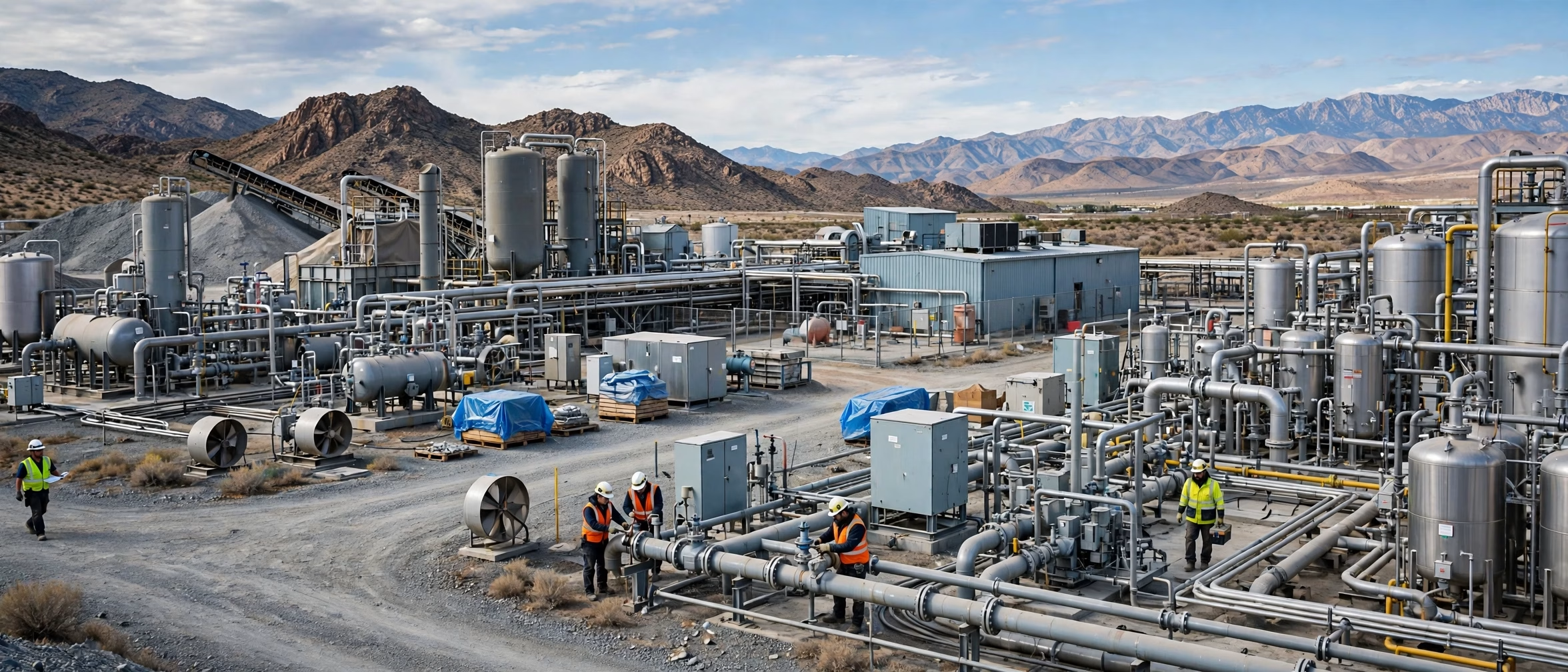
The Union Cabinet has approved a Rs 2,814 crore scheme to promote critical mineral processing in India, offering capital support for four plants that will refine lithium and nickel into the high-purity compounds used in batteries, electronics and defence equipment. The decision, taken on 4 November and announced by Information and Broadcasting Minister Ashwini Vaishnaw, is one of the government’s most direct attempts yet to cut India’s dependence on imports for the materials at the heart of the energy transition.
The scheme, formally called the Capex Support Scheme to Promote Critical Mineral Processing, will run for five years, from financial year 2026-27 to 2030-31. It will provide a capital subsidy of 30 per cent of eligible investment for setting up four processing plants: two lithium plants, each with a minimum capacity of 30 kilotonnes, and two nickel plants, each with a minimum capacity of 50 kilotonnes. Support is capped at Rs 500 crore per lithium beneficiary and Rs 900 crore per nickel beneficiary.
The logic is straightforward. India has some critical mineral resources and a large and growing demand for batteries, but it depends heavily on imports for the refined, high-purity forms of lithium, nickel and cobalt, because domestic processing is still at an early stage. A battery cell is only as Indian as its refined inputs, and without processing capacity, the country’s electric mobility and energy storage ambitions rest on supply chains controlled elsewhere. The scheme aims to build that missing middle of the value chain inside India.
The sectors named in the official statement show how broad the bet is: electric mobility, battery energy storage systems, electronics, defence and speciality steel. Cobalt, a third critical mineral, is expected to be recovered as a by-product of nickel processing, adding a further strategic material to the output. The scheme sits within the National Critical Mineral Mission, approved in 2025, which covers exploration, mining, processing, overseas sourcing and recovery from discarded products.
The subsidy will not be paid in one go. It will be released in tranches tied to milestones as plants are built, a design intended to ensure that public money follows real capacity rather than announcements. The government has not yet given dates for inviting applications or named the body that will run the bidding, and those implementation details will determine whether the scheme attracts the serious industrial players it needs. Four plants, however well funded, will not transform India’s mineral position overnight.
Prime Minister Narendra Modi welcomed the approval, saying India must build capabilities in future technologies. It sits alongside the Cabinet’s same-day Rs 14,500 crore package for grid-scale energy storage; together, the two schemes address both sides of the battery economy.
The test for the scheme will be execution. Building a lithium refinery is a complex, multi-year undertaking, involving feedstock contracts, clearances, water and energy supply, and offtake agreements with battery makers. The 30 per cent subsidy lowers the hurdle but does not remove it. If the plants reach their stated capacities, India will have taken a genuine step towards self-reliance; if they stall, the scheme will join policies whose ambitions outran delivery.
For now, the signal to industry is clear. The government is willing to pay a significant share of the capital cost to bring mineral refining home, and it has put a five-year window and a fixed budget behind that offer. The companies that take it up will be building not just four plants, but the first chapter of India’s critical mineral industry.
