

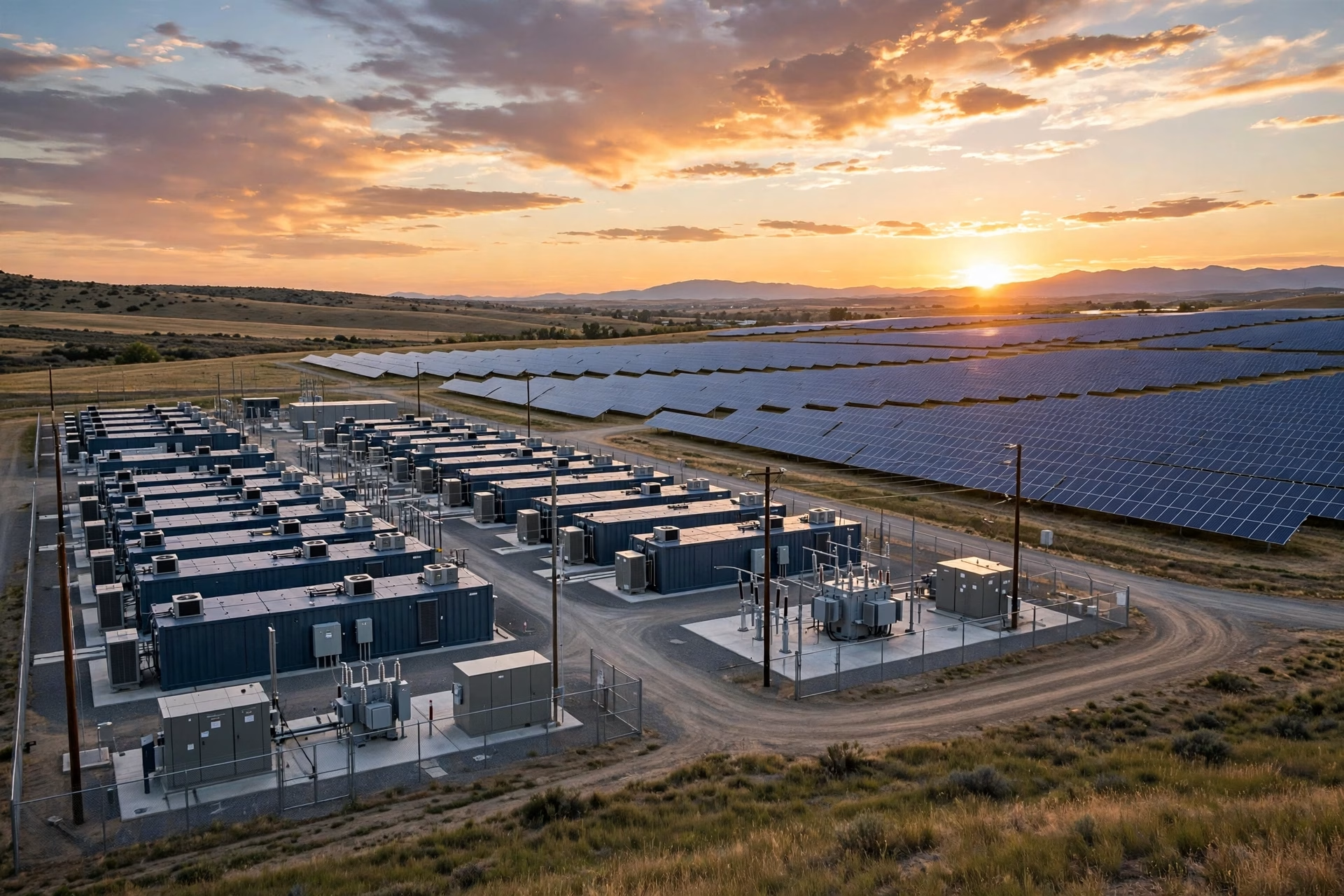
The Union Cabinet has approved Rs 14,500 crore in viability gap funding for grid-scale energy storage, backing 92 gigawatt-hours of new storage capacity that India says it needs to integrate renewable power and keep its grid stable. The decision, taken on 4 November, is the single largest outlay in a package of four schemes cleared by the Cabinet that day, with a combined value of more than Rs 25,473 crore.
Viability gap funding is a grant that covers part of a project’s cost so that it can sell its service at a price buyers will accept. Storage projects are capital-intensive and their revenues are uncertain, which has held back private investment even as renewable capacity has surged. The government’s grant is intended to close that gap and unlock a much larger pool of investment, estimated in the official statement at Rs 97,600 crore across the 92 GWh.
The 92 GWh is split three ways. Pumped hydro storage, which uses two reservoirs at different heights to store energy as water, gets the largest share at 60 GWh. Battery energy storage systems get 30 GWh, and 2 GWh is reserved for newer, alternative storage technologies. The scheme will run from financial year 2026-27 to 2030-31 and will support capacity that is yet to be commissioned, awarded through tariff-based auctions.
The scale is best understood against India’s existing storage base. The government says the new capacity equals 170 per cent of the country’s present grid-scale storage, and that it will help meet a required grid-scale storage capacity of 411 GWh by financial year 2031-32. In other words, the scheme is a catalyst, not a complete solution: it covers roughly a quarter of the storage India will need within six years, and the rest will have to come from other programmes, state initiatives and private investment.
The need for storage has grown with renewable energy itself. Solar power peaks at midday and wind is variable, while demand peaks in the evening. Without storage, surplus renewable power is wasted and the grid must fall back on coal or gas when the sun sets. Pumped hydro provides long-duration storage for hours at a time, while batteries respond in seconds and are better suited to short, sharp balancing. The scheme’s mix reflects that division of labour.
New and Renewable Energy Minister Pralhad Joshi welcomed the decision, describing it as a programme designed to anchor India’s clean-energy ambitions with the storage capacity they have long demanded. India has set a target of 500 GW of non-fossil fuel capacity by 2030, and storage is the missing piece that makes such a target operable rather than merely aspirational.
As with the Cabinet’s parallel critical minerals scheme, the details that will decide success are not yet public. The government has not given dates for the first bids, nor said how the 92 GWh will be shared among states, nor split the grant by technology. The viability gap funding rate per unit of storage, and the domestic content requirements for battery projects, will shape which developers bid and at what price.
What is clear is the direction of travel. India is moving from building renewable generation alone to building the system around it: transmission, storage and flexible demand. The Rs 14,500 crore approved on 4 November is a down payment on that system, and a signal that the government now treats storage not as an optional extra but as core grid infrastructure. Whether 92 GWh is built on time and at a reasonable cost will be one of the defining tests of India’s energy transition in the years ahead.
