

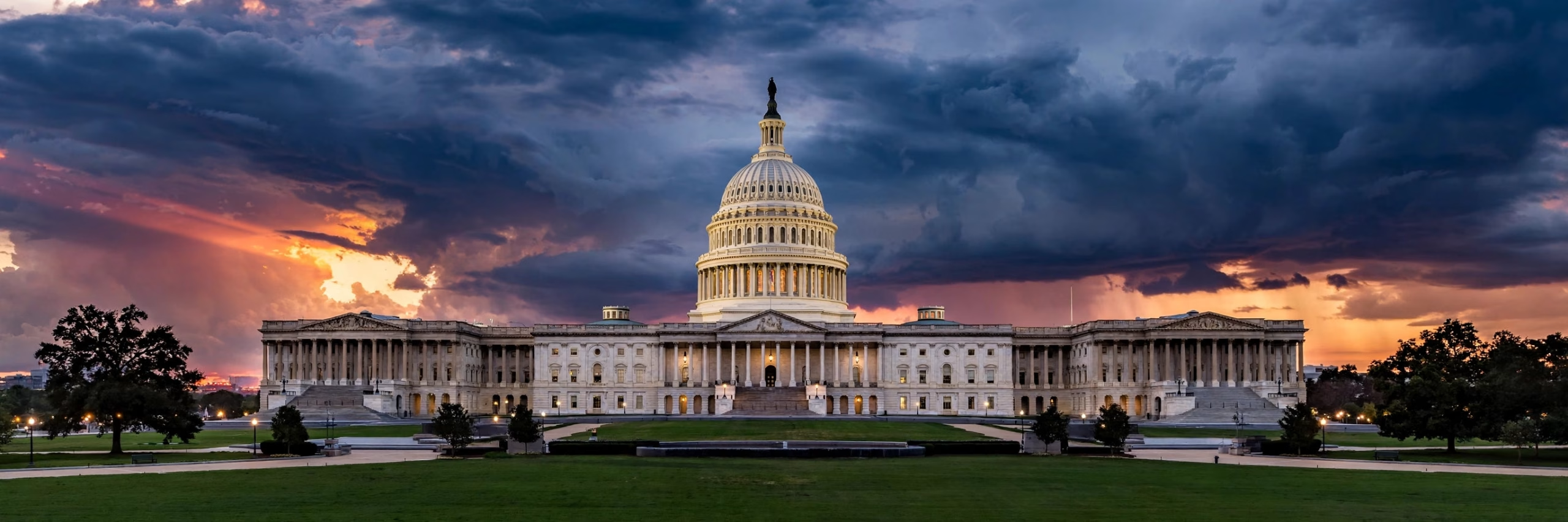
The Democratic Party has won control of both chambers of the United States Congress in the 2026 midterm elections, ending two years of unified Republican rule and handing President Donald Trump the sharpest political setback since his return to the White House. The Associated Press called the Senate for the Democrats late on election night, Tuesday, 3 November, and the House early on Wednesday.
In the Senate, Democrats flipped seven Republican-held seats — in Iowa, Kansas, Maine, North Carolina, Ohio, South Carolina and Texas — and now hold at least 54 of the 100 seats, counting two independents who caucus with them. Two contests, in Alaska and Mississippi, remained uncalled on Thursday, but they can only change the size of the Democratic majority, not its existence. Democrats needed a net gain of four seats to take the chamber; they won seven.
The House result was called with Democrats past the 218 seats needed for a majority. The AP had called 222 Democratic seats against 138 for Republicans by Thursday morning, with 75 races still uncalled. Other tallies put the eventual Democratic total higher, with NBC News projecting at least 242 seats. House Democratic leader Hakeem Jeffries, who has led the party in the chamber since 2023, declared victory on election night and is now in line to be elected Speaker when the new Congress convenes on 3 January 2027.
The scale of the sweep surprised even optimistic forecasters. Democrats won House seats in districts that had voted for Trump by as much as 18 percentage points in 2024, and they flipped Senate seats in states long treated as Republican strongholds. In Texas, Democrat James Talarico defeated Republican Ken Paxton, becoming the state’s first Democratic senator since 1988. In Maine, Troy Jackson defeated Susan Collins, ending her nearly three decades in the Senate. In Michigan, Abdul El-Sayed won the open seat and is set to become the first Muslim senator in American history.
Democrats also flipped five governorships — in Georgia, Iowa, Nevada, Ohio and Texas — underlining that the result was a broad verdict rather than a narrow one. Pre-election polling had pointed to a Democratic House win, but the Senate had been treated as an open question, and prediction markets had put the chance of a full sweep at roughly 75 per cent on election day itself.
The consequences in Washington are immediate. From January, Democrats will chair House committees, giving them subpoena power and the ability to investigate the Trump administration, the President’s family and their business interests. In the Senate, they will control confirmations and the legislative calendar. But their power has a hard limit: with 54 seats at most, they remain well short of the 60 votes needed to overcome a filibuster, which will constrain how far they can advance their own legislation.
For Trump, the result reshapes the final two years of his presidency. A president who has governed with a compliant Congress will now face an opposition-controlled legislature with the tools to block his agenda and scrutinise his administration. The White House has not yet commented in detail on the outcome, and the final seat counts in the House will take days to settle as the remaining races are called.
For India and the rest of the world, a divided American government means a different rhythm in Washington: less certainty on trade and tariff policy, more congressional scrutiny of foreign policy, and a louder debate over the direction of the world’s largest economy. The midterms were, as ever, an American election first. Their consequences will travel well beyond America’s borders.
