

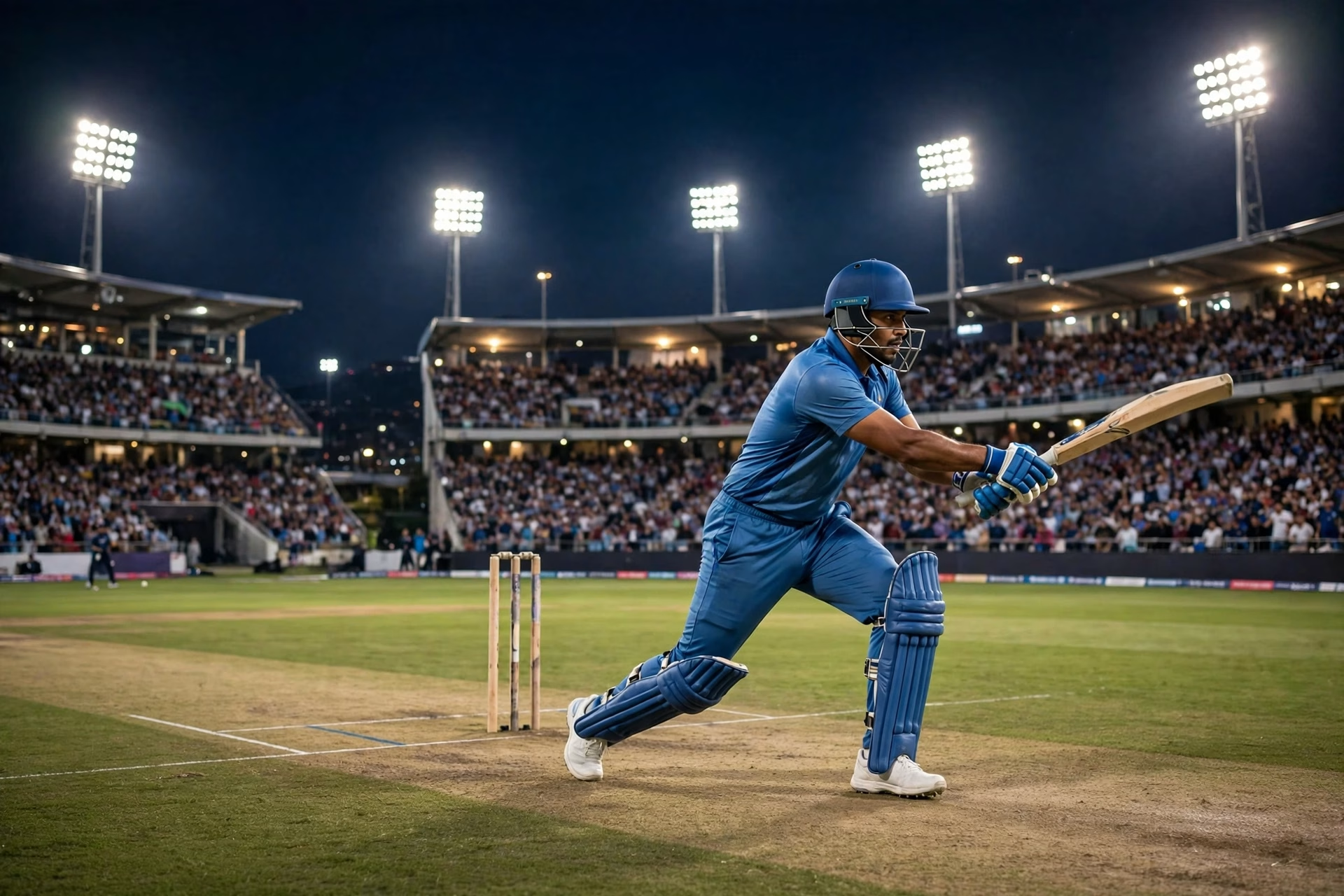
Virat Kohli has passed Sachin Tendulkar to become the highest run-scorer in ODI run chases, leading India to a five-wicket win over New Zealand in the rain-hit first ODI at Eden Park, Auckland, on 4 November. India chased a revised target of 143 in 32 overs under the Duckworth-Lewis-Stern method and reached it in 22.4 overs, taking a 1-0 lead in the five-match series. Kohli’s 74 off 51 balls, studded with 13 fours and a six, was the innings that decided the match and rewrote the record book.
The record fell in the 16th over of India’s chase, when Kohli struck a boundary off New Zealand pacer Blair Tickner. He had walked in needing 54 runs to pass Tendulkar’s tally of 8,720 runs in ODI chases. By the end of the innings, his total in chases stood at 8,741 runs, at an average above 66 and a strike rate above 95. Tendulkar’s mark had stood as one of the great benchmarks of the one-day game, built over 232 innings. Kohli has reached his total in far fewer innings, which is why the comparison has become a defining statistic of this era.
It was not the only record of the evening. Kohli also became the first batter in ODI history to score 13,000 runs batting at number three, a position he has made his own for more than a decade. He needed only 12 runs at that position before the match to reach the milestone, and he passed it early in his innings. He also drew level with former Australia captain Ricky Ponting for the most ODI runs against New Zealand, with both men on 1,971 runs against the Black Caps.
The match had been shortened by rain. New Zealand were bowled out for 185 in 40.2 overs; Arshdeep Singh took four wickets and Anshul Kamboj conceded just 22 runs in 10 overs. The revised target of 143 in 32 overs still demanded a brisk chase, and India completed it with 56 balls to spare.
Kohli’s innings was a study in control. He reached his fifty in 35 balls, his second-fastest fifty in an away ODI, and he never allowed the required rate to climb. The boundary that took him past Tendulkar was not a slog but a clean, timed stroke, typical of a batter who has built his reputation on chasing down targets rather than merely surviving them. His record in successful chases is even more formidable, with more than 6,400 runs at an average close to 90.
For India, the win carries significance beyond the record. It was the team’s first ODI victory on New Zealand soil in seven years, achieved with a side in transition built around a young bowling attack. Kohli’s presence at number three gave the chase its spine, and restricting New Zealand to 185 gave the batters a target they could attack.
The series now moves to Wellington, where the second ODI is scheduled for 7 November. There, Kohli will have the chance to go past Ponting outright as the highest ODI run-scorer against New Zealand, and to become the first batter to score 2,000 ODI runs against the Black Caps. Those are smaller milestones than the one he passed in Auckland, but they underline how much of the record book he continues to reshape.
Tendulkar’s chase record was long considered untouchable, combining longevity with consistency across two decades. Kohli has passed it not by playing longer, but by chasing better, at an average no other batter in the format has matched. In Auckland, the chase master finally moved past the master blaster.
