

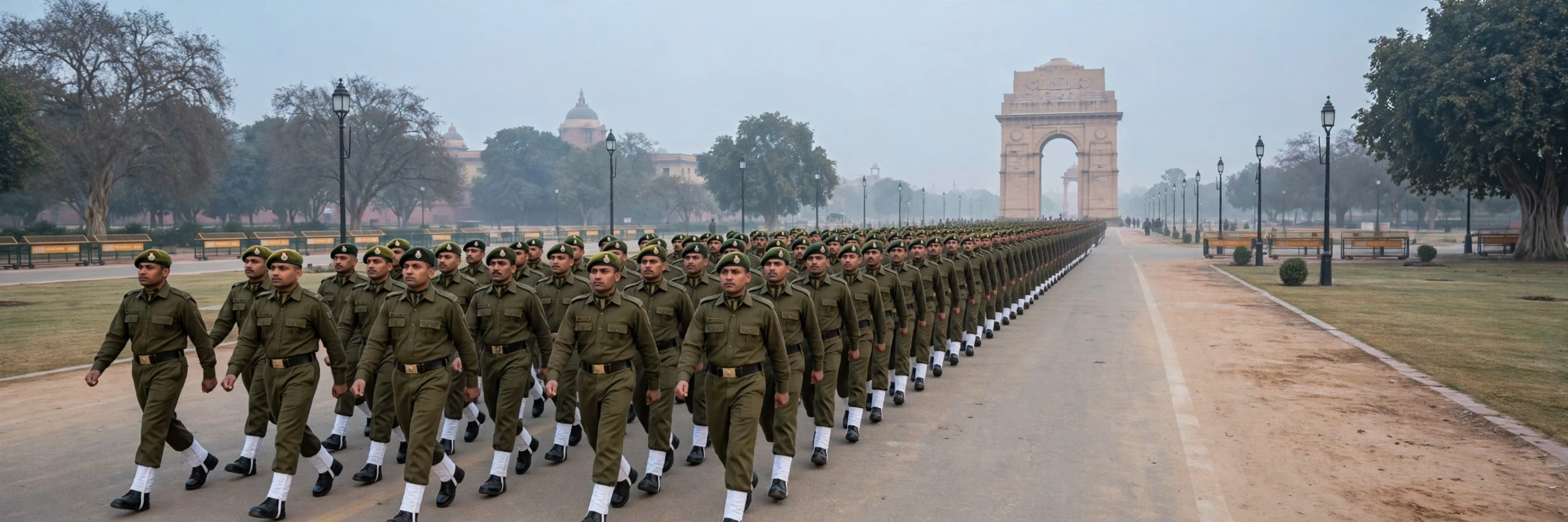
The Union Cabinet has approved a two-year Second Tour of Duty for Agniveers under the Agnipath scheme, in the most significant revision of the military recruitment framework since it was introduced in 2022. The decision, taken on 4 November, applies to the 75 per cent of Agniveers who are not absorbed into the regular Armed Forces after their initial four-year tenure. Instead of leaving service at the four-year mark, they will now be offered an additional two years in uniform, on a voluntary basis, taking their total engagement to six years.
Chief of Defence Staff General N.S. Raja Subramani announced the decision at the Cabinet briefing in New Delhi, making it clear that the original four-year engagement has not been changed. What has changed is what happens next for those who are not retained at the first stage. Under the existing framework, up to 25 per cent of each batch is enrolled into the regular forces on merit after four years. The remaining 75 per cent will now get a second engagement, followed by another opportunity to be considered for regular enrolment.
The timing matters because the first batch of Agniveers is approaching the end of its initial tenure, with around 18,000 personnel due to begin exiting in late 2026. The services assessed their performance over three to four months and found high fitness, motivation, discipline, technical skill and adaptability; the recommendation for extension came directly from military leadership.
For the Agniveers themselves, the second engagement carries tangible benefits: higher remuneration, an enhanced Seva Nidhi package and cumulative seniority benefits. The Seva Nidhi, the contributory fund built up during service, has been central to the Agnipath package from the start, and a larger payout after six years rather than four changes the calculation for many recruits and their families.
At the end of six years, those who wish to continue will be considered for enrolment as regular soldiers, subject to their willingness and to prescribed, objective selection criteria. The government has been careful to say that absorption after six years will not be automatic. Performance during the extended period will count, and the process is intended to be transparent. In effect, the revision creates two gates rather than one: retention after four years for the top quarter, and a second assessment after six years for the rest.
Defence Minister Rajnath Singh described the decision as part of long-term structural reforms aimed at building a younger, fitter and more technologically equipped military. Union Home Minister Amit Shah welcomed the move, saying it would keep the Army youthful and better prepared for the changing nature of warfare. Families of serving Agniveers and young defence aspirants in several states also welcomed the announcement, saying two more years in uniform gives recruits more time to prove themselves and to plan their next step.
The Opposition has questioned the timing and the prospects of recruits, with some leaders calling it an election-season measure. The government has rejected that reading, pointing to the inter-service evaluation that preceded the decision. The debate is likely to continue, because Agnipath has been one of the most contested defence policies of recent years.
A recruit who joined in 2022 expecting to leave after four years can now, if willing and selected, serve for six and then compete again for a regular career. For the Armed Forces, it retains trained personnel for longer. For those in uniform, it answers the question that has hung over the scheme since its first batch was recruited: what happens after four years. From 4 November, there is a second tour, and a second chance.
