

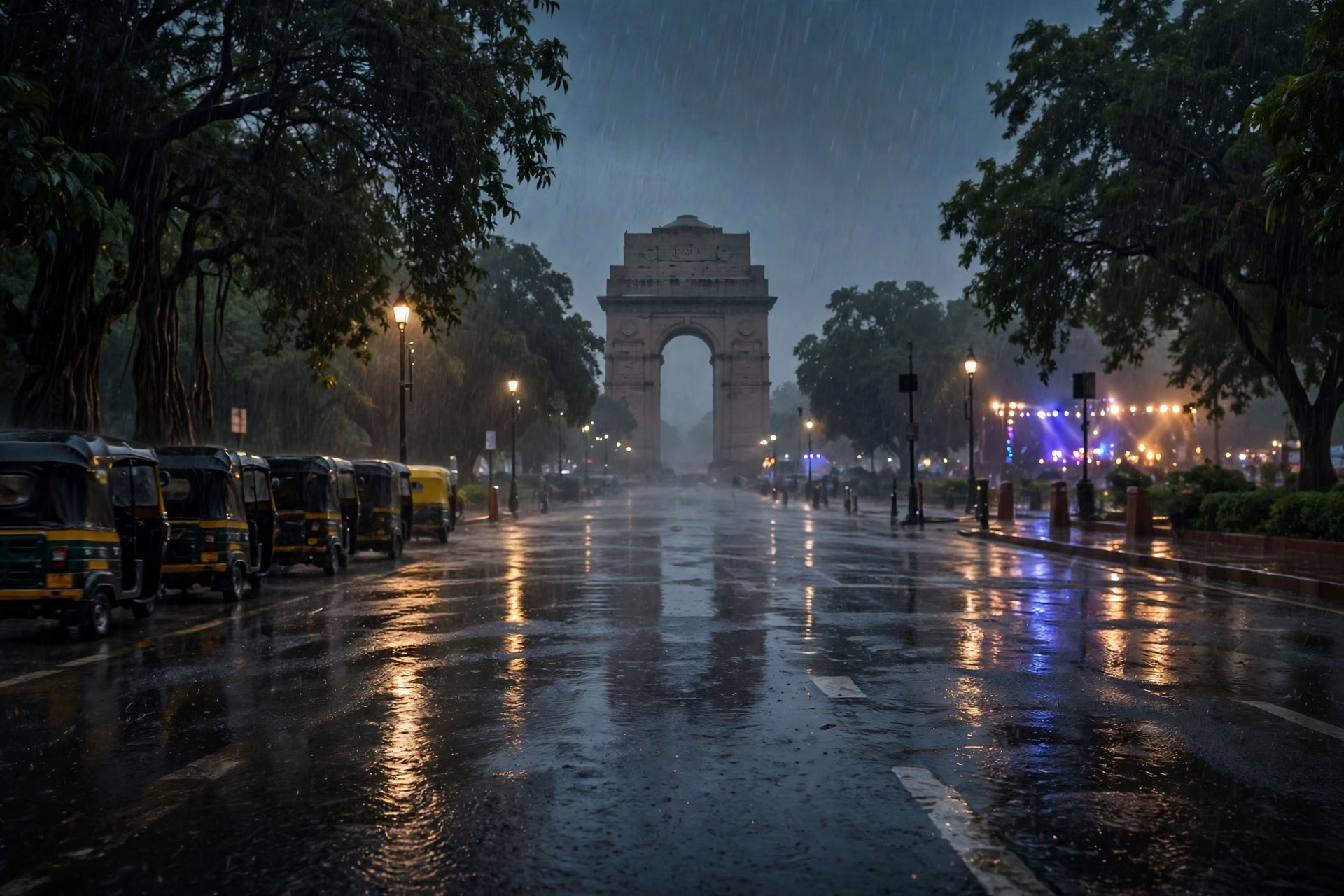
Delhi woke on Friday to a distinct winter chill after overnight rain linked to the remnants of Cyclone Arnab swept across the capital, bringing cleaner air and a sharp change in the city’s weather. The rain, which arrived after a spell of dry and hazy days, washed the skies and left residents reaching for light woollens as morning temperatures dipped noticeably.
The improvement in air quality was the most welcome consequence of the rain. Delhi’s air quality index improved to the moderate category, a relief for a city that has been battling pollution as winter approaches. Rain is one of the few natural forces that can quickly clear the haze that settles over the capital at this time of year, washing particulate matter from the air and offering residents a rare day of easier breathing.
The rain’s origin lay far from Delhi. Cyclone Arnab, after weakening over central India, left behind a remnant system whose moisture and associated weather patterns extended their influence northwards. It is a reminder of how interconnected India’s weather systems are: a storm that forms over the Bay of Bengal can, days later, bring rain to the national capital, altering temperatures and air quality hundreds of kilometres from the coast.
For Delhi’s residents, the chill marks the arrival of the season the city both loves and dreads. Winter in the capital brings crisp mornings, clear skies and a festive mood, but also the annual struggle with pollution as cold air traps smoke and dust close to the ground. Friday’s rain has offered a brief respite, but the longer battle for clean winter air will depend on sustained action on vehicles, construction dust, crop burning and other sources.
As the city enjoyed its cleaner morning, attention turned to the evening’s major event. Punjabi music star Diljit Dosanjh performs at the Jawaharlal Nehru Stadium on Friday, with around 70,000 fans expected to attend. The concert, one of the biggest live music events in the capital this season, has prompted elaborate security and traffic arrangements across south Delhi.
High security has been put in place around the stadium, with police managing crowds, checking entry and regulating traffic on surrounding roads. Large concerts in Delhi require careful coordination between organisers, police and civic agencies, particularly when tens of thousands of fans converge on a single venue. The arrangements are designed to ensure that the evening passes safely and smoothly for concert-goers and residents alike.
The Delhi Metro has extended its services till midnight to help fans return home after the concert, a move that will ease pressure on roads and provide a safe late-night option for the huge crowd. Metro extensions for major events have become a standard part of Delhi’s event planning, reflecting the network’s central role in the city’s transport system.
For fans, Friday promises a memorable night: a winter chill in the air, cleaner skies overhead and one of India’s biggest music stars on stage at the JLN Stadium. For the city, it is a day that captures Delhi in all its contrasts, where a cyclone’s remnants can bring rain, a concert can bring 70,000 people together, and a single morning can feel like the true start of winter.
