

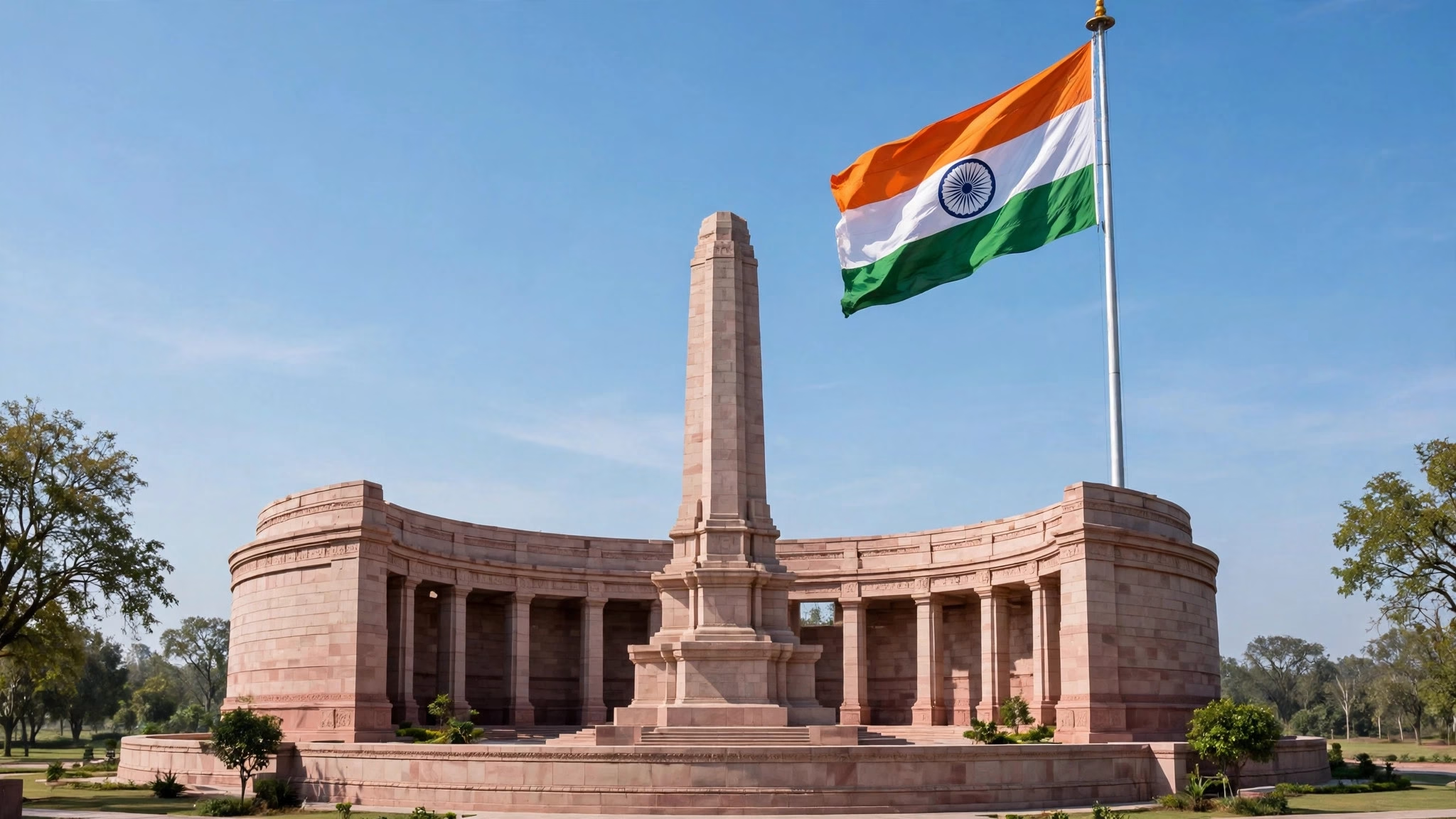
Union Home Minister Amit Shah inaugurated the 1857 First War of Independence Martyrs’ Memorial in Ambala, Haryana, in a ceremony held on 6-7 November 2026, paying tribute to the soldiers and civilians who rose against British rule nearly 170 years ago. The memorial honours the martyrs of India’s first war of independence, and its inauguration is a significant moment in the country’s ongoing effort to remember and commemorate the freedom struggle. The event was reported in today’s current-affairs roundup, drawing attention to one of the most important chapters in India’s history.
Ambala holds a special place in the story of 1857. It was one of the early centres of the uprising, where soldiers and local people rose against the East India Company in the first weeks of the revolt. The events in Ambala were among the earliest sparks of a rebellion that would soon spread across northern and central India, from Meerut and Delhi to Kanpur, Lucknow and Jhansi. The town’s role in the uprising has long been recognised by historians, and the new memorial stands as a permanent reminder of the courage shown there.
The memorial is dedicated to the memory of those who gave their lives in the cause of freedom in 1857. For the families and descendants of the martyrs, and for the people of Ambala and Haryana, it is a place of remembrance and pride. Memorials of this kind serve an important purpose: they keep the stories of ordinary people who did extraordinary things alive for future generations, and they ensure that the sacrifices of the past are not forgotten in the rush of the present.
The inauguration reflects the government’s broader emphasis on commemorating India’s freedom fighters and the lesser-known heroes of the independence movement. In recent years, there has been a concerted effort to bring the stories of regional centres of the freedom struggle, and of the men and women who fought in them, to wider public attention. The 1857 uprising, in particular, has been the focus of renewed interest, as historians and the public alike revisit the events that shaped modern India.
The first war of independence in 1857 was a turning point in Indian history. It began as a mutiny among soldiers of the East India Company but quickly grew into a widespread rebellion involving rulers, soldiers, peasants and townspeople across large parts of the country. Though the uprising was eventually suppressed, it marked the end of the East India Company’s rule and the beginning of direct British Crown rule in India, and it planted the seeds of the nationalist movement that would eventually win independence in 1947.
For the people of Haryana, the memorial in Ambala is a source of pride and a reminder of the state’s contribution to the freedom struggle. Haryana’s soldiers and civilians played a significant role in 1857 and in the decades that followed, and the memorial helps to ensure that their contribution is recognised. It is also expected to become a place of interest for visitors, students and history enthusiasts who wish to learn more about this chapter of India’s past.
The inauguration of the memorial is a reminder that the story of India’s freedom is not confined to a few famous names and places. It was written by thousands of ordinary people in towns like Ambala, who stood up against an empire and paid the price. By honouring their memory, the memorial ensures that their sacrifice continues to inspire future generations, and that the spirit of 1857, the spirit of resistance and the desire for freedom, remains a living part of India’s national consciousness.
