

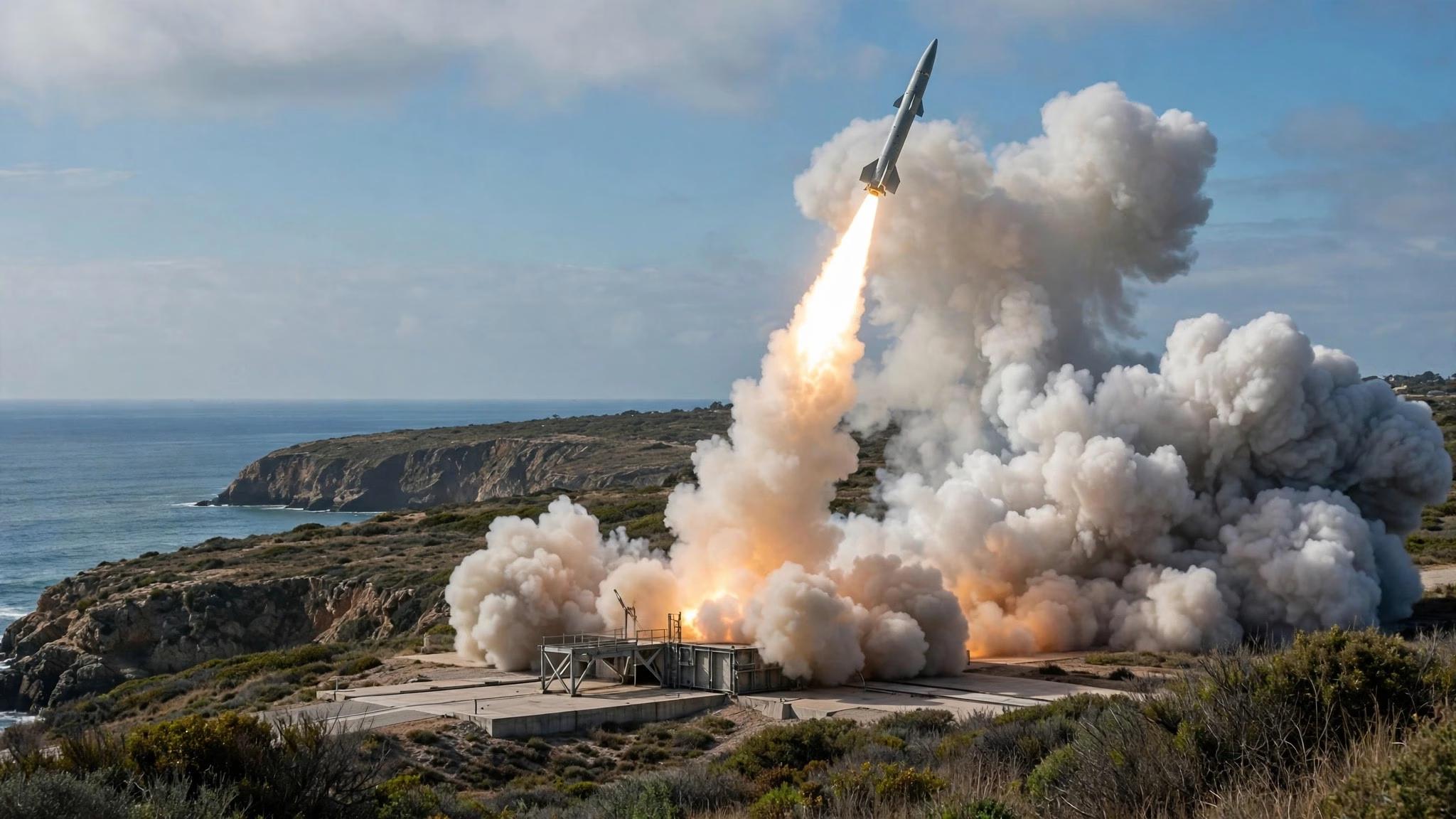
India’s Defence Research and Development Organisation has successfully flight-tested the indigenously built quasi-ballistic missile Pralay, marking another milestone in the country’s missile programme. The test was carried out on 5 November 2026 from Dr APJ Abdul Kalam Island off the Odisha coast, one of India’s key missile testing facilities. The successful flight-test was reported by All India Radio and The Tribune, and it adds to a series of recent achievements by the country’s defence scientists.
Pralay is a surface-to-surface quasi-ballistic missile developed by DRDO, and its successful test is a significant step forward for India’s indigenous defence capabilities. The missile has been designed and built entirely in India, and each successful flight-test brings it closer to full operational use. For a country that has long sought to reduce its dependence on imported weapons, the progress of programmes like Pralay is a matter of both strategic importance and national pride.
The test was conducted from Dr APJ Abdul Kalam Island, formerly known as Wheeler Island, which has been the launch site for many of India’s most important missile tests over the years. The island, located off the coast of Odisha in the Bay of Bengal, offers the safety and the sea range needed for testing missiles, and it has become synonymous with India’s missile development programme. The successful launch from this facility follows a long tradition of tests that have steadily expanded India’s missile capabilities.
The Pralay programme is part of a broader effort by DRDO to build a complete family of missiles for the Indian armed forces, covering a range of roles and ranges. From short-range battlefield systems to long-range strategic missiles, India has spent decades building the expertise and the industrial base needed to design and manufacture its own weapons. Each successful test is the result of years of work by scientists, engineers and technicians, and it reflects the growing maturity of India’s defence research establishment.
Indigenous missile development has become a cornerstone of India’s defence policy, and the government has repeatedly stressed the importance of self-reliance in defence production. Successful tests like that of Pralay demonstrate that Indian institutions can deliver complex, high-technology weapons systems, and they strengthen the case for investing further in domestic research and manufacturing. They also send a message about India’s growing technological capabilities to the wider world.
The successful flight-test of Pralay is a moment of pride for the scientists and engineers of DRDO, and for the armed forces who will one day operate the system. It is also a reminder of how far India’s missile programme has come since its early days, when the country depended heavily on foreign suppliers for even basic defence equipment. Today, India designs, builds and tests its own missiles, and each successful launch is a step towards greater self-reliance.
As the Pralay programme moves forward, further tests and trials are likely to follow, refining the system and preparing it for induction into service. For now, the successful test on 5 November stands as another achievement for DRDO and for India’s indigenous defence industry, and it underlines the country’s determination to build the weapons it needs at home, with its own scientists and its own technology.
