

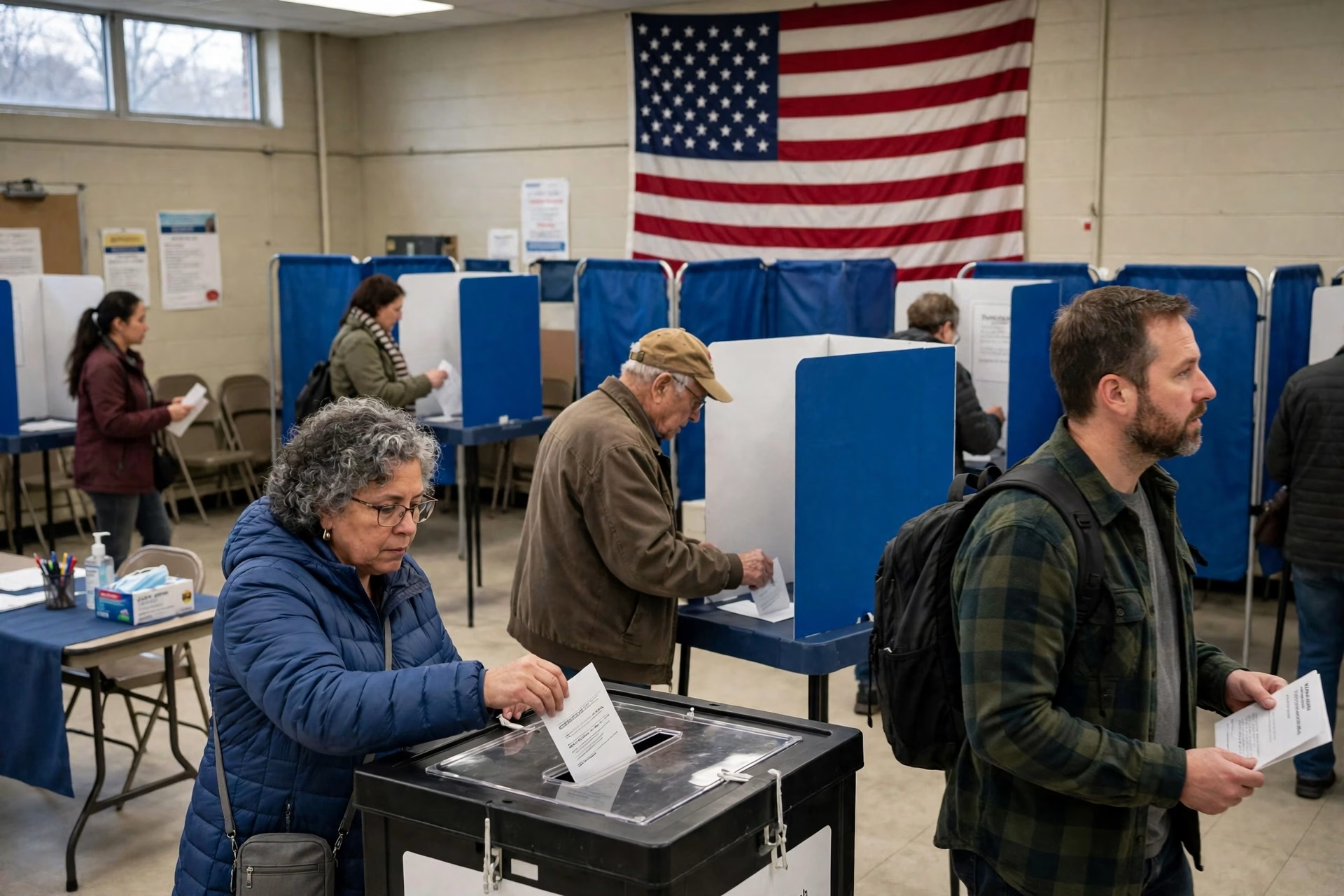
Americans are voting on 4 November 2026 in midterm elections that will reshape the balance of power in Washington and set the political direction of the United States for the remainder of President Donald Trump’s term. All 435 seats in the House of Representatives are on the ballot, along with more than 30 seats in the Senate and 36 governorships, making this one of the most consequential elections of the current political cycle. Polling stations across the country have opened to voters who will decide not only individual races but the broader course of American politics.
Midterm elections have always carried unusual weight in American politics. They arrive midway through a presidential term, when voters have had time to judge the administration in office, and they often become a verdict on the president’s record. This year, that framing is sharper than usual. The contest is widely seen as a referendum on President Trump, with the campaign dominated by concerns over inflation, the state of the economy, war and conflict abroad, and deep political divisions at home. Those issues have shaped debates in races across the country, from congressional contests to the battles for state governorships.
The stakes in the House are straightforward and high. With every seat contested, control of the chamber is fully in play, and the outcome will determine how easily the administration can advance its legislative agenda in the years ahead. In the Senate, where more than 30 seats are being contested, the balance of power will also shift, influencing everything from confirmations to the passage of major legislation. The 36 gubernatorial races add another layer, since governors play a central role in state policy, from education and healthcare to election administration.
For voters, the issues at stake are immediate and personal. Inflation has remained a central concern, affecting household budgets and shaping the mood of the electorate. Political divisions, sharpened by years of polarised debate, have made this election as much about the direction of the country as about individual candidates. Questions of war and America’s role in the world have also featured prominently, adding a foreign policy dimension to an election that is usually fought primarily on domestic ground. Together, these themes have given the midterms a national character that goes beyond local contests.
Counting will begin once polls close, and the first results are expected late at night Indian time and overnight. Early results reported in live coverage have boosted Democrats’ hopes, according to Deccan Herald’s live coverage, though it remains early in the counting process and no overall outcome can be declared on the basis of initial trends alone.
The significance of the results will extend well beyond Washington. The composition of Congress will shape American economic policy, its approach to trade and foreign affairs, and the domestic debates that have divided the country. For countries watching from abroad, including India, the outcome will influence the tone and priorities of American engagement with the world in the coming years. A shift in congressional control could constrain or reshape the administration’s agenda, while a result that preserves the existing balance would be read as an endorsement of its current course.
As counting continues through the night, attention will turn to the key battlegrounds and the pattern of results as they emerge. For now, the election remains open, and the verdict of voters, expressed across thousands of polling stations, is still being counted. What is already certain is that the 2026 midterms will be remembered as a defining moment in the Trump presidency, whatever the final tally shows.
