

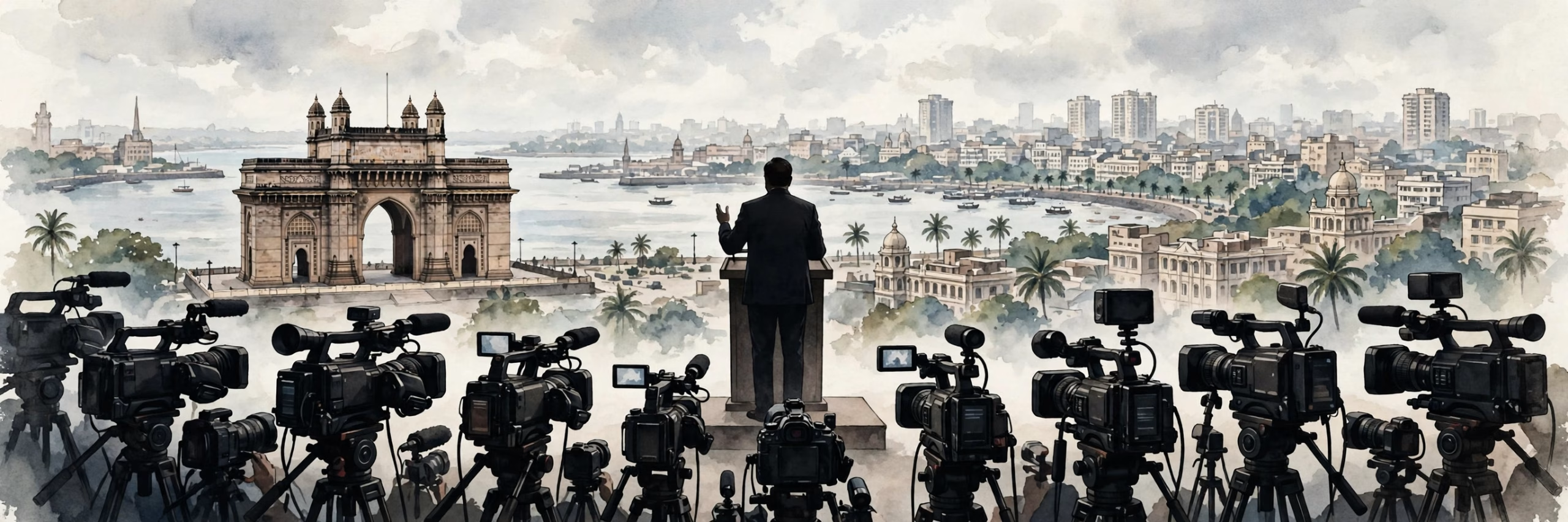
Mumbai: Maharashtra Navnirman Sena chief Raj Thackeray issued a stark warning on October 21, predicting that the “entire country may take to the streets in the coming months” amid the raging controversy over alleged “vote chori” — and reiterated his long-standing demand for a return to ballot-paper voting.
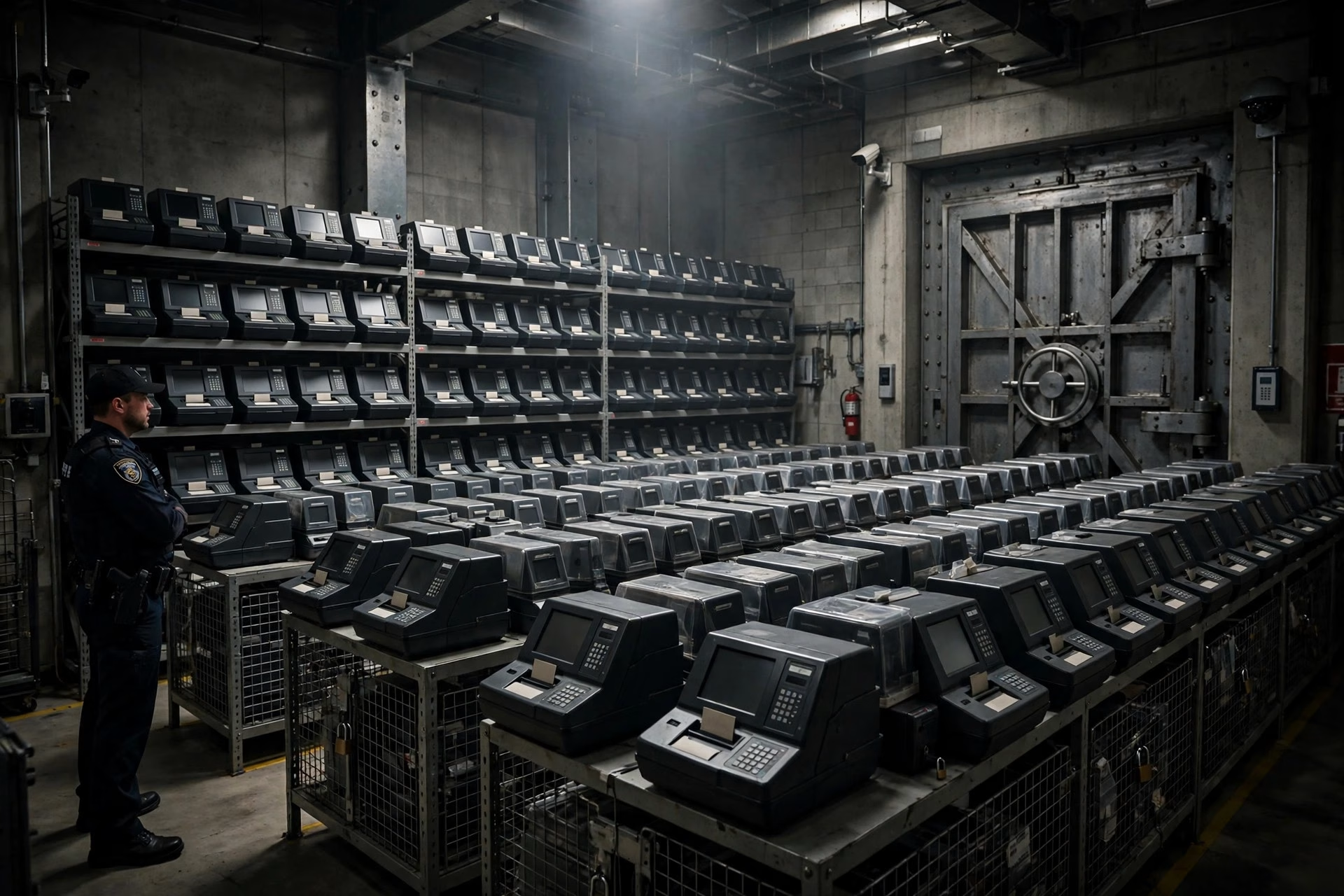
Addressing a press conference in Mumbai, Thackeray said the current unrest over electoral integrity was only the beginning. He has demanded paper ballots since 2018, he reminded his audience, and questioned why countries like France had abandoned electronic voting machines if they were as foolproof as claimed. The EVM-versus-ballot-paper debate, dormant for stretches, has roared back to life with the opposition’s allegations around the Special Intensive Revision of electoral rolls.
Thackeray’s warnings went well beyond electoral mechanics. He predicted shortages of foodgrains and essential commodities that the government “will not be able to handle”, painting a picture of compounding crises — economic distress feeding political anger, and political anger spilling onto the streets. In his most dramatic flourish, he spoke of a day when “this country will have no Prime Minister”, a line clearly designed to rattle the ruling establishment.
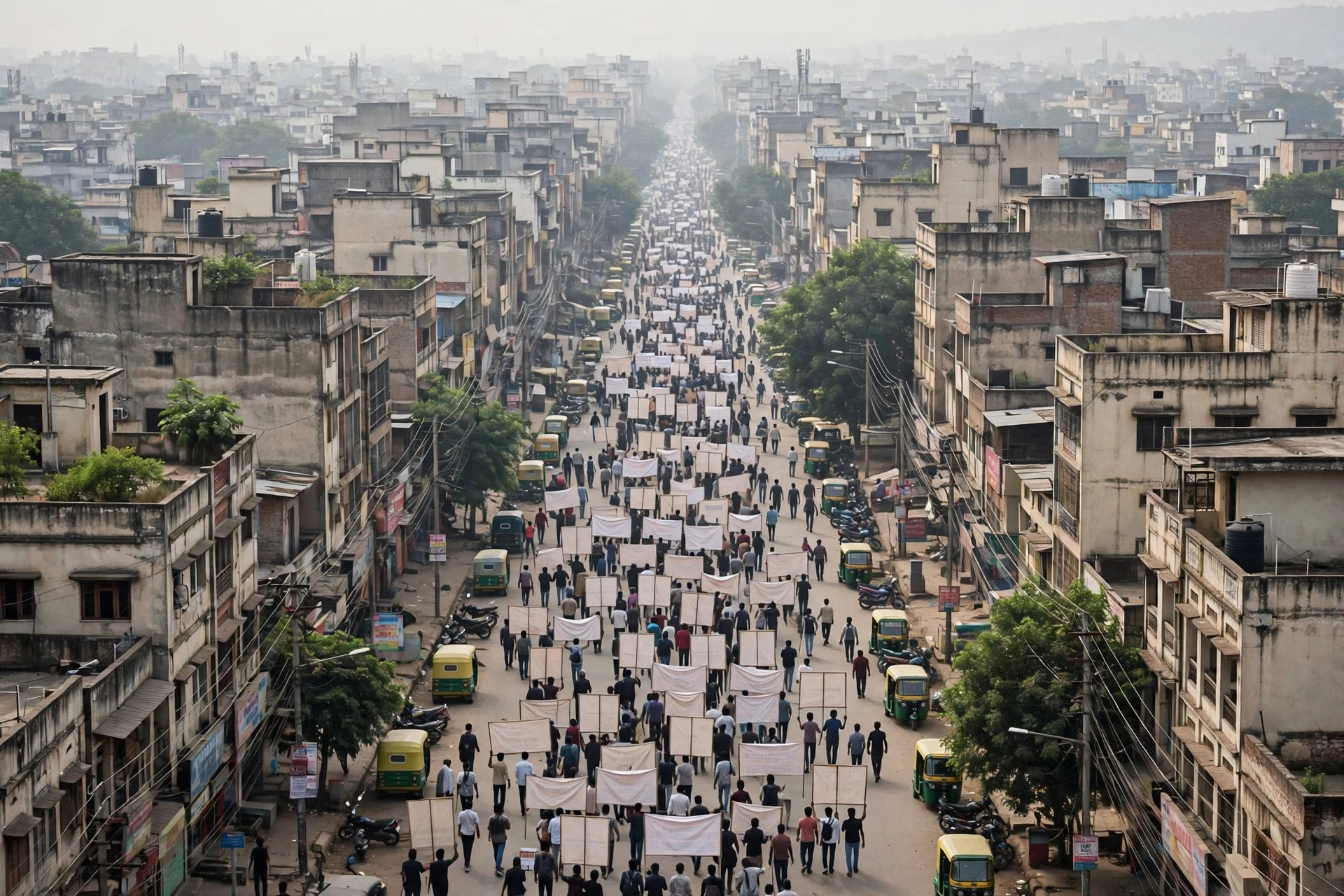
The MNS chief also levelled serious allegations about the handling of recent youth protests, claiming that police had lathi-charged peaceful demonstrators and that men disguised as policemen had been planted among the crowds. The charges, offered without documentary evidence at the press conference, add to the opposition’s broader narrative of a state machinery being weaponised against dissent.
Thackeray’s intervention did not come in isolation. It followed a meeting in which INDIA bloc leaders called on President Droupadi Murmu with a four-demand memorandum: the resignation of Chief Election Commissioner Gyanesh Kumar, an end to the SIR exercise, a return to ballot papers, and the repeal of the 2023 law granting election commissioners lifelong immunity from legal proceedings. The memorandum gives the street-level agitation a formal, institutional anchor — and Thackeray’s warning gives it a timeline.
The MNS chief occupies a distinctive position in this debate. Neither part of the INDIA bloc’s core nor aligned with the BJP-led NDA, he has carved out space as an independent pole of opposition politics in Maharashtra, and his warnings tend to be amplified precisely because they come from outside the usual partisan trenches. When he speaks of the country taking to the streets, both the government and the opposition listen — the former with alarm, the latter with interest.
The Election Commission has consistently defended the integrity of EVMs and the SIR process, dismissing the opposition’s allegations as baseless. But the political temperature suggests the technical rebuttals are not landing. Each press conference, each memorandum, each warning adds another layer to a confrontation that shows no sign of de-escalation.
Whether Thackeray’s prediction of nationwide unrest proves prescient or hyperbolic will be judged in the coming months. For now, his October 21 press conference has ensured that the ballot-paper demand — and the spectre of street protests — remains at the very centre of India’s political conversation.
