

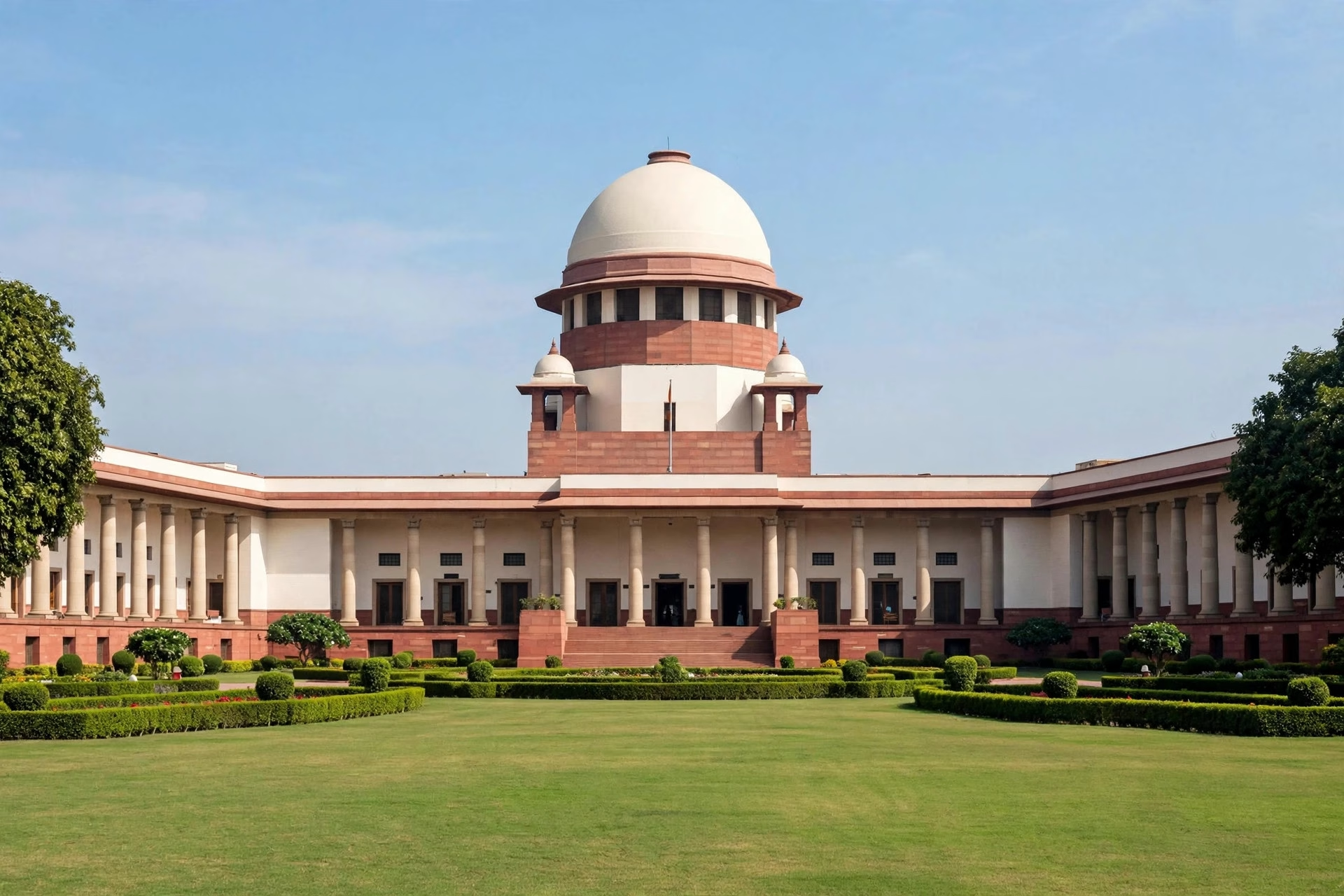
The Supreme Court on Thursday took up a clutch of petitions on the controversy surrounding the Delhi leg of the Special Intensive Revision (SIR) of electoral rolls, including a plea by Leader of Opposition Rahul Gandhi challenging the Election Commission of India’s revision exercise. The matter is being heard by a bench comprising Chief Justice of India Surya Kant and Justice Joymalya Bagchi at 10:30 am.
The petitions allege police excesses against protesters, journalists and lawyers during the recent Delhi protests against Chief Election Commissioner Gyanesh Kumar over the SIR. They also challenge the closure of metro stations ahead of the October 10 protest and a provision of the Bharatiya Nagarik Suraksha Sanhita invoked by the authorities.
The list of petitioners reads like a roll call of the INDIA bloc leadership — Rahul Gandhi, Congress president Mallikarjun Kharge, Samajwadi Party chief Akhilesh Yadav, RJD leader Tejashwi Prasad Yadav, Supriya Sule, Sanjay Raut, CPI(M)’s M.A. Baby, Manoj Jha, Digvijaya Singh, advocate Menaka Guruswamy and AIMIM chief Asaduddin Owaisi.
Separately, on October 14 the Court advanced to October 28 a related plea concerning the Delhi SIR Form-6 issue — the allegation that voters deleted from the rolls are being asked to reapply while declaring “first-time” inclusion. The bench took note of the fact that the deadline for claims and objections is October 30.
The petitions also question the decision to shut metro stations ahead of the October 10 protest and challenge the application of a provision of the Bharatiya Nagarik Suraksha Sanhita by the Delhi Police during the agitation.
The listing comes amid a rapidly escalating political confrontation over the SIR. The INDIA bloc’s “March for Democracy” reached the Supreme Court registry on October 12, and on October 13 Union Home Minister Amit Shah, at a press conference, predicted a “crushing defeat” for the Congress and its fourth consecutive loss in 2029, accusing the opposition of shielding infiltrators through its opposition to the revision.
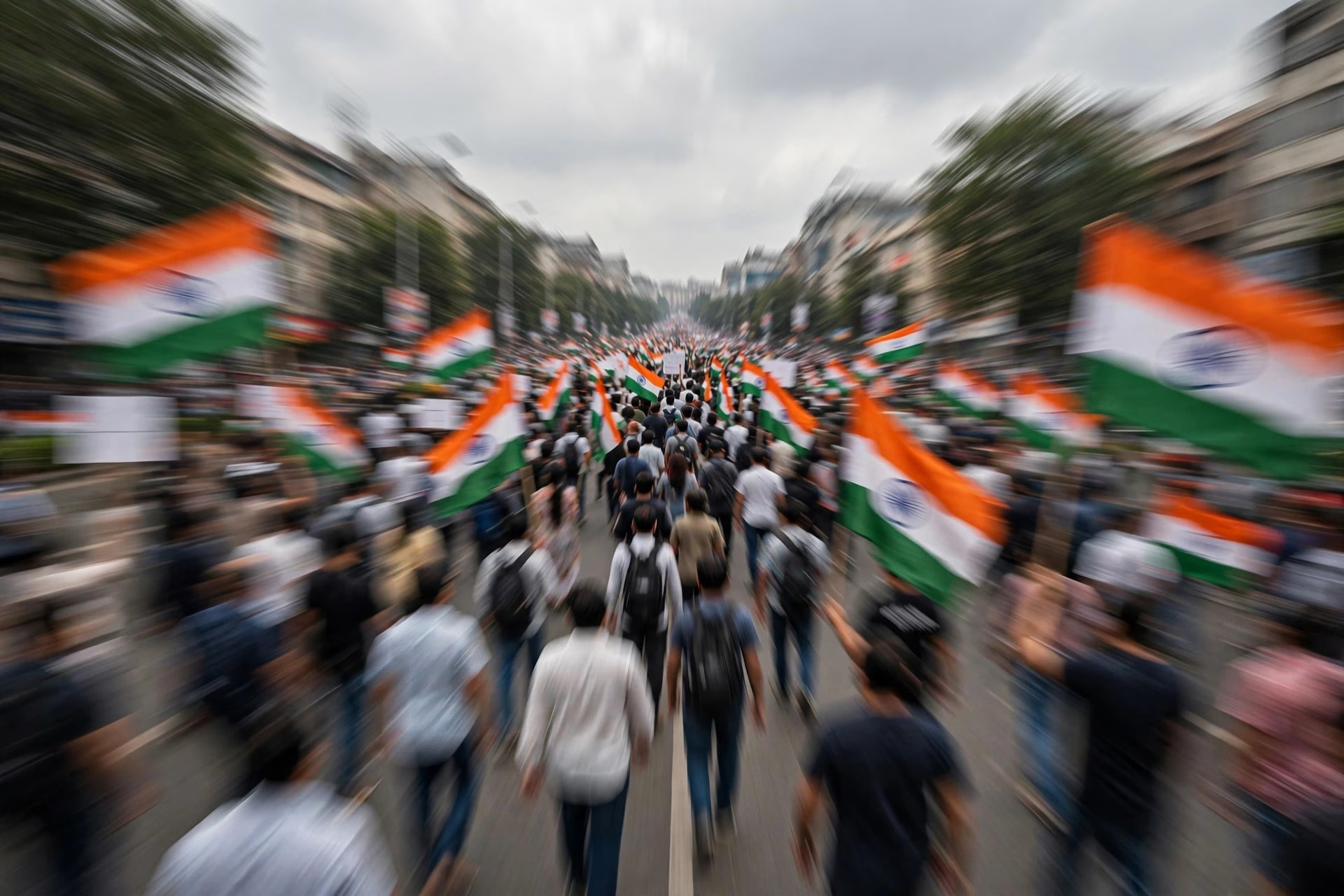
Rahul Gandhi, on October 14, expressed support for CJP leaders who have been jailed for five days following the Jantar Mantar protest — a demonstration that has now cost the capital’s most iconic protest venue its authorised status. On October 14, Jantar Mantar lost its position as an authorised protest venue after three decades, a decision that itself has drawn sharp reactions from civil society groups.
The outcome of today’s hearing is being watched closely, not just for the fate of the Delhi revision exercise but for the legal principles the Court lays down on protest policing and the conduct of roll revisions — questions that are likely to resonate far beyond this one election cycle.
