

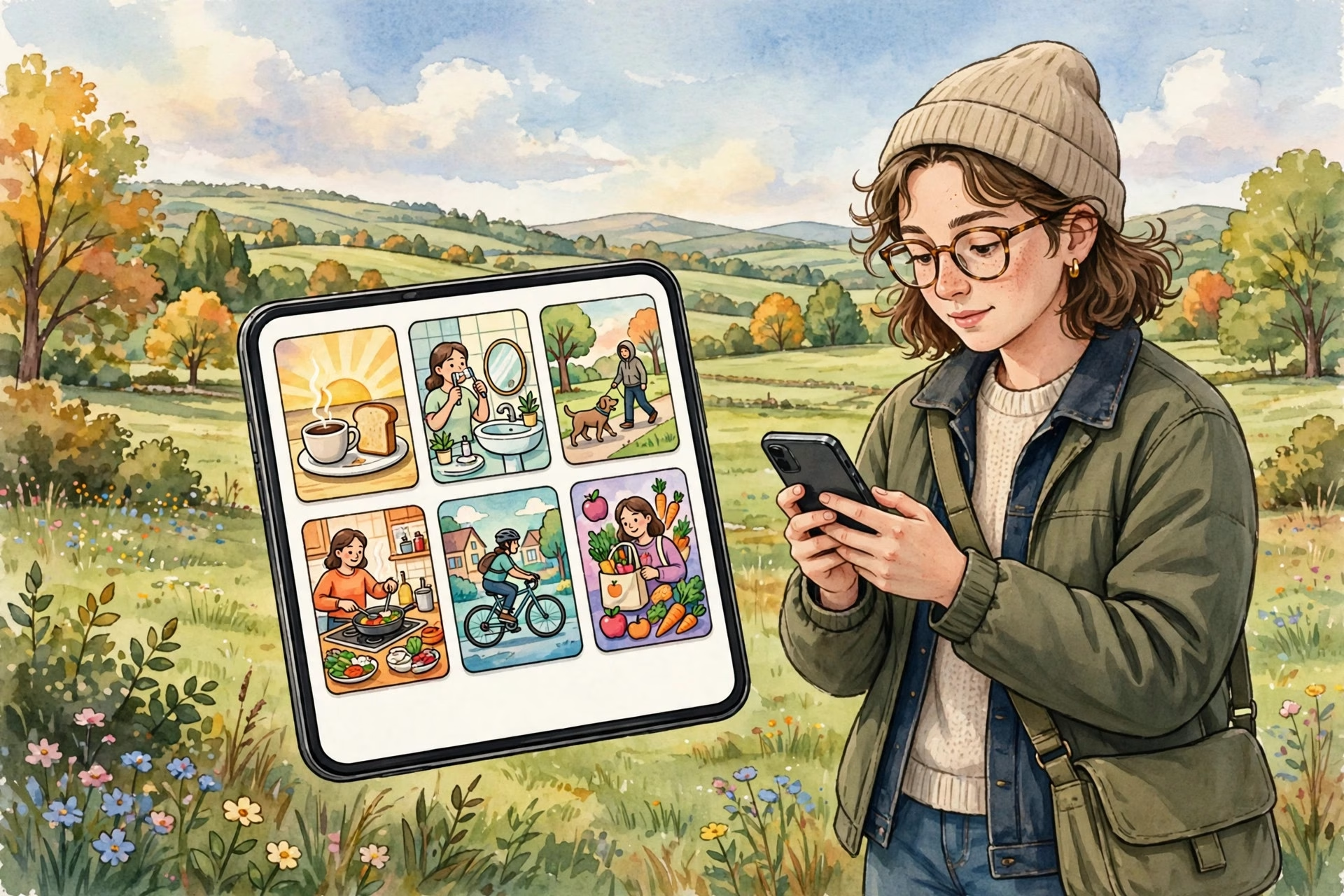
Google has launched its experimental Dreambeans app in India, the first market outside the United States for an AI product that turns a user’s digital life into personalised, illustrated stories. Announced on Monday, the expansion brings the app to Android and iOS users in India with support for 13 local languages — including Hindi, Punjabi, Tamil, Telugu and Bengali — alongside English.
Dreambeans, built by Google Labs, works on a simple but ambitious idea: instead of an endless feed, it delivers a small daily set of stories drawn from the user’s own activity. With permission, it connects to services including Calendar, Gemini, Gmail, Photos, Search and YouTube, and uses Google’s Personal Intelligence system to surface things a user might have missed, would love, or could act on — each story accompanied by an AI-generated illustration.
India was chosen as the first international market, Google said, because of strong interest from Indian users and the unusually high overlap of users across Gemini, Gmail and Google Photos in the country. Product manager Gozde Oznur told reporters that the breadth of Google’s services in India made it the natural testing ground for a product that depends on drawing connections across apps.
The language support is a significant part of the pitch. Users can choose one language at a time for their generated stories, and while the app can draw on information across services in multiple languages, it cannot currently generate stories that mix languages. For a market where multilingual households are the norm, that limitation will be watched closely — as will how well the stories handle Indian names, places and cultural context.
Dreambeans began in June as a Labs experiment, opened to all eligible US users aged 18 and older in September, and has recorded nearly 55,000 downloads in the US, according to estimates from Sensor Tower shared with TechCrunch. Those are modest numbers, but Google Labs experiments are judged less on scale than on what they teach: whether users actually want an AI to narrate their lives back to them, and whether they trust it with the data that makes that possible.
Privacy is therefore the central question. Dreambeans only uses connected services with consent, and Google says it works from distilled information rather than full content — but the product’s very premise requires deep access to email, photos and calendar. In India, where data protection awareness is rising fast, the app’s reception will be a useful test of how far users will let personalisation go.
For now, Dreambeans remains an experiment that may change or end. Its arrival in India, though, is a signal of how seriously Google takes the market as a proving ground for its most personal AI ideas. The stories it tells will be about users’ lives; the story that matters for Google is whether users want to hear them.
