

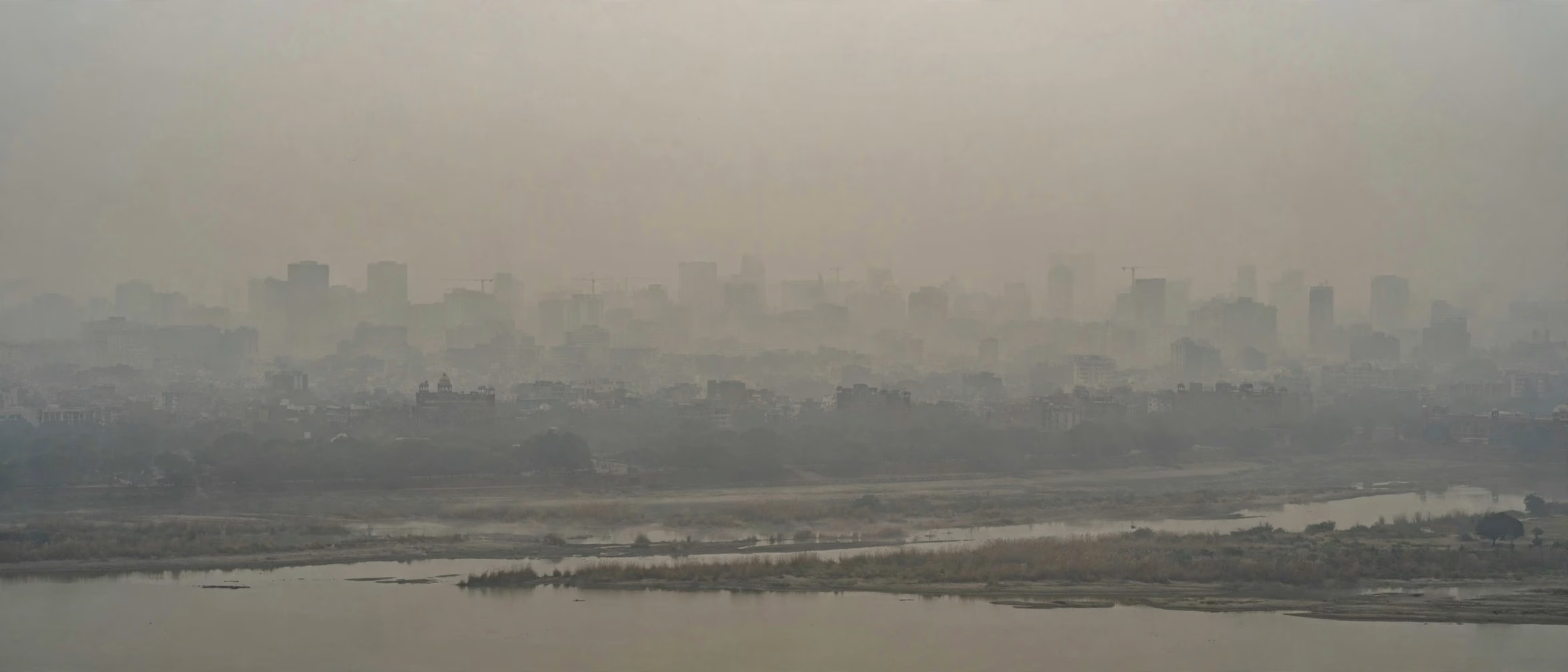
The Commission for Air Quality Management (CAQM) has invoked Stage II measures under the Graded Response Action Plan (GRAP) across Delhi-NCR, after the region’s air quality deteriorated into the ‘very poor’ category. The decision, announced as November began, brings a fresh round of restrictions aimed at curbing dust, emissions and other pollution sources before the winter smog season tightens its grip.
Stage II of GRAP is triggered when the air quality index (AQI) is forecast to remain in the ‘very poor’ range, between 301 and 400. The measures focus on the everyday sources that add up across a megacity: increased mechanised sweeping and water sprinkling on roads, stricter enforcement against dust at construction sites, curbs on the use of diesel generator sets except for emergency and essential services, and tighter checks on polluting vehicles and industrial units.
The timing is unwelcome but familiar. Every year, as temperatures fall and wind speeds drop, Delhi’s air traps the emissions of vehicles, industry, construction dust and seasonal farm fires from neighbouring states. Diwali fireworks add a sharp, short-lived spike to the mix, and the days after the festival are often when the city’s air turns visibly worse. This year’s invocation of Stage II at the start of November follows that pattern closely.
For residents, the practical advice from doctors remains unchanged and worth repeating: limit outdoor exertion on poor-air days, especially for children, the elderly and people with asthma or heart conditions; keep windows closed during the worst hours; and use a well-fitting mask outdoors when the AQI climbs into the ‘very poor’ or ‘severe’ bands. Air purifiers help indoors, but they are no substitute for reducing exposure during morning and evening peaks.
The authorities’ challenge is that GRAP’s early stages are largely about enforcement of rules that already exist — dust control, waste burning bans, vehicle checks — rather than dramatic new interventions. The sharper measures, including restrictions on construction activity and vehicle categories, arrive only at Stages III and IV, when the air turns ‘severe’. Invoking Stage II early is meant to delay, or avoid, that escalation.
Whether it works will depend on the weather as much as on enforcement. A spell of strong wind can clear the capital in a day; a still, cold week can undo the best compliance efforts. Forecasts in the coming days will therefore matter as much as the measures themselves.
For now, Delhi-NCR is back in its annual winter routine: advisories, sprinklers, and a skyline that fades by afternoon. Stage II is a warning, not yet an emergency. The question, as every November, is whether the city acts early enough to keep it that way.
