

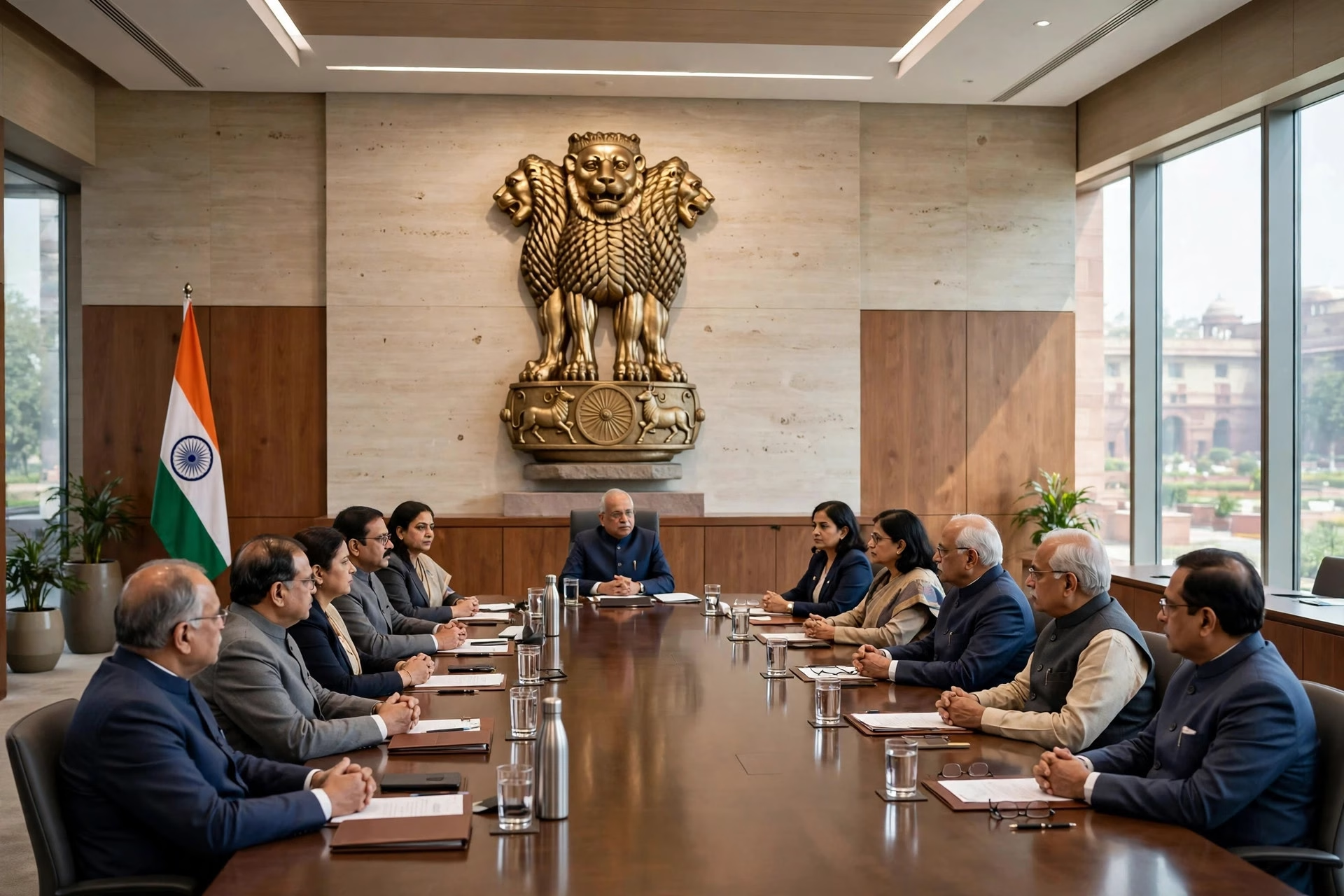
The Union Cabinet, chaired by Prime Minister Narendra Modi, has approved a major new scheme to transform India’s statistical system, clearing the Viksit Bharat Initiative for Statistical Transformation, Analytics and Research, known as VISTAR. The decision was taken on 4 November 2026, and the scheme carries a total outlay of Rs 4,371.10 crore for the period from financial year 2026-27 to 2030-31. VISTAR is a Central Sector Scheme that will be implemented through the Ministry of Statistics and Programme Implementation, known as MoSPI, and it represents one of the most significant overhauls of official statistics in the country in years.
At its heart, VISTAR is about making India’s data better, faster and more useful. Good statistics are the foundation of good policy: governments need reliable numbers on jobs, prices, production and trade to decide where money should go and whether schemes are working. The new scheme aims to modernise how that data is collected, processed and shared, using new technology and new methods to produce statistics that reflect the reality of a fast-changing economy.
The scheme has three main components, and the first is a comprehensive overhaul of statistical operations. During the 16th Finance Commission cycle, 59 surveys are proposed, compared with 43 major surveys in the earlier cycle, a substantial expansion of the statistical work the government undertakes. New measures are planned, including a Headline Index of Services Production and an Index of Unincorporated Sector Enterprises, both of which would fill important gaps in how the economy is measured. Artificial intelligence and machine learning will be used for data processing, with the aim of producing results more quickly and with greater accuracy than the manual methods of the past.
The second component, Support for Statistical Strengthening 2.0, is aimed at states and Union Territories. Under this part of the scheme, support will be provided to improve statistical capacity at the state level, including the production of district-level estimates and estimates for million-plus cities. This matters because national averages often hide wide differences between regions, and policymakers in states and districts need local data to plan effectively. Better state-level statistics should mean better-targeted welfare schemes, infrastructure spending and employment programmes.
The third component is the 8th Economic Census, a massive exercise that will cover non-farm establishments and workers across the country, down to the level of gram panchayats and wards. The census will support the creation of a National Statistical Business Register, a comprehensive database of businesses that would help the government understand the structure of the economy in far greater detail. For a country where a large share of economic activity takes place in small, informal enterprises, such a register could be a powerful tool for planning and policymaking.
It is important to note clearly that these are planned outputs, not completed results. The Cabinet has approved the scheme and its funding, but the surveys, the new indices, the state-level strengthening and the Economic Census are all work that lies ahead over the next five years. The success of VISTAR will depend on how well it is implemented, how quickly the new data is produced, and whether the statistics it generates are trusted and used by policymakers, researchers and the public.
If it works as intended, VISTAR could change the way India understands its own economy. Better data on services, on unincorporated enterprises, on districts and cities, and on the millions of small businesses that drive employment would give the government a sharper picture of where the economy is heading. That sharper picture may prove to be one of the most valuable investments the Cabinet has made.
