

1 November is India’s unofficial States Day, and on Sunday it was marked across the country as nine states and union territories celebrated their foundation anniversaries. From Karnataka to Kerala, Tamil Nadu to Punjab, the day carried the same message from leaders of different parties: India’s diversity is its strength, and its federal map is a living part of its democratic story.
Rajasthan Chief Minister Bhajan Lal Sharma opened the morning with warm wishes for Andhra Pradesh, Chhattisgarh, Haryana, Karnataka, Kerala, Madhya Pradesh, Delhi, Punjab and Tamil Nadu. Writing in Hindi, he extended heartfelt good wishes to residents of all nine and invoked the idea that diversity and rich cultural heritage are India’s greatest strength, urging each state to establish new dimensions of progress, harmony and prosperity.
Haryana Chief Minister Nayab Singh Saini issued a similar message, greeting Punjab, Madhya Pradesh, Andhra Pradesh, Chhattisgarh, Karnataka, Kerala, Tamil Nadu, Lakshadweep, Andaman and Nicobar Islands and Puducherry. He tied regional pride to the national vision of a developed India by 2047, arguing that linguistic and cultural plurality is a source of unity, not fragmentation.
The date’s significance goes back to the States Reorganisation Act of 1956, which redrew India’s internal map largely along linguistic lines. On 1 November 1956, Andhra Pradesh, Karnataka, Kerala and Madhya Pradesh came into existence in their reorganised forms. Punjab followed through the Punjab Reorganisation Act of 1966, Haryana was carved out the same year, and Chhattisgarh was born as a new state on 1 November 2000. That layered history is why so many anniversaries fall on a single day.
Both chief ministers invoked “Ek Bharat — Shreshtha Bharat”, the cultural integration initiative launched by the Ministry of Culture in 2015 that pairs states with each other to promote exchanges in language, tourism and the arts. The scheme’s premise is simple: Indians understand their own country better when they encounter each other’s festivals, food, literature and crafts first-hand.
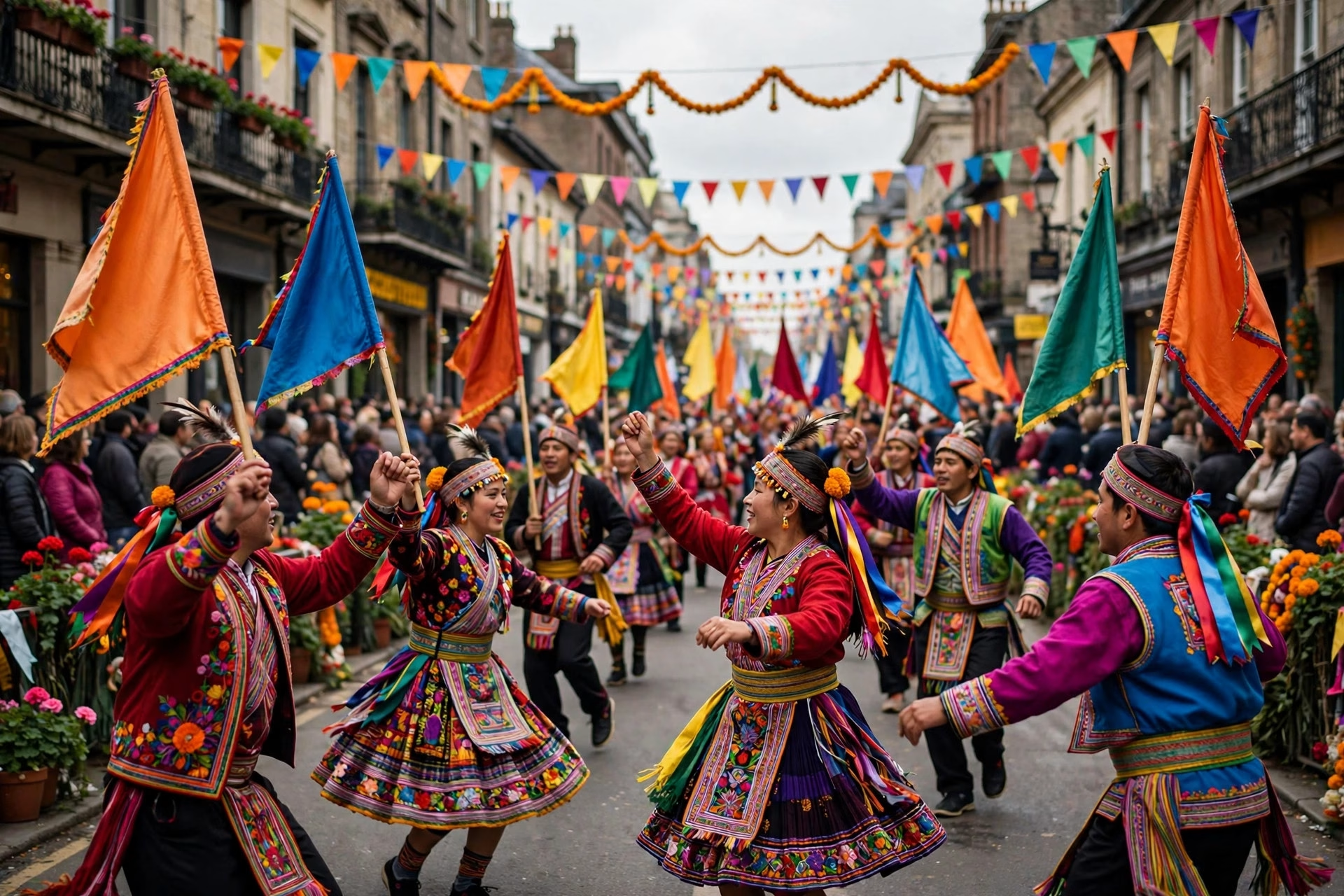
For ordinary citizens, Foundation Day is less about statutes and more about identity. In Bengaluru, Thiruvananthapuram, Chennai and Bhopal, the day is marked with flag-hoisting, cultural programmes, awards for distinguished residents and school events that retell how each state took shape. It is a reminder that statehood in India was not handed down whole; it was negotiated, debated and, at times, fought for.
The celebrations also carry a quiet political lesson. India’s linguistic reorganisation was once feared as a recipe for division. Seven decades on, it is more often cited as the settlement that allowed strong regional identities to coexist with a single national citizenship. A Kannadiga, a Malayali and a Punjabi can each celebrate a distinct state day on the same date without any contradiction — and that, leaders argued on Sunday, is precisely the point.
As the festive season builds towards Dhanteras on 6 November and Diwali on 8 November, Foundation Day also sets a cultural tone for the week ahead. Markets, fairs and family gatherings will now take over the calendar. But 1 November remains the day when India pauses to remember how it became a union of states — not by erasing differences, but by giving them a home.
