

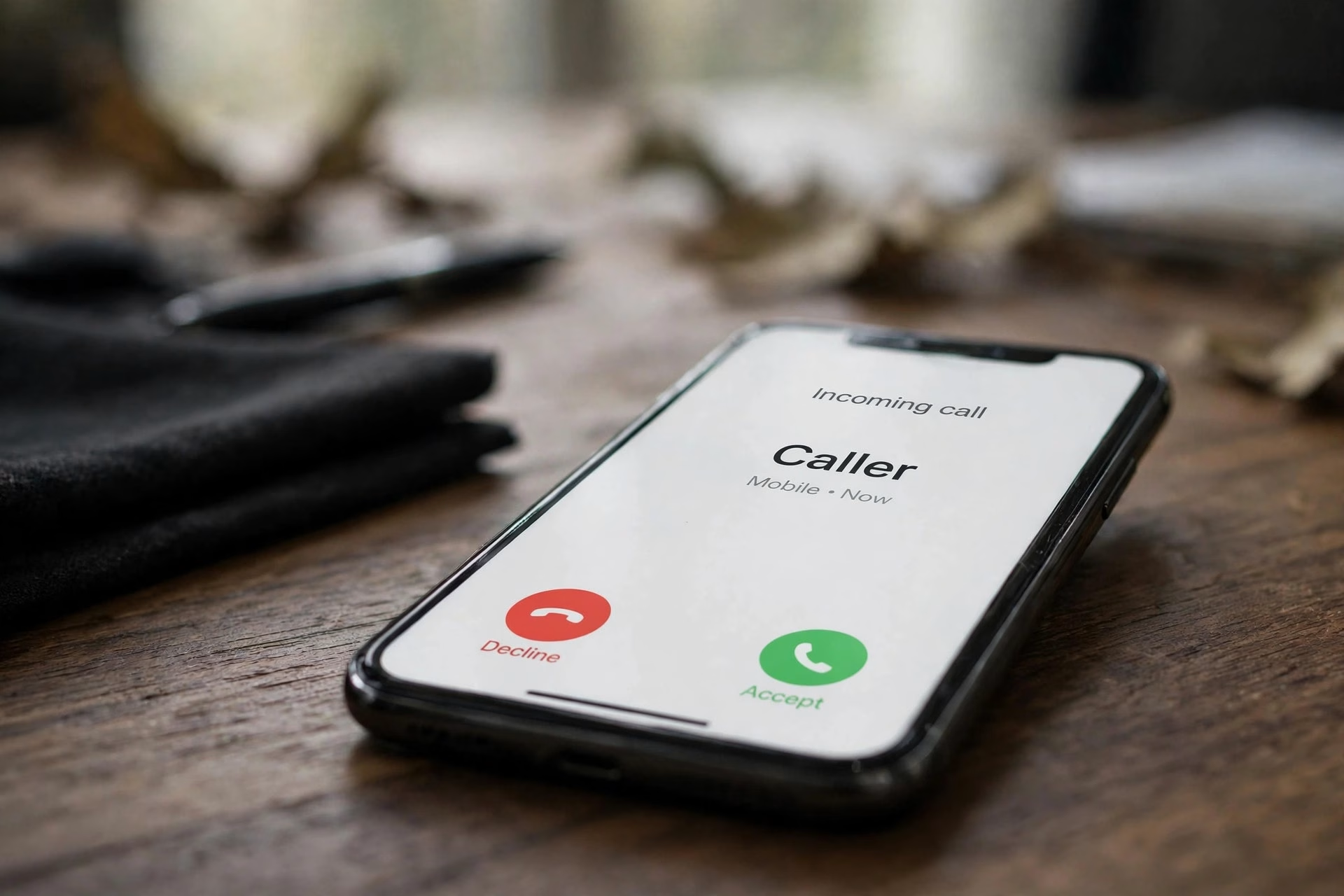
From Sunday, 1 November, millions of mobile users in India will begin seeing something new when an unknown number calls: the caller’s name, displayed alongside the number, without needing a third-party app. The government-mandated Calling Name Presentation (CNAP) service goes live on 4G and 5G networks, in one of the most visible telecom changes of the year.
The Department of Telecommunications (DoT) directed all access-service providers — including Reliance Jio, Bharti Airtel, Vodafone Idea and state-owned BSNL — to implement CNAP across every service area from 1 November. The directions, issued on 13 October, cite the Telecommunications (Authorisation for Provision of Principal Telecommunication Services) Rules, 2026, and the Unified Licence Agreement.
CNAP works through the network itself. When a call arrives from a number that is not saved in the recipient’s contacts, the displayed name will be the one recorded in the originating operator’s subscriber database — typically the name provided during Know Your Customer (KYC) verification. If the number is already saved, the contact name will appear as usual.
The service is automatic. Eligible users do not need to submit a separate request, change a setting or install an app. That is a deliberate shift from the Telecom Regulatory Authority of India’s original February 2024 recommendation, which envisaged users opting in. The DoT has made CNAP a default service on 4G and newer wireless networks, including 5G.
There are important limits. CNAP will initially cover only 4G and newer mobile networks. Users on 2G and 3G networks, and landline users, remain outside the first rollout, with a decision on extending the service to those networks to be taken separately. Calls originating outside India will be shown only as “International Call”, rather than displaying a caller’s name.
Privacy protections are built in at the edges. Callers who have activated Calling Line Identification Restriction (CLIR), an existing facility for restricting caller identification, will not have their names displayed through CNAP. Businesses with a trademark or registered name on the GST portal may be able to have a preferred name shown, under the framework described in coverage of the rollout.
The aim, officials and regulators have said, is to help users identify unknown callers and curb spam, fraud and impersonation calls. India has long relied on crowd-sourced caller-identification apps such as Truecaller to fill this gap. CNAP moves that function into the network, using verified subscriber records rather than user-reported tags.
That distinction matters, but it does not make CNAP a cure-all. The DoT circular does not claim the service will eliminate spam or fraudulent calls, and a displayed KYC name is not a guarantee that the caller is who they claim to be in a commercial sense. Users should still treat unexpected calls seeking money, OTPs or personal details with suspicion.
Rollout may also be uneven in the first days. Operators must switch the service on across service areas, and handset and network combinations can affect how the name field renders. Anyone who does not see names immediately on 1 November is not necessarily excluded; the mandate sets the implementation date, and coverage is expected to settle as networks complete the change.
For most users, though, the practical change is simple: the next unknown call will come with a name attached. In a country where a single missed or mistaken call can mean a lost delivery, a missed job opportunity or a fraud attempt, that small piece of context is likely to be noticed quickly.
