

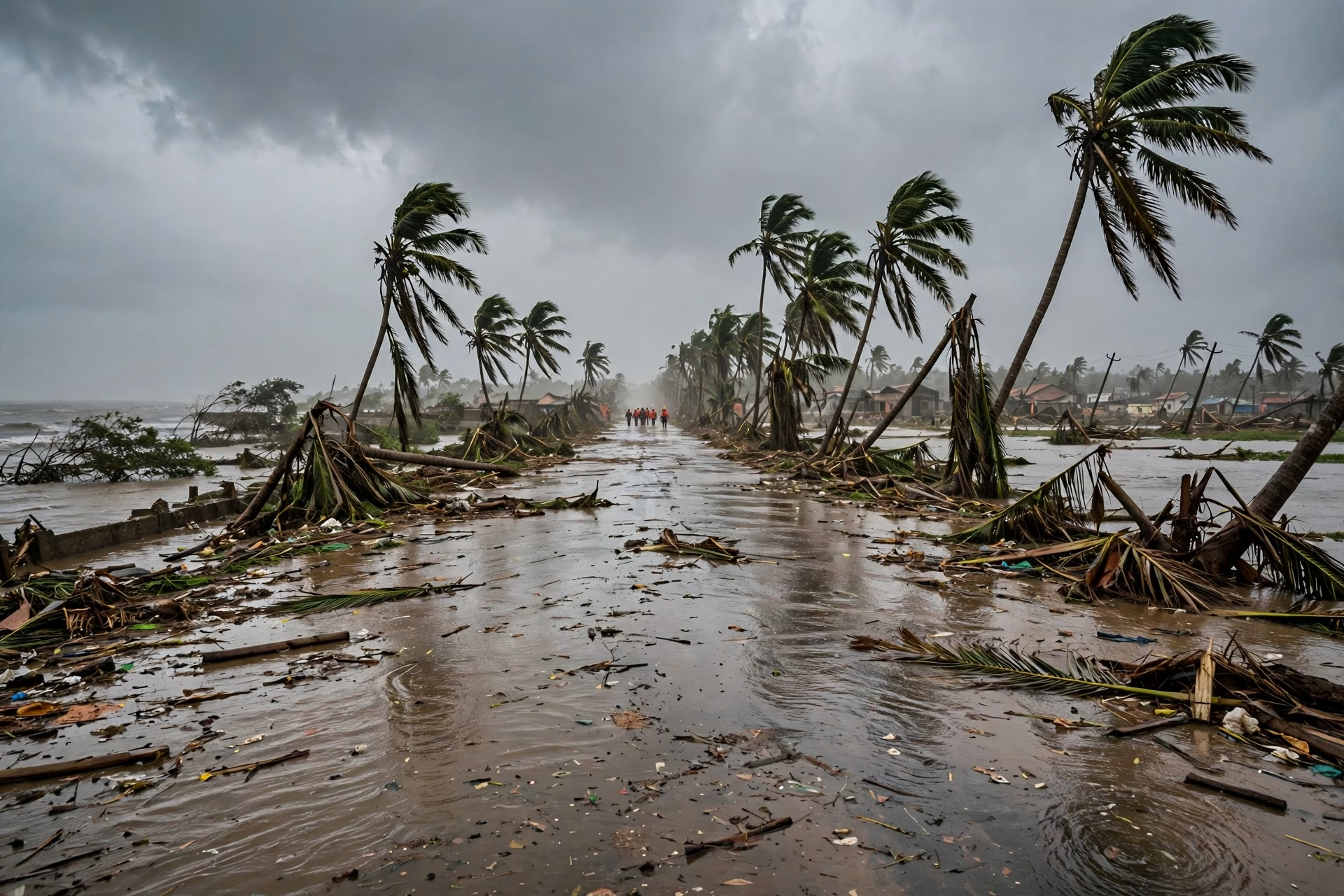
Severe Cyclonic Storm Murasu has weakened after crossing the south Andhra Pradesh coast, but its passage has left a wide trail of damage across coastal districts, with heavy rain continuing into parts of the region and relief operations still under way. The storm crossed the coast near Ongole in the early hours of 3 November, between 3:30 am and 5:30 am, with winds of 100 to 110 kilometres per hour gusting to 120 kilometres per hour. By later on 3 November, it had weakened to a cyclonic storm and then a deep depression, yet the rain it brought, and the disruption that followed, did not end with the weakening of the winds.
The human cost of the storm is still being assessed, and early reports differed on the number of casualties. Authorities later confirmed at least two deaths in cyclone-related incidents, according to reports from PTI and the Andhra Pradesh State Disaster Management Authority. Officials have urged caution in treating early, unverified figures as final, and the confirmed toll reflects the information available as assessments continue across the affected districts.
Rainfall figures underline why the damage has been so extensive even after the storm lost strength. Bapatla recorded 22 centimetres of rain, while Narasapur recorded 20 centimetres. Such intense rainfall in a short period overwhelmed drainage in low-lying areas, damaged standing crops and added to waterlogging in towns and villages along the coast. For farming families, the timing of the storm has been particularly harsh, coming at a stage when crops were standing in the fields and vulnerable to both wind and water.
The scale of the agricultural damage is now becoming clear. As much as 52,459 hectares of crops have been damaged, a figure that points to significant losses for farmers across the affected belt. Beyond the fields, the storm tore through basic infrastructure. Around 31,000 electric poles were damaged, triggering a power blackout in 4,095 villages, while 312 houses were reported damaged. The overall loss has been estimated at around Rs 344 crore, though officials are continuing to compile a fuller picture as teams reach more areas.
Thousands of people were moved to safety before and during the storm. More than 12,230 people were accommodated in shelters, and tens of thousands were evacuated from vulnerable coastal and low-lying areas as a precaution. Shelter operations, food and drinking water arrangements, and the restoration of power and road connectivity have become the immediate priorities for the administration as the weather begins to ease.
Murasu is the second cyclone to strike within a week, coming after Cyclone Arnab, and the back-to-back systems have stretched relief and restoration machinery in the coastal region. Heavy rain continued into 4 November in coastal Andhra Pradesh as well as Telangana and Tamil Nadu, keeping the risk of localised flooding alive even as the main system weakened. The India Meteorological Department warned fishermen not to venture into the sea until the morning of 4 November, a reminder that conditions offshore remained unsafe.
For coastal communities, the days ahead will be about recovery as much as relief. Restoring electricity to thousands of villages, repairing damaged houses, assessing crop losses for compensation, and clearing waterlogged areas will take time and coordination. As the rain recedes and teams complete their surveys, the full account of Murasu will emerge, but the immediate story is already clear: a storm that weakened quickly still left behind flooded fields, darkened villages and thousands of people waiting to return home.
