

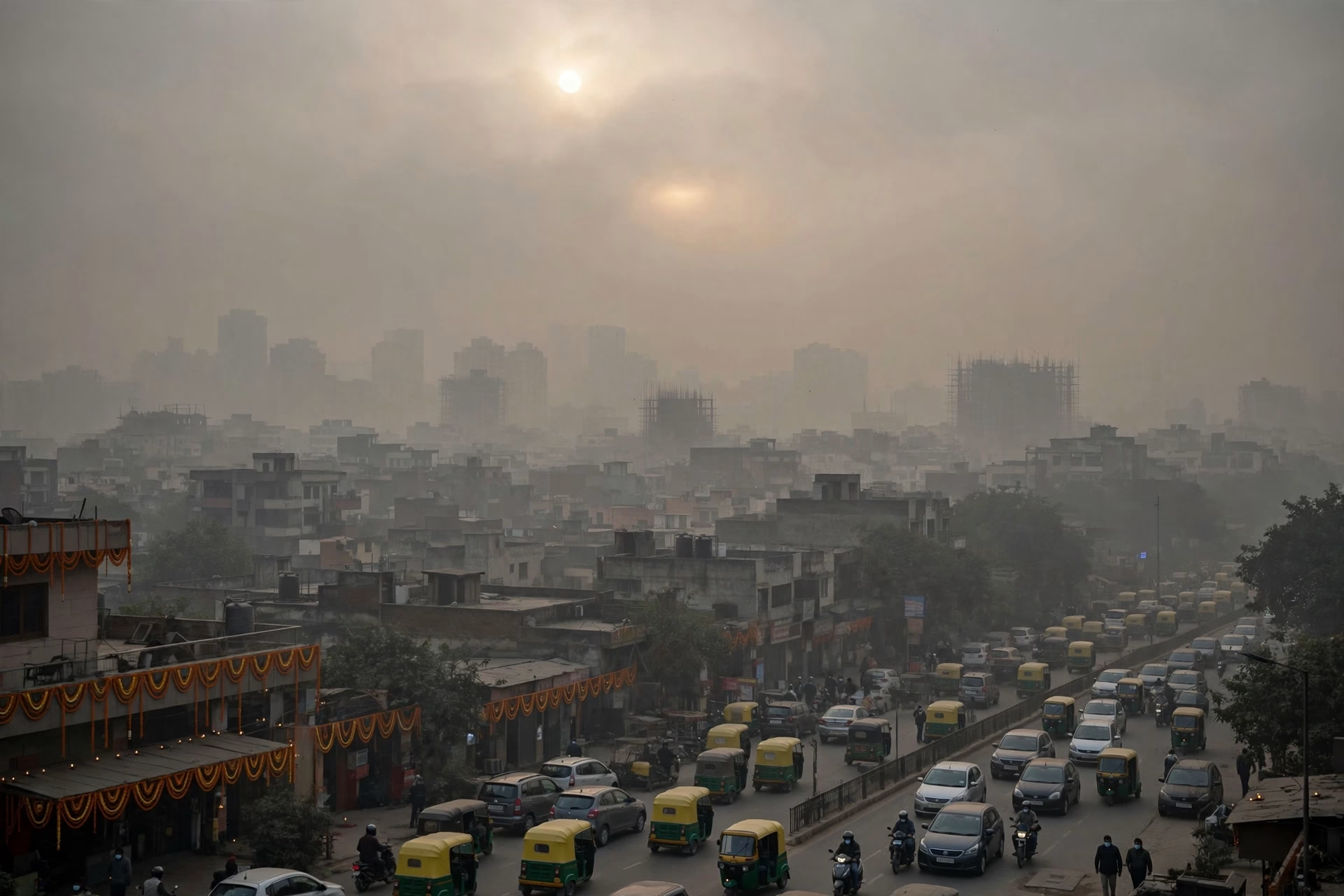
Delhi’s air has slipped into the very poor category ahead of Diwali, bringing back the familiar winter anxiety over pollution in the national capital and prompting the return of anti-pollution curbs. As the festival season approaches, the deterioration in air quality has once again placed the city under scrutiny, with residents, authorities and courts all grappling with the same recurring question: how to celebrate Diwali without worsening an already fragile atmosphere.
The timing of the deterioration is significant. Diwali is traditionally associated with fireworks, and the days around the festival have historically seen sharp spikes in pollution levels. This year, the slide into the very poor category has come before the festival itself, raising concerns about what the festival days could bring. Anti-pollution curbs have returned as authorities move to limit sources of pollution and prevent a further slide in air quality during a period when weather conditions already work against the city.
Into this situation has come an important decision from the Supreme Court. The court has allowed certified green crackers in Delhi-NCR on 7 and 8 November, with fixed morning and night hours during which they may be burst. The ruling draws a careful distinction between certified green crackers, which are designed to produce lower emissions, and conventional firecrackers, and it confines the permission to a limited window on two specified days. For residents who wish to mark Diwali with fireworks, the order provides a regulated route; for authorities, it sets clear boundaries for enforcement.
At the same time, the court flagged the sale of all firecrackers in Delhi and asked the Centre to probe the issue. That direction adds a layer of scrutiny to the firecracker trade in the capital, raising questions about how crackers reach the market, whether uncertified products are being sold, and how effectively existing restrictions are being enforced. The court’s intervention suggests that the question of firecrackers in Delhi is not settled by the green cracker permission alone, and that the sale side of the trade will now face closer examination.
The return of anti-pollution curbs reflects the broader challenge Delhi faces every winter. A combination of factors, including weather conditions that trap pollutants close to the ground, emissions from vehicles and other urban sources, and seasonal influences from the wider region, tends to push air quality down as winter sets in. Curbs are intended to reduce the pressure on the city’s air at precisely the moment when it is most vulnerable, though their effectiveness depends on enforcement and public cooperation.
For ordinary residents, the developments carry practical implications. The very poor air category is a warning that outdoor air is unhealthy, particularly for children, the elderly and people with respiratory conditions. The green cracker window, limited to fixed hours on 7 and 8 November, means that celebrations involving fireworks must fit within a regulated framework rather than extending unchecked through the festival period. And the court’s probe into cracker sales signals that enforcement may tighten in the days ahead.
The days leading up to Diwali will therefore be watched closely. Air quality readings, the enforcement of curbs, and compliance with the Supreme Court’s hours for green crackers will all shape whether the festival passes without a severe deterioration. The court’s twin approach, permitting certified green crackers within limits while ordering a probe into the wider sale of firecrackers, captures the balance authorities are trying to strike: allowing celebration, but within boundaries that protect public health. For Delhi, a city that confronts this dilemma every year, that balance remains as difficult, and as important, as ever.
